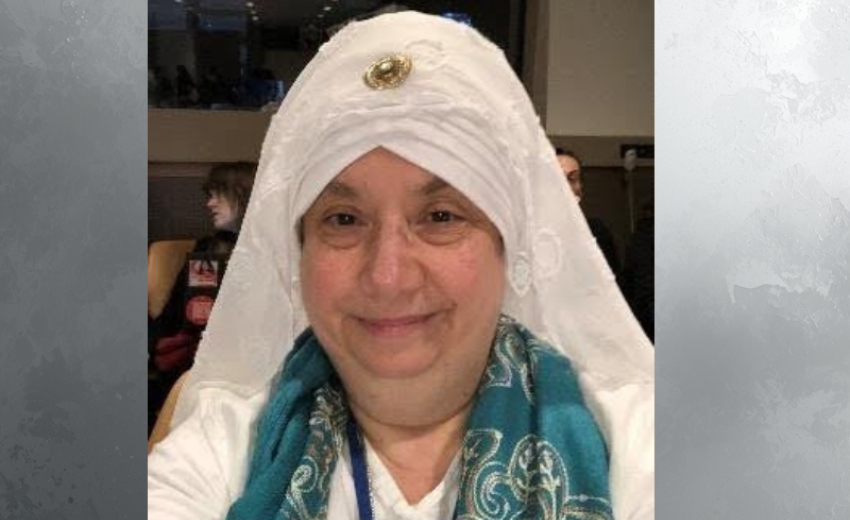

Ek Ong Kaar Kaur Khalsa stands among the contemporary voices dedicated to interpreting and sharing the spiritual wisdom of Sikh scripture with global audiences. A writer, translator, educator, and lecturer, she has devoted much of her life to bringing the poetic depth of Gurbani into accessible English language expressions while preserving its mystical and spiritual essence. Her work represents an important bridge between traditional Sikh scripture and modern seekers attempting to understand the teachings of the Sikh Gurus in a rapidly changing world.
Born in the United States, Ek Ong Kaar Kaur Khalsa developed an early fascination with Eastern spirituality, literature, and sacred traditions. She graduated from Rice University in Houston, Texas, with a degree in Asian Studies and a concentration in English Literature. During her time at Rice, she studied abroad in China on a scholarship, where she explored questions related to the translation of sacred texts and cross-cultural interpretation. These early academic experiences would profoundly shape her later contributions as a translator of Sikh scripture.
Her spiritual journey took a decisive turn when she encountered Yogi Bhajan, also known as Harbhajan Singh Khalsa Yogiji, in the mid-1990s. Under his guidance, she embraced Sikh Dharma and began studying Gurmukhi, the script of the Guru Granth Sahib. This immersion into Sikh spirituality inspired her lifelong commitment to translating and teaching Gurbani. By the year 2000, she also had the opportunity to study with scholars such as Dr. Balkar Singh of Punjabi University, Patiala, deepening her understanding of Sikh theology, philosophy, and scriptural poetics. In 2017, Ek Ong Kaar Kaur Khalsa married her high school sweetheart, Dr. Patrick Michaud, and became Ek Ong Kaar Kaur Khalsa Michaud.
One of the most defining features of Ek Ong Kaar Kaur Khalsa’s work is her poetic approach to translation. Rather than offering merely literal or academic renderings of Sikh scripture, she attempts to communicate the emotional, mystical, and experiential dimensions of Gurbani. Her translations seek to preserve not only the meanings of words but also the spiritual atmosphere and transformative power embedded within the original compositions of the Sikh Gurus. This approach has resonated strongly with many English-speaking Sikhs and spiritual seekers around the world.
Among her best-known works are interpretive translations of sacred Sikh compositions, including Japji Sahib, Anand Sahib, and Sukhmani Sahib. Her translation of Japji Sahib, the foundational composition of Guru Nanak, has received particular appreciation for its lyrical and contemplative style. Through these works, she has sought to make Sikh scripture more accessible to readers unfamiliar with Punjabi or Gurmukhi while retaining reverence for the original sacred text.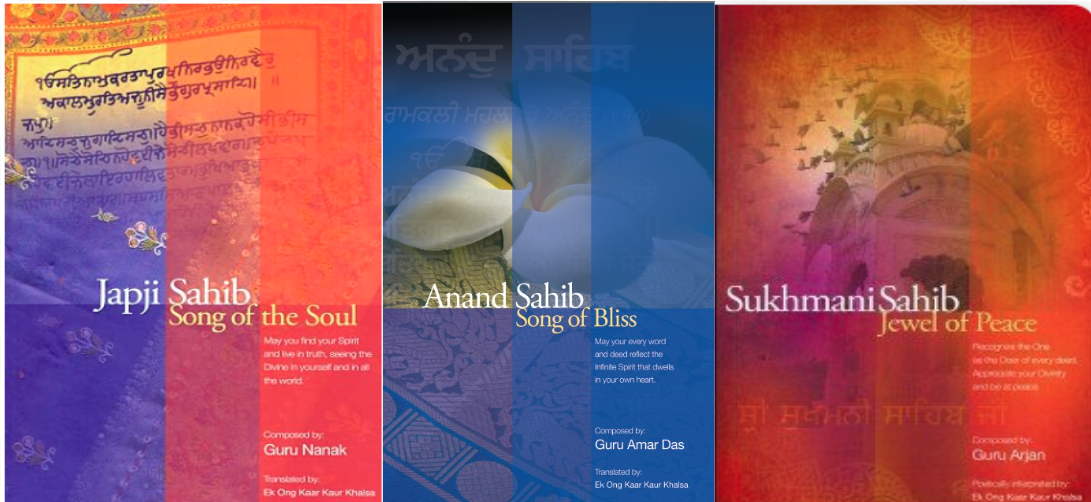 Beyond writing and translation, Ek Ong Kaar Kaur Khalsa has also emerged as a respected teacher and public speaker. Through platforms such as SikhNet Play and Sikh educational forums, she has delivered lectures on Naam, Simran, Japji Sahib, Sukhmani Sahib, and Sikh spiritual philosophy. Her talks often emphasize the transformative and psychological dimensions of Gurbani, exploring how meditation upon sacred sound and scripture can reshape consciousness and deepen spiritual awareness.
Her writings also address broader social and ethical issues facing humanity. Through essays published on SikhNet, she has written on themes such as interfaith harmony, systemic patriarchy, seva, spiritual resilience, and humanity’s shared spiritual destiny. In articles such as “Our Common Humanity” and “Transforming Systemic Patriarchy,” she applies Sikh teachings to contemporary global concerns, demonstrating the continuing relevance of Sikh philosophy in addressing modern social challenges.
Ek Ong Kaar Kaur Khalsa’s legacy lies largely in her role as a cultural and spiritual bridge-builder. She belongs to a generation of Western Sikh scholars and practitioners who helped introduce Sikh teachings to international audiences beyond Punjab and South Asia. By combining literary sensitivity, spiritual devotion, and educational outreach, she contributed to a broader understanding of Sikh spirituality among diverse communities.
Her work also reflects the evolving global character of Sikhism in the modern era. Through digital platforms, online learning, lectures, and translations, she has helped expand access to Sikh teachings for people across geographical and linguistic boundaries. Her association with organizations such as SikhNet, Sikh Dharma International and Sikh Research Institute further strengthened this educational mission.
Overall, the life and work of Ek Ong Kaar Kaur Khalsa illustrate the enduring power of spiritual literature to transcend language, culture, and nationality. Through her translations, teachings, and reflections, she has sought to illuminate the universal wisdom contained within Gurbani and inspire seekers toward inner transformation, compassion, and awareness of the Divine presence within all creation. During one of my recent meetings with her, I had the opportunity to learn more about her contributions and insights into Sikhism. I'm sharing a brief write-up of the interview for readers' benefit.
Dr. Singh: How did your studies in Asian Studies and English Literature at Rice University shape your intellectual and spiritual outlook?
Ms. Khalsa: It is difficult to express the impact that attending Rice University had on my life. I was the first person in my family to graduate from college. The professors that I had the privilege to interact with during my time there expanded my worldview so profoundly. Dr. Anne Carolyn Klein, (Lama Rigzin Drolma) had just been hired in the Religious Studies Department at Rice University during my undergraduate years. As a scholar of Tibetan Buddhism, she created a cross-cultural dialogue within her classes between feminism and deconstructist philosophy with core Buddhist concepts such as interdependence and impermanence. Through studying with her, I had my first experience with an Eastern teacher - Tenzin Wangyal Rinpoche - who teaches Dzog-Chen as rooted in the Bon tradition, the native tradition of Tibet. Dr. Richard J. Smith, a history professor who taught Chinese culture and history, was also influential in my time at Rice. Dr. J. Dennis Huston in the English Department really pushed all of his students to become the best writers they could be, and shared the power of poetry and literature. These are a few of the great minds I had the blessing to interact with. Overall, my time at Rice cemented three interests: Asian culture, history and philosophy; deconstructing texts and conducting literary analysis; and honing my voice as a writer.
Dr. Singh: What inspired your journey toward Sikh Dharma, and how did your encounter with Yogi Bhajan influence your life direction?
Ms. Khalsa: Houston, Texas in the early 1990’s was a hot bed of New Age activity: there was a center for East-West dialogue, New Age gift shops, and a humble 3HO ashram, in the Montrose district, close to Rice University, where Kundalini Yoga was taught. During that time in my life, I explored everything.
Through a series of events in my late 20s, I moved to the Hacienda de Guru Ram Das Ashram in Espanola, New Mexico, USA, which is considered the mother ashram for the 3HO.
Even though I arrived as a yoga student, I became more curious about Gurbani over time. Through my connection with Yogi Bhajan, the Shabad Guru started pulling on me. I could tell from my university training, and also from my studies of Dzog-Chen, that the English translations were flat. That there was more “there” in the original. But I didn’t know how to approach it.
When I was 30 years old, at Yogiji’s direction, I began learning Gurmukhi. Dr. Balkar Singh, an esteemed scholar of the Guru Granth Sahib, lived in Espanola at the time, serving as the Director of the Guru Ram Das Institute of Language and Culture, which was created in conjunction with Punjabi University. Studying with Dr. Balkar Singh and meetings with Yogi Bhajan helped me develop an approach to translating Gurbani. So my journey with Sikh Dharma ultimately came from my curiosity about Gurbani.
Dr. Singh: You studied in China during your academic years. How did exposure to different cultures and philosophies affect your understanding of spirituality and translation?
Ms. Khalsa: Language is the ocean in which all beings swim. Most people don’t realize how language moulds their view of the world. It gives us the basic framework in which we think, decide and understand the reality around us. The fish doesn’t contemplate the ocean. It just moves by its current and lives by its ecosystems.
American culture and Chinese culture are so distinct from each other that it really opened my eyes to how language and culture work. There are three lenses when it comes to translation: text, subtext and supertext. The text is the word itself, and what it means. The subtext is the assumed, unstated relationship between words that are rooted in the culture. Take the word “white.” In English, white has a subtext of purity, of chastity. In poetry, the word “white flower” might carry that symbolism. But in Chinese, the color white is associated with mourning or death. So a white flower in a Chinese poem might carry a totally different subtext. If we don’t understand the subtext of a language, then the subtle play of the deeper meanings get lost.
This is especially true when it comes to the “supertext” of spiritual writing. Guru Naanak says there is only One Divine Reality. Yet there are myriad cultures trying to express Truth through so many languages and symbols. The supertext is the mystical experience that transcends language. In translation, the challenge is to understand text, subtext and supertext together and make them visible to a different culture in a different language.
Dr. Singh: Your translations are often described as poetic and spiritually immersive. How do you balance literal accuracy with emotional and mystical depth?
Ms. Khalsa: It takes time to translate. I have a process that I go through. The first part is to understand the text itself. I am not a native Punjabi speaker. So I approach translating like a puzzle to decode.
Every composition is a world unto itself. It has a complete picture it is trying to present. And every shabad in the Siri Guru Granth Sahib is explaining something from Japji Sahib. So I meditate on what that is - what aspect of Japji is being illuminated here? What is the internal structure and language of the composition?
Then I write my first rough draft, and if something is unclear, I do more research. I talk to people and read other translations to see what I am missing.
Yet while “I” may be translating Gurbani, at the same time - the Guru is translating me. The power of Guru Dev - of that Invisible Wisdom - shows up in my life. Insights happen - through meditation or events in everyday life. This is an integral part of the process and completely beyond my control. That grace transforms me in the journey of translating.
The last step is to sculpt the poetry. Weave literal understanding with mystical insights and attempt to convey the entire world of the Shabad into poetic English. That process takes time. Vision and revision are the art of writing.
Dr. Singh: Among your works, such as Japji Sahib, Anand Sahib, and Sukhmani Sahib, which composition has impacted you most personally and why?
Ms. Khalsa: Each composition has offered its own special gift and journey. But I will share a story about translating Guru Amar Das's Anand Sahib. It took about 3 years to translate this bani. The final draft crystallized during an intense weekend when I was snowed in at my home. There was a blizzard outside. I couldn’t go anywhere. So I just focused and wrote, and the translation came together.
When the draft was complete, a grace descended upon my consciousness. These things are hard to describe. For the next few days, everything felt so clear, so pure, so precious - like the Guru had given me a glimpse of Karam Khand. It was such a refined consciousness. I knew at the time that I couldn’t sustain that state for long. It was far beyond anything I had ever experienced. I knew no one could really be in that state and live on the earthly plane at the same time. But I felt it was a gift from the Guru. He gave me a glimpse, for just a few days, of what these clearer, more subtle realms feel like, to show that they are real and that Gurbani offers a doorway to them.
Dr. Singh: How do you respond to differing perspectives within Sikh scholarship regarding interpretive versus literal translations?
Ms. Khalsa: As someone who translates on the outskirts of the academic world, I am not very well versed with what scholars have to say on this topic. However, I will offer this. There is no such thing as a literal translation of Gurbani in my view. English does not understand what Gurbani understands. There is not a “one to one” mapping of Gurbani to English.
Let’s take a simple example. Languages focus on what is important to their culture. The indigenous Inuit tribes who live in the Arctic and Subarctic regions really care about snow. They have to for their survival. Their language has many words for snow. “Privtla” - snow melting in the spring rain. “Tlayopi” - snow drifts that you fall into and die. If you just translate these words as “snow” into English, you flatten them completely. You lose definition, complexity and a powerful worldview. So the “literal” doesn’t exist here. All we can say is that the Inuit have many words that English doesn’t have for the concept of snow.
Gurbani is the same way. There are many words in Gurbani for God, for the Word, for Love. English doesn’t have the same rich vocabulary for these topics. If you go for a “literal” translation, you are simply flattening the original, losing insight and meaning. One principle I have learned over time is this: The dictionary is not the Guru. (Reference: http://ontology.buffalo.edu/smith/varia/snow.html)
Dr. Singh: Many of your writings address themes such as systemic patriarchy and common humanity. How can Sikh teachings contribute to social healing and equality today?
Ms. Khalsa: What is needed most is for the Sikhs to embody Guru Nanak’s message. I sometimes contemplate how Guru Naanak defied the social norms of his time and stood up for women's dignity. I think about how Guru Amar Das appointed women to teach. All of this against a cultural backdrop where women were considered inherently inferior.
Why didn’t the Sikhs take this message and share it with the world sooner? Why did the world have to wait for the West in the 20th Century to create the language of women’s liberation?
Guru Naanak offered a vision of society free of gender discrimination, free of caste and wealth discrimination, a society where one’s religion didn’t matter as much as one’s common humanity.
As I grow older, I understand the difficulty. Manifesting such a society requires surrendering power. Surrendering the power of caste and wealth, the power of patriarchy, the power of religious superiority. These earthly powers are intoxicating. If any group - no matter how small - finds a way to truly manifest Guru Naanak’s societal vision, their very presence will elevate and inspire the world around them. They will lead others through their example.
Dr. Singh: What role do you believe women, especially Sikh women, play in shaping the future of spirituality and leadership?
Ms. Khalsa: This is a tough question.
First, we need to confront and rebel against any teaching that says God made women inferior to men. That is an outright lie.
The toughest place women need to confront this lie is within ourselves. Thousands of years of being called “less than” have given us very real inferiority complexes. So the first job for women, in my view, is to refuse to agree to the lie. No matter what their faith is, or whether they have any faith at all. To call it out when they see it around them. To transform the lie that dwells within their own minds.
Then, it’s an open question. What is leadership? Where does it dwell? It could be through governance work, music and the arts, charity work, business, or education. It could be within the home itself - the Grisht ashram - having the home as a temple and serving the Divine in your family. There are endless possibilities for leadership.
But we as women must know our value. We must feel our worth and align ourselves with those who recognize it.
As Sikh women, I believe we have a unique gift in the Sri Guru Granth Sahib. There are many shabads that talk about women, that discuss the bride. And while some like to focus on the metaphor of the Soul-Bride, my experience is that the Gurus spoke directly to women in many of those Shabads. Spoke to their social challenges and how to overcome them. The more we understand Gurbani as having something unique to say to women, the more enlightened we, as Sikh women, can become.
Dr. Singh: Looking back on your journey, what moments do you consider the most meaningful in your life of service and teaching?
Ms. Khalsa: Wealth is meant to be shared. This is true of earthly wealth, but also true of spiritual wealth. The Creator’s grace provided me with the opportunity, the time, and the teachers to go deep within myself and learn something. But if I just sit in the satisfaction of “knowing”, then I am a spiritual miser. There is a benefit to receiving wisdom, and then there are the blessings that come from sharing those insights with others.
Without a doubt, the most satisfying, fulfilling, and powerful moments of my life come when the Guru gives me the opportunity to teach. When someone invites me, and there are students who are genuinely curious and interested in learning.
This last sentence matters.
One thing about teaching - it is not something my ego can arrange. There is a destiny for when and with whom teaching occurs. As long as I leave it in the Guru’s hands to arrange, the act of sharing what I have been blessed to learn is truly the best moment of my life. Teaching happens in Divine synchronicity: of being welcome into the space as a teacher, and of having people whose longing have brought them to learn. These moments don’t have to happen often. But when they happen, there is a potent sense of wholeness, of purpose, of meaning and completion.
Dr. Singh: What legacy would you most like future generations to remember from your work?
Ms. Khalsa: First, I hope there is a legacy. I sometimes worry that the translations haven’t reached a wider audience. It would be great if the future generations remembered the work at all. That would be amazing.
Second, I have wrestled with shadows during my time. I hope that studying my life will help others understand that something beautiful can come from a person, even if that person is flawed or struggles. When we put spiritual personalities on a pedestal and imagine they are somehow better or more “perfect” than others, we miss the real message. The real message is that all of us are imperfect and can still be a channel of Light if the Guru’s grace prevails.
Third, I hope that being a woman who translates can inspire other women to study and understand Gurbani. It sets an example for how women can develop a relationship with the Guru on their own terms. Why is this important? Even though the historical Gurus gave women an honored and dignified place in the community, that status has not been fully realized in the day-to-day reality of the Sikhs. Women claiming their sovereign connection with and understanding of the Guru, in my view, would help create that balance of power which the Gurus offered to women.
Dr. Singh: What advice would you offer to young scholars, translators, and seekers who wish to engage deeply with Sikh scripture?
Ms. Khalsa: We live in a world where people want to rush, rush, rush. Where ambition and status are subconscious drivers of achievement and success. I say - remember the meaning of the 7th Pauree of Japji Sahib. Even if you have fame and reputation, if you don’t experience the Divine Gaze (nadar), it doesn’t mean anything.
Don’t rush. Don’t become a student of Gurbani for money or status. Separate it out. I always remember how Guru Arjan Dev ji gave his family’s fortune to his brothers and himself lived as a horse trader. Use your ambition for worldly pursuits. It’s OK to have a business or vocation in order to be successful in life. Translate and understand Gurbani as a sadhana, as a personal practice. Do it in the Amrit Vela and the Twilight Hours. Those are the best times.
If you approach it this way, you will discover something beyond the words, the grammar and the debates. You will discover what it means that the Guru’s Light lives in the Shabad. You will experience how the Divine can arrange your affairs if you keep your mind focused on the bani. These are real powers. They are tangible. And they can introduce themselves to you, if you are sincere, devoted, and steadfast in doing the veechaar of Gurbani.
Last but not least - if you are not transformed by the process of translating, then you haven’t really done the work. Let the Guru translate you.
Dr. Singh: Thank you, Bibi Ek Ong Kaar Kaur Khalsa Ji, for taking the time to participate in this interaction. It was wonderful meeting you and hearing your views on various aspects of Sikh doctrines, poetics, Sikh philosophy, and Global spirituality.
Ms. Khalsa: Thank you very much, Dr. Devinder Pal Singh, for your intelligent and thought-provoking inquiry. I appreciate your input and efforts very much.