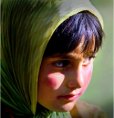
Late last year, the United Nations declared Oct. 11 the International Day of the Girl. Celebrated for the first time this month, the occasion aims to highlight the challenges girls face around the world to gain access to education and other basic rights, and empower them to advocate on their own behalf.
Ten. Eleven. Twelve. Those are the ages that for many girls, the world becomes a much more dangerous place.
Female infanticide and foeticide can be stopped through widespread awareness and national regulations. We must join hands, in more than just prayer, to save the missing girls of India and put an end to this genocide.
In advance of the London Summit on Family Planning, the International Planned Parenthood Federation (IPPF), convened a special “Young People and Family Planning Summit” to focus on a critical factor in the debate: young people.
Worldwide, complications in pregnancy are the number one killer of girls and young women aged 15-19. Every year 50,000 teenage girls and young women die during pregnancy or childbirth, in many cases because their bodies are not ready to bear children.
So then why do we have a National Day of the Girl Child? Are we just paying lip service to the idea of female emancipation when nothing much has changed since Manu stated, way back in 200 BC: "By a young girl, by a young woman, or even by an aged one, nothing must be done independently, even in her own house". And further: "In childhood a female must be subject to her father, in youth to her husband; and when her lord is dead to her sons; a woman must never be independent."

The project is aimed at providing education to girl children and it works with over 20 non-governmental organizations to support around 75,000 girls across the country. The cause is well-intended and noble. But was it really necessary to use sexual allusions to drum up support for their cause?
In today's world keeping Kesh (hair) has become an issue for some men and women. However, our sisters struggle the hardest to maintain Sikhi saroop in this western society whilst dealing with the images bombarded by the media all around us of what an ideal woman should look like.
Abortion and multiculturalism, two of the most contentious areas of Canadian public policy, were placed on a collision course Monday by the country’s leading medical journal.
When something is in short supply, common sense suggests that it should become more valuable. This intuition is borne out in the market for goods and services as well as the labor market. But could this logic also apply to women?
"We need to provide them with access to education, healthcare and opportunities which will help them make decisions for themselves and stand up to those who seek to abuse or exploit them."
Top-down approaches like reservation work but take time. Bottom-up approaches like the one done in Satara are eminently more doable and can have a greater chance of making a real impact on people. Who knows one day one of these `unwanted' girls from Satara may just become a power player, a shining star we can all be proud of.
When the second annual G(irls)20 Summit got under way Tuesday, each of the 21 delegates stood up and finished the sentence “I am here because …” Answers ranged from acting as a voice for women around the world to questioning the lack of women working in science.
The oppression of women and girls used to be a fringe issue. This week at the U.N., the 60-year-old institution has taken the health and human rights of women and girls to the center of the conversation.
Forced weddings and ‘honor’ killings aren’t just a developing-world issue. New research shows how it happens in England and the United States.
A girl under the age of 18 is married every three seconds -- that's 10 million every year -- often without her consent and sometimes to a much older man, according to the children’s charity Plan UK.
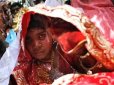
One in seven girls in developing countries is married before her 15th birthday—often to a man twice her age or older. Decisions about if and when to marry a girl are often made without her input, and sometimes without her knowledge. Child marriage puts girls, some as young as seven or eight, at risk of problems that will impact the rest of their lives.
Make no mistake, India's future will not be brighter for having sunk to 914 girls per 1,000 boys. The daughter deficit will create a society that is much less stable and much more volatile than it would be with a more balanced ratio. The sustainability of peace and stability -- for India and the region -- will be progressively undermined in lockstep with the devaluation of India's daughters.
Surprising as it may sound but the girls have outnumbered boys in Pakistan. Despite the socio-cultural taboos associated with girl child like dowry, sexual abuse, weaker sex etc, the girl child were not aborted in certain areas of Pakistan like Southern Punjab and Khyber Pakhtonkhawa.
As we walk around the home, it is easy to see that her claim is quite well-founded. Even as her ‘family’ expands and her responsibilities grow, Prakash Kaur’s fount of maternal compassion shows no signs of drying up.
In the fall of 2010, the United Nations Foundation launched Girl Up -- a "for girls, by girls" campaign aimed at igniting a movement to transform the lives of adolescent girls in developing countries.
Was it financial crunch or under-utilization of the teaching staff that forced the Punjab government to allow colleges to re-introduce senior secondary (science groups) classes?
OnlyGirls
In all its educational institutions, preference is given to the girls. At Akal Academy, underprivileged rural girls aged from 8 to 25, who were forced to stay at home and do household work, are being put to schools and taught modern scientific education and spiritual training.

Pages

Subscribe to RSS - girls