

The Sweetness of Sehj
A Story of Peace on a Hot Afternoon
It was a very hot afternoon. The sun shone brightly over the Gurudwara, and the air felt warm and dry. Outside the gate, a small shabeel stall had been set up. Large steel buckets were filled with cold, sweet chabeel, ice cubes floating on top, and the sound of water pouring into glasses filled the air. A sewadaar called out warmly to all who passed, inviting them to take a drink.
A few children ran toward the stall, tired from playing in the heat. After drinking eagerly, one of them looked up curiously and asked why chabeel was served on this particular day. The sewadaar smiled softly and explained that today was the Shaheedi Divas of Guru Arjan Dev Sahib Ji - the day of His martyrdom. Another child asked what seemed like the most natural question in the world: if it was a sad day, why were they giving out something sweet?
The sewadaar sat down beside them and said gently, “Because this is not just a story of pain… It is a story of peace.”
A Child Blessed with Greatness
Long ago, in the house of Guru Nanak’s tradition, a child was born by the name of Arjan. From a young age, he was calm, kind, and full of sweetness. One day, as a small child, he crawled toward his grandfather, Guru Amar Das Sahib Ji, and reached his seat. The sangat watched quietly. Guru Amar Das Sahib Ji lifted the child lovingly and spoke words that would come to be remembered across generations: “Dohita Bani Da Bohita” - meaning, “A grandson who will become a great ship of Divine Word.”
That child grew up to become Guru Arjan Dev Sahib Ji, the Fifth Guru of the Sikhs. He guided people with love and humility. He built Sri Harmandir Sahib, a place of worship open to everyone, regardless of who they were. He also compiled the Adi Granth, bringing together the sacred words of the Gurus and Bhagats into one timeless gift for all of humanity. People came from far and wide to listen, to serve, and to find peace in His presence.
But as the Guru’s light spread further across the land, some hearts became restless.
Jealousy and Ego
Not everyone was happy to see the Guru’s influence grow. Within the family, his elder brother Prithi Chand had long hoped to become Guru himself, and over time, that unfulfilled desire turned into deep bitterness and jealousy. Outside the family, in the city of Lahore, there lived a man named Chandu Shah - wealthy, powerful, and accustomed to getting his way. He carried great pride in his status and his wealth.
When someone suggested that his daughter could be married into Guru Sahib’s family, to Hargobind Sahib Ji, Chandu Shah responded with arrogance, saying that his daughter was like a jewel kept in a golden palace and ought not be sent to a simple house. His words were filled with pride and disrespect. Yet despite this, he still sent the proposal forward. When the sangat heard what he had said, they were deeply hurt, and felt that a proposal ought to come with humility, not with pride.
Guru Arjan Dev Sahib Ji remained perfectly calm. He did not respond with anger. He simply declined the proposal with quiet dignity. But Chandu Shah’s pride had been deeply wounded, and from that moment, his anger began to grow into something far more dangerous.
The Court of Lahore
Soon after, Guru Arjan Dev Sahib Ji was called to the Mughal court in Lahore. Emperor Jahangir sat on his throne and observed the Guru carefully. He had heard of this man who had gathered so many followers, and he did not understand the Guru’s message of peace and humility. He saw only influence, and influence made him uneasy.
Chandu Shah stepped forward in the court and accused Guru Sahib of having supported Prince Khusrau, a rival to the throne. The accusation was not true, but it created doubt. The Emperor gave his judgment: Guru Sahib would be punished under the law of Yasa - a cruel law under which no blood could be spilled, yet suffering could be immense.
The Final Choice
Before the punishment began, Guru Sahib was given one last chance. He could pay a fine, or he could agree to change certain words in his sacred compilation. The court waited in silence for his answer.
For Guru Arjan Dev Sahib Ji, Gurbani was not simply a book - it was Divine Truth. It could not be altered out of fear. It could not be surrendered to any worldly power. Guru Sahib calmly declined both options and chose to stand by truth. And so the punishment began.
The Five Days of Shaheedi
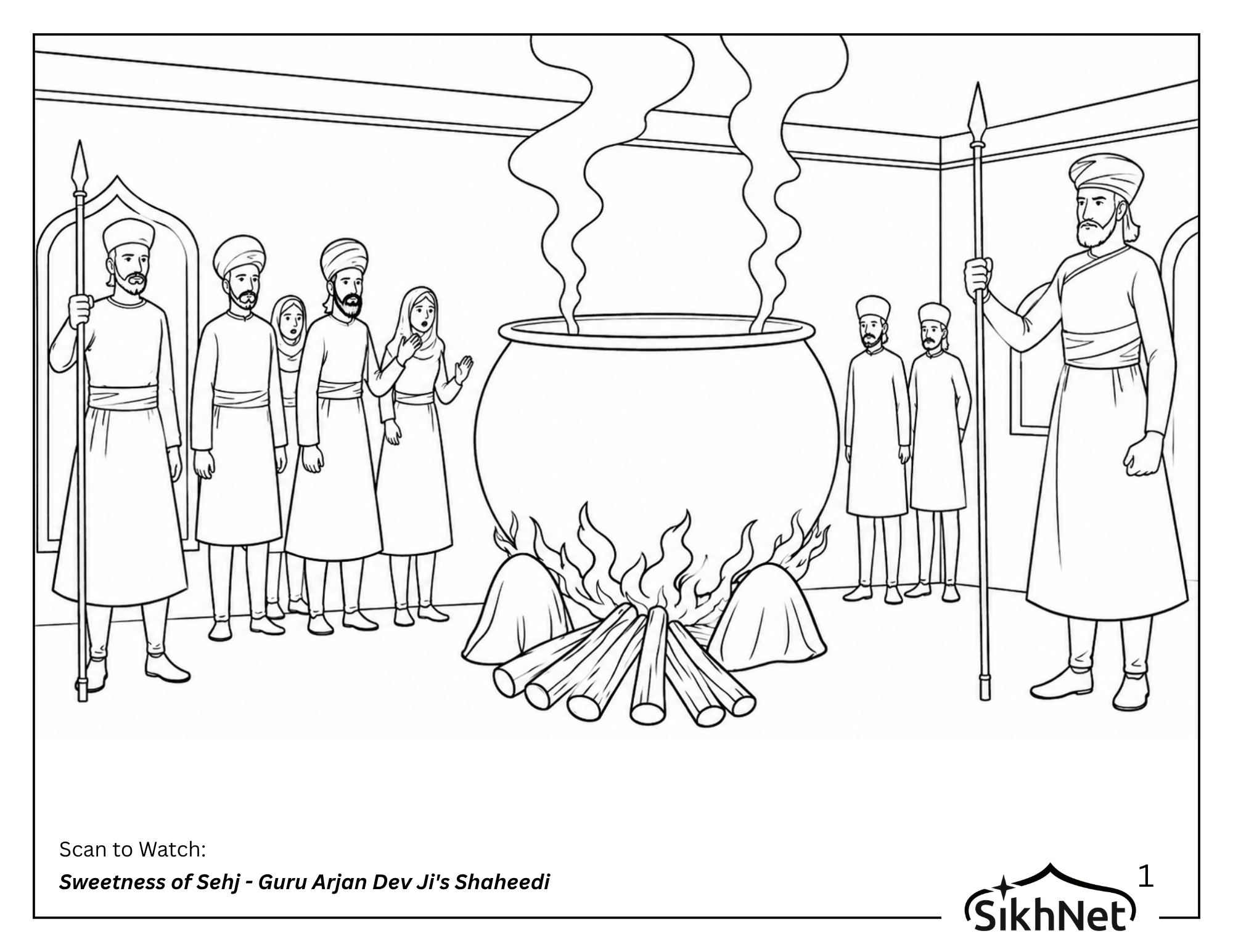
For five days, Guru Arjan Dev Sahib Ji endured suffering that few could imagine. On the first day, He was made to sit in burning hot water. Steam rose into the air, yet Guru Sahib remained peaceful, his mind fixed on Waheguru. Those watching from a distance could hardly comprehend how anyone could bear such pain with such stillness.
On the second day, the suffering continued without pause. Some of the Sikhs wanted to rush forward and help, but those who had watched more carefully understood that even in this moment, Guru Sahib was teaching them something profound - teaching them how to face hardship with grace.
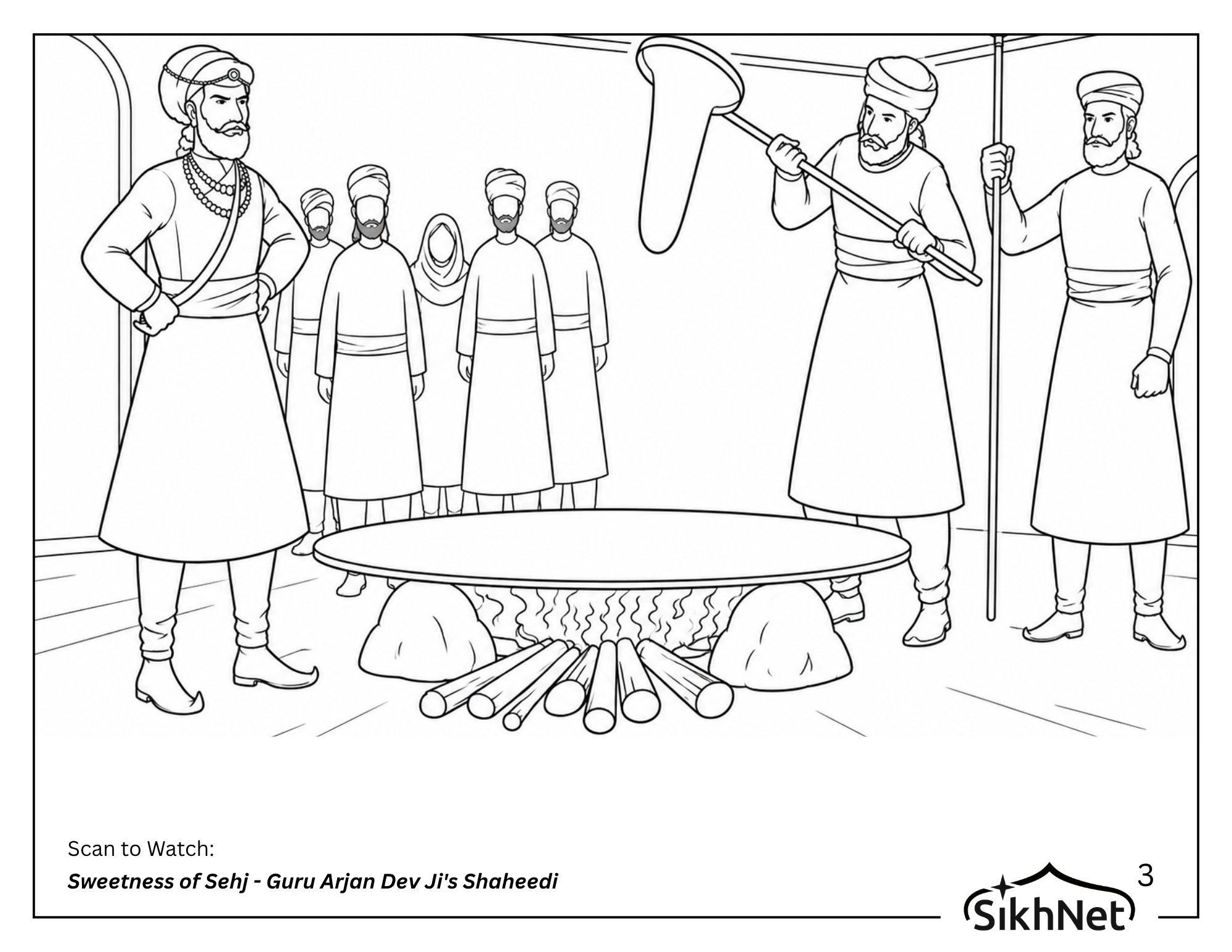
On the third day, a hot iron plate was heated until it glowed red, and Guru Sahib was made to sit upon it. Burning sand was poured over His body. Many in the crowd could not bear to watch. Chandu Shah looked on and taunted, wondering how long this peace could last. But this was not ordinary peace. It was divine.
On the fourth day, the pain continued. Yet Guru Sahib’s mind remained like a cool river flowing quietly beneath a scorching sky.
During these days, the revered Sain Mian Mir Ji came to visit Guru Sahib. He was a beloved saint, deeply saddened by what he witnessed. With great emotion, he offered to use his spiritual power to bring down the empire itself if Guru Sahib gave the command. But Guru Arjan Dev Sahib Ji did not ask for revenge. He accepted everything as Hukam - the Divine Will - and remained at peace.
That night, Guru Sahib spoke gently to the Sikhs who had gathered near. He reminded them to stay strong, to remember Waheguru in every moment, and to remain calm no matter what life brought before them.
On the fifth day, Guru Arjan Dev Sahib Ji was taken to the banks of the River Ravi. The water flowed peacefully, as it always had. And there, in the presence of Waheguru, Guru Arjan Dev Sahib Ji merged into the Eternal Light.
The Sweetness We Serve
When the sewadaar finished telling the story, the children sat in silence. One of them said quietly that it had been so painful. Another asked, with wonder in her voice, whether Guru Sahib had truly stayed calm through all of it.
The sewadaar held up a glass of chabeel. “That is exactly why we serve this,” he said. “To remember that even in burning heat, Guru Sahib remained cool and peaceful. We serve this sweetness so that we never forget.”
One by one, the children stepped behind the stall and began to serve. They called out to those passing by, offering them cold, sweet chabeel on a hot afternoon. And one child whispered softly to herself, as if making a quiet promise: “Stay calm… like Guru Sahib.”
The world tried to burn His body… but it could never burn His peace.