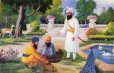
This endearing village makes a conscious effort to save girl children and the green cover at the same time, by planting 111 trees every time a girl is born. A brilliant exercise in eco-feminism, this should inspire India and the rest of the world.
Global Citizen 2015 Earth Day marks the 45th anniversary of Earth Day. Be a part of the Sikh representation on Earth Day in Washington DC! Our Gurus reminded us to see the Earth as our Divine Mother - to respect and protect it and we're happy to be joining in this historic moment.
Researchers at Michigan State University have created a fully transparent solar concentrator, which could turn any window or sheet of glass (like your smartphone’s screen) into a photovoltaic solar cell.
We have proposed the idea of dedicating between 25 and 50 acres of land at Nankana Sahib and at Kartarpur as “sacred forest” to conserve bio-diversity around these places...In addition, around five or 10 acres would be devoted to organic farming to supply organic food for 'langar'.
What happens after the cremation? The last rite for Sikhs usually involves dispersing the remains in flowing water. HARKIREN KAUR has something to say about it.
In 2015, Sikhs worldwide will be celebrating the 5th annual worldwide Sikh Vatavaran Diwas (Sikh Environment day) during the week of March 14th.
FiBL team member Dr. Gurbir S. Bhullar has received the 2014 research award from the Swiss Forum for International Agricultural Research (SFIAR). The former ETH Zurich researcher has explored an interesting possibility for farmers to cultivate climate-neutral rice while also creating added value.
Cotton is the primary raw material used in making turbans, patkas, other clothing we use as Sikhs. It takes anywhere from 700-2700 litres of water to grow enough cotton to make one turban.
It provides a platform to all educational institutions to lead as messiahs of change and foster eco-friendly celebrations of gurpurabs. It definitely leads to sustainable celebrations, cleanliness of the planet and good health of its inhabitants.
Sikh-Think seeing Sikh in the world. Bolivia is to become the first country in the world to give mother earth comprehensive legal rights!
The Washington-based environmental organization, EcoSikh has released a statement on climate change from the Sikh perspective, the first of its kind from a Sikh organization.
On Sunday, EcoSikh hosted its annual gala, which marked the fifth anniversary of the non-profit organization and drew a crowd of over 300 guests from all across the Washington, DC area and East Coast to celebrate EcoSikh’s five years of green action.
In Sikh beliefs a concern for the environment is part of an integrated approach to life and nature. As all creation has the same origin and end, humans must have consciousness of their place in creation
We fight for our rights and our struggle is real. Will we fight for their rights, their struggle is just as real. Besides many decades of oppression, first nation people are now trying to stop the destruction of the environment.
Visiting Darbar Sahib is a mixed experience.
While the Sikh love of and respect for nature has not abated, over the last several decades life styles have changed dramatically, turning many of the older paradigms that helped maintain the ecological balance around us, redundant.
300 people gathered for the EcoSikh Gala Event to support the environmental efforts by this four year old organization.
It is a powerful visual journey into the heart of an astonishingly symbolic environmental tragedy.
During a recent meeting of five Takhats at Amritsar, the Singh Sahibans (the spiritual heads of the Sikh community) declared that Gurgaddi Diwas (coronation day ) of the 7th Sikh Guru, Guru Har Rai, should be celebrated as a Sikh Environment Day each year especially ‘in light of the rising global environmental crisis’.
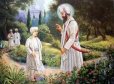
One day as a child, while passing through a garden, Guru Har Rai, the seventh Sikh Guru, damaged some flowers with his loose-flowing robe. The sight of scattered, crushed petals — separated from their stems — affected his tender heart and he resolved never to harm anything in the world.
As aged fingers reached down through the dirt to create space for young saplings, this group of Sikh elders revived a centuries old tradition of planting culturally important plants at historic Sikh sites.
President of EcoSikh, Dr. Rajwant Singh, said, "We had set the audacious goal of 1,500 but the response has been overwhelming. It is amazing to see so much enthusiasm among the Sikh communities all around the world, and we believe that this is the largest direct action by the Sikhs for the environment in the history of Sikhism.
Environment awareness includes conserving energy, lesser reliance on fossil fuels, water wastage, greed motivated devastation of vegetation without proper rejuvenation, minimisation of garbage and encouraging recycling.
At age 15, one day from the window, Tavleen looked at her garden and asked her father, "My dear Dad, I want to live in this beautiful world, look at the butterflies, squirrels, roses, sunflowers, listen to the chirruping of birds, gaze into the vast sky. I want to live;...
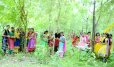
Jathedar Sardar Kulwant Singh Ji, from Takhat Sri Hazur Sahib released a message for Sikh community to plant one tree on the occasion of Sikh Environment Day on March 14 as a token of love for Guru Har Rai Ji,..
EcoSikh’s initiative got a major boost by UNDP, SGPC, DSGMC and all the Takhats giving a supportive call to the entire Sikh community worldwide to observe the Sikh Environment Day.
EcoSikh invites you and your Gurdwara/ Institution to join Sikhs all over the world in celebrating March 14th as 3rd Sikh Environment Day. This important day marks the New Year in the Sikh calendar and the Gurgaddi Diwas of our Seventh Guru, Sri Guru Har Rai Ji, who is remembered in Sikh history for his deep sensitivity to nature and its preservation.
We are also hopeful that this year on Sikh Environment Day, the Sikhs around the world will receive and celebrate the message of Guru that: 'Being Sikh is Being Kind to Environment.'
EcoSikh sent a formal appeal to Jathedar Sri Akal Takhat Sahib to mandate “One Candle One Family” for Sikhs who want to light candles at the Gurdwaras. EcoSikh survey revealed that majority of Sikh families light more than 50 candles in Gurdwaras during Diwali eve.
Jonathan Overpeck, a climate scientist at the University of Arizona, said the key question was not whether the ice sheets would break up, but how quickly. Some models suggest rapid melting that would bring sea level rises of more than a metre per century. "That would be much harder for us to cope with," he says.

Pages

Subscribe to RSS - environment