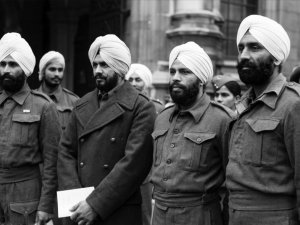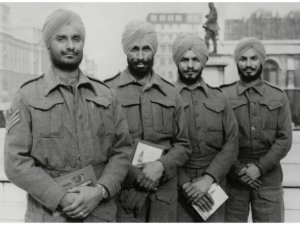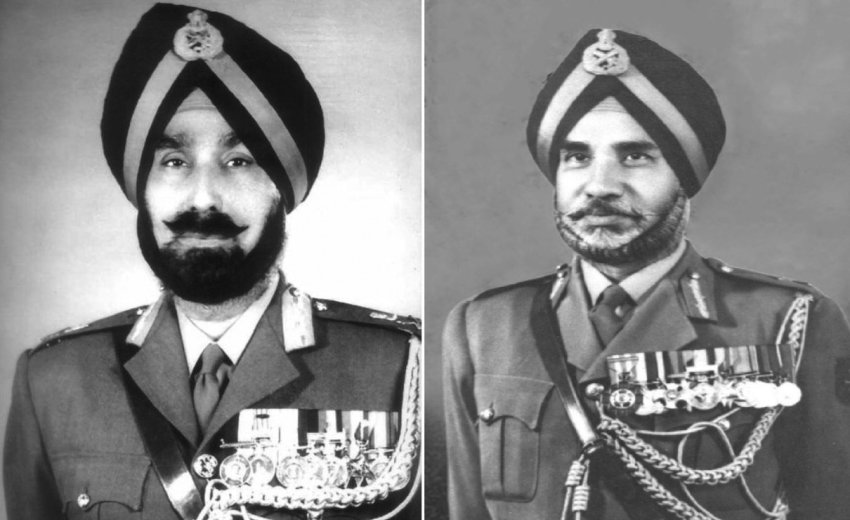

Lt. General Harbaksh Singh & Major General Gurbaksh Singh
In recognition of their exemplary loyalty.
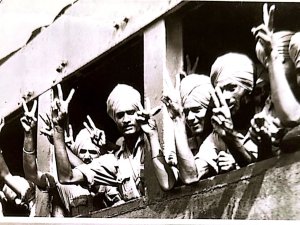
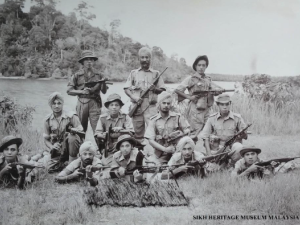
In the gripping saga of two brothers caught in the turmoil of World War II, their journey unfolds as they endure the harrowing experience of being Japanese prisoners of war in Malaya. They faced unprecedented ordeal and privation for over three years alongside their Battalion. Through this adversity, they held their Battalion together, demonstrating unwavering loyalty and strength by spurning a personal offer from Subhash Chandra Bose to defect and join the Indian National Army (I.N.A.).
As they strive to survive and maintain their hope, their story becomes a powerful testament to the indomitable human spirit amidst the darkest of times.
Lt. General Harbaksh Singh, Padma Vibhushan, Padma Bhushan, Vir Chakra, exemplified bravery and resilience during his remarkable service. In 1942, he commanded a company of the 5th Sikhs in Malaya against the Japanese, demonstrating courage in the face of adversity. During the withdrawal from Kuantan on January 5, 1942, Captain Harbaksh Singh drove into a Japanese ambush, sustaining serious injuries. Yet, his spirit remained unbroken as he was rescued and transported to Kuala Lumpur, then rushed by ambulance train to Singapore's Alexandria Hospital.
Despite the harrowing experience of being captured as Singapore fell, he endured with unwavering determination, repatriated only in September 1945 after the cessation of hostilities. Severely wounded in the head, a steel plate became a lifelong reminder of his sacrifices. Even in captivity, he displayed remarkable leadership by establishing secret contacts with the local population, ensuring his fellow internees received crucial food supplies whenever possible. His commitment to sharing valuable information about the war's progress uplifted the spirits of those around him, showcasing the indomitable human spirit in the darkest of times.
His elder brother, Lieutenant Colonel Gurbaksh Singh, commanded a battalion of the Jind Infantry of the Indian States Forces in Singapore when the British forces surrendered to the invading Japanese. For three years, he and his battalion were prisoners of war for the Japanese. But he refused to defect and join the Indian National Army, and coaxed his soldiers from doing so, too. With the turning of the tide and the defeat of the Japanese, Singh brought his battalion back to India. For the 'leadership of his battalion under extreme adversity' during captivity, he was awarded the Distinguished Service Order and the Order of the British Empire.
His citation says—
“For his outstanding loyalty, leadership, and personal example whilst in captivity. From February 1942 to December 1942, he resisted all efforts to force him and his men, especially the Sikhs, to join the I.N.A. Despite the personal intervention of the then leader of the I.N.A., the majority of his Sikhs and many of those of other units were dissuaded by him from wavering from their allegiance. Some months later, he, with all his Sikh officers, was called before Subash Chandra Bose. After half an hour of the subtlest persuasion ending in vile threats, this splendid officer rose and said,
“I am a man of principle; if I could betray one Master I could betray another.”
This remark, spoken with such dignity and strength, appeared to receive the actual approval of Subash Chandra Bose; the conversation ended, and the party was sent back to their camp at Kluang. Thereafter, they were never again worried or threatened, nor were any attempts made to renew their efforts to shake their loyalty.
As a Lieutenant Colonel, he was commanding his Battalion Jind Infantry, in Singapore when the British Forces in Malaya surrendered to the Japanese. He became a Prisoner of War along with his Battalion and faced unprecedented ordeal and privation for over three years. During the captivity, he held his Battalion together, even spurning a personal offer from Subhash Chandra Bose to defect and join the Indian National Army. From that time to the end of his captivity, Lt. Col. Gurbaksh Singh concentrated his efforts on the welfare of his men. He organised and gave lectures on village uplift, agriculture and education. During this period, he also wrote and staged no fewer than 29 Indian Dramas to keep up the spirits and morale of the camp. At the end, he brought back to India his complete Regiment, loyal almost to a man. By his wonderful example and leadership and the faith placed in him by all, he has earned and deserves the highest possible praise and distinction”. - reference WO 373/87/332
“If I could betray one Master, I could betray another.”
This powerful statement serves as a testament to the unwavering loyalty exemplified by Lt. General Harbaksh Singh and Major General Gurbaksh Singh.
These individuals represent a distinct category of leaders—those whose commitments are unwavering, whose loyalty is resolute, and whose courage is inspiring. They remain steadfast in circumstances where others may falter. Their integrity is not contingent upon circumstances; rather, it is founded upon principles, characterised by discipline, and marked by absoluteness.