
The Thrilling Odyssey of Escape and Evasion
A Gripping Survival Story in the Face of Adversity Behind Enemy Lines
INDIAN ESCAPEES AT THE HOUSE
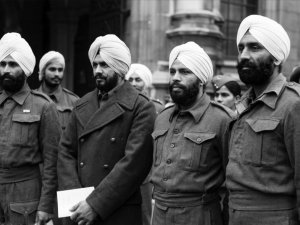
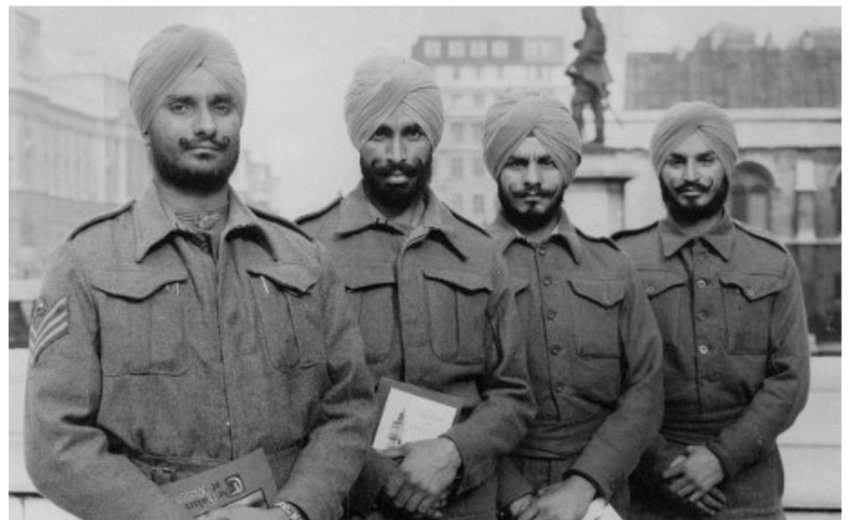
A number of Indian Soldiers who were captured in Libya and escaped from Nancy, France, and now residing in a rest camp in England, paid a visit to the House of Commons this morning, October 12, 1944.
Four of the Indian Escapees seen at the House this morning, October 12, are:
L-R: Havildar Tara Singh of the Indian Artillery, Lance Naik Mela Singh, Indian Signal Corps, Sepoy Nand Singh, Frontier Force Rifles, and Havildar Mohinder Singh, Frontier Force Rifles. Photo Courtesy of Northcliffe Collection.
In the midst of World War II, the atmosphere inside the prisoners of war camp was charged with tension and a yearning for freedom. The soldiers, mainly from undivided India, found comfort in their shared hope for liberation, yet many were not willing to sit back and wait for rescue. Their adventurous spirits drove them to hatch bold escape plans, recognising that escaping captivity was not merely a desire but a duty they felt compelled to undertake.
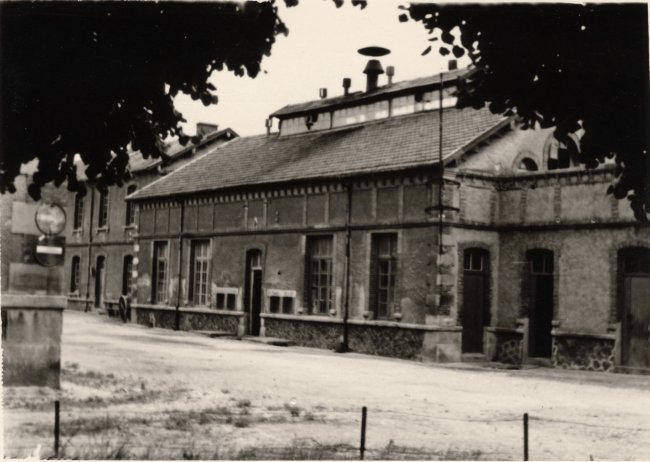
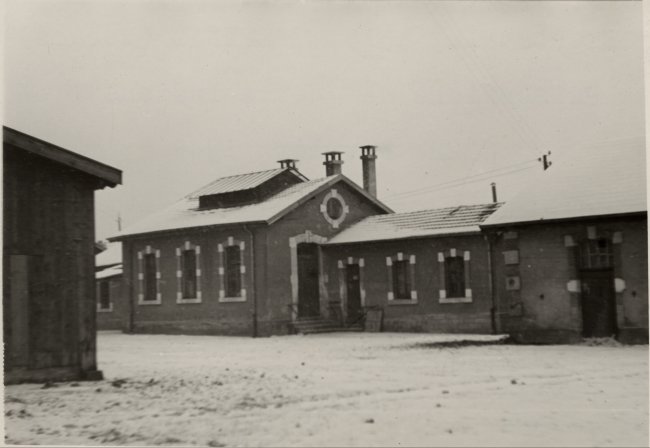
During those chaotic years, a notable prisoner-of-war camp, known as Stalag 194, was located near the scenic city of Nancy, France. This camp housed a diverse group of inmates, predominantly soldiers from the brave army of undivided India, many of whom had been captured in the fierce battles fought across the rugged terrains of the Western Desert.
Every escape attempt became a thrilling saga of courage and cunning. The challenges were immense; the guards were vigilant, the camp’s layout was complex, and punishment for being caught was severe. Yet, the allure of freedom propelled these prisoners to take risks that would leave the faint-hearted behind. Each escape was a meticulously crafted plan, often involving cooperation amongst inmates, resourcefulness in acquiring tools, and sheer bravery in the face of danger.
These adventures are not just stories of individuals; they echo the collective bravery of many who dared to dream of freedom. Though some were recaptured or faced dire consequences, their attempts remain a testament to the unyielding spirit of hope and the audacity of the human heart.
The stories of these courageous prisoners resonate as powerful legacies, reminding us of the extraordinary lengths individuals will go to reclaim their liberty.
Here is the story of four men: Havildar Tara Singh, Havildar Mohinder Singh, Lance Naik Mela Singh, and Sepoy Nand Singh. They have some of the most remarkable and heartbreaking prisoner-of-war stories ever told. After several escapes and recaptures, they finally seized an opportunity and escaped in September 1944. The Swiss border was the only chance for these prisoners of war to escape.
The Great Escape
L/Naik Mela Singh was captured at Fuka in June 1942. He was sent via Tobruk, Benghazi and Altumura to Avezzano, from where he escaped in September 1943. He lived alone in the mountains, trying to make his way towards where he thought the fighting would be, for about a month, and was then joined by two other escapers. In December, however, they were all three recaptured by the Germans on information from Italian Fascists
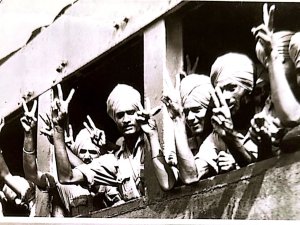
On 11th May 1944, Allied bombers accidentally bombed a camp at Épinal in eastern France, which was a temporary home to over 3,000 Indian men. Some died from the bombing, but many took advantage of the confusion and ran away into the woods.
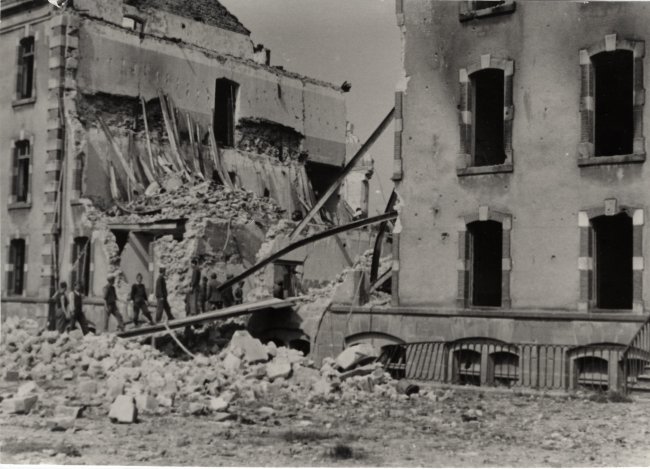
The next few weeks saw hundreds of prisoners of war trudging through the forests, crossing rivers and dodging Germans as they made their way towards neutral Switzerland. They had to stay hidden, as their physical appearance was noticeably different from the French population.
Most were from northwestern India, now part of Pakistan, including Sikhs, Muslims, and Hindus, all with dark skin. Sikhs, primarily from Punjab, wore turbans to cover their long hair and beards, and their British Army uniforms made them easy to identify. Blending in was nearly impossible, so they ventured into the woods, searching for a route to Switzerland.
French civilians helped them, and within a week, they crossed the frontier. Some were recaptured. A handful stayed in France and joined the Resistance (Maquis). This was the largest successful escape of World War II, but it remains largely unknown.
Mela Singh was one of those who escaped during the bombing. He managed to get away and remained at large for five days before being recaptured. He was sent to Front-Stalag 194, Nancy, where he remained until September 1st. He refused to give up. He knew an opportunity would eventually arise to escape.
Stole a truck
Another escapee, Sepoy Nand Singh, was captured at Mersa Maturah in June 1942 and, with two wounded companions, attempted to escape the same night in a truck. The truck, however, ran out of fuel after going for a mile or so, and they were recaptured.
His second escape attempt was from Avezzano, Italy, in September 1943, when he and four companions were at large for nearly 4 months. They were, however, recaptured and sent to Laterina, Italy.

In March 1944, he was entrained for Germany but managed to cut a hole through the floor of the train and, with one companion, escaped once more. After only two days, they were recaptured, and in June 1944, Nand Singh arrived in Nancy, France, where he remained until September 1st.
Cut a hole through the floor of the train
On 15th September 1943, another escapee, Havildar Mohinder Singh, escaped from Avezzano for the first time and led a small band into the mountains, where he contacted a friendly farmer, and lay up for the winter. However, on 7th January 1944, he was overrun by the Germans and re-taken as prisoner.
On 15th March, whilst on route from Laterina to Germany, Mohinder Singh cut his way through the undercarriage of the train, fell out, and awaited the train passing over him. Once free, he struck off into the mountains towards Switzerland, but on the fifth day, he was once again recaptured and sent to Nancy, where he remained until September 1st.
On September 1, 1944, Havildar Tara Singh, Havildar Mohinder Singh, Lance Naik Mela Singh, and Sepoy Nand Singh took advantage of an opportunity during their unit's march from Nancy to Germany. When the sentry was not looking, the four men quickly slipped away and escaped. They found refuge in the attic of an old house provided by a French civilian. Two weeks later, they reported to the American forces. During this time, they lost no opportunity to escape and remained undaunted in spirit.
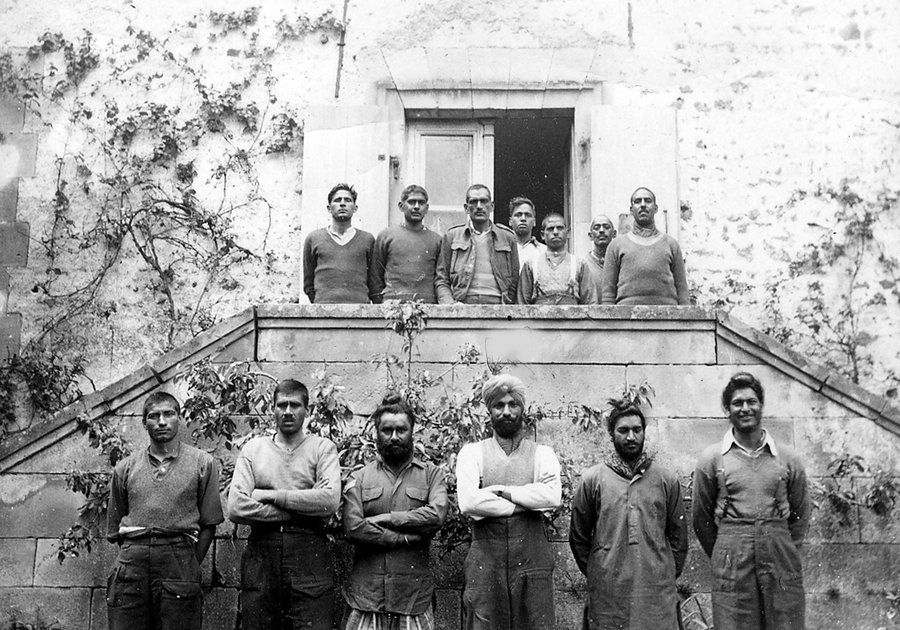
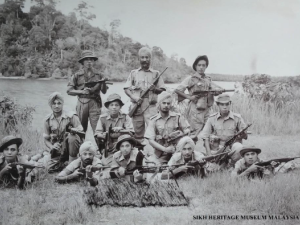
Some of the Indian prisoners of war who escaped during the bombings of the Front-Stalag 315 Epinal at Etobon village, France.Photo courtesy of "Ceux d'Etobon,"Benjamin Valloton/Jules Perret
In occupied France during 1944-45, the villagers of Etobon and Chenebier demonstrated incredible courage and compassion in the face of adversity. With open hearts and generous spirits, they welcomed Indian prisoners of war who had bravely escaped from their captors, providing them with food, shelter, clothing, and protection. These humble individuals, often overlooked, made profound sacrifices not only for their own nation but also for their allies. Their actions are a testament to the enduring spirit of selflessness and heroism that flourished even in the darkest of times.
These are inspiring stories of courageous individuals who, against all odds, managed to escape from captivity during World War II. The human spirit's desire for freedom is a powerful force, and the instinct to break free represents one of humanity's fundamental challenges. Overcoming this challenge is one of our greatest victories.
I hope that one day, there will be a movie based on these stories.