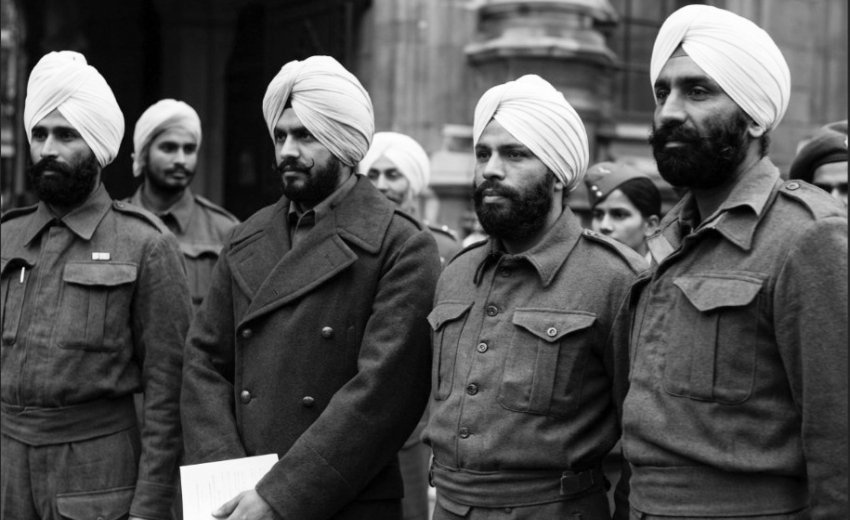

Heroes in the French Resistance and Italian Partisan Brigade
Discover the captivating stories of Indian prisoners of war who turned their captivity into a rallying cry for freedom. Amid the turmoil of World War II, these brave individuals found a new purpose by aligning with the French Resistance and the Italian Partisans. Their remarkable journey not only showcases their resilience and courage but also highlights a lesser-known chapter in history, where people from distant lands united against oppression.
Dive into the inspiring tales of camaraderie, bravery, and the unyielding spirit of those who fought for liberation on European soil!
Beyond the campaign of 1940, Indian soldiers captured by Axis forces earlier in the war, particularly in North Africa, were held as prisoners of war (POWs) in France and Italy. Some of these soldiers managed to escape and joined the French Resistance (Maquis) and the Italian Partisans in their efforts against Nazi occupation.
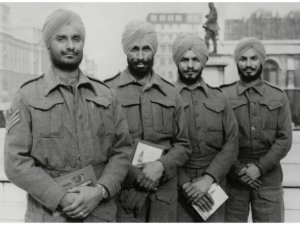
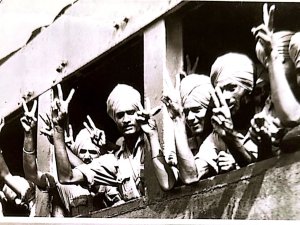
Most were from northwestern India, now part of Pakistan, including Sikhs, Muslims, and Hindus, all with dark skin. Sikhs, primarily from Punjab, wore turbans to cover their long hair and beards, which made them easy to identify.
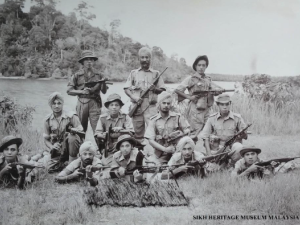
Drawing upon their military training, these soldiers integrated into resistance networks and executed sabotage and guerrilla operations. Their contributions added a multicultural dimension to the French and Italian Resistance, although precise numbers and specific actions remain inadequately documented in mainstream historical accounts.
In June 1942, amidst the chaos of El Alamein, Lance Naik Jai Lal of the Royal Indian Army Service Corps (R.I.A.S.C.) found himself captured and facing a daunting fate. With unwavering determination, he made a daring initial escape attempt, but his freedom was short-lived as he was quickly recaptured and sent to Tobruk. Undeterred, Jai Lal seized a second opportunity to break free while being transported in a German ambulance heading to a military hospital in Brindisi, Italy. Unfortunately, his plans were thwarted once again, and he found himself imprisoned in Avezzano and was later moved to Limburg and lastly to Epinal.
However, fate intervened when a bombing raid by the Royal Air Force struck the Front Stalag Epinal camp on 11 May 1944, creating just the opening Jai Lal had been waiting for. With a newfound sense of hope, he escaped yet again, this time finding refuge with kind-hearted French civilians in Bouligney.
Drawing upon his leadership skills, he proposed a bold plan: to form a resistance movement. It wasn't long before he garnered the support of two sons from a local family. Armed with a couple of rifles, a pistol, and ammunition from their generous neighbours, Jai Lal transformed himself into an Indian Army captain who had parachuted into the area.
This audacious endeavour marked the beginning of their resistance against the occupying German forces. By late May, Jai Lal and his newfound comrades executed a daring bombing operation that successfully destroyed a train by detonating explosives on a bridge at St. Loup. Their bold actions didn’t stop there; they captured three German tanks and took several German soldiers as prisoners, significantly bolstering their capabilities. The momentum of their military efforts attracted more recruits, and by June, their ranks swelled to 30 members. This growth led to further ambushes against German forces, enhancing their supplies and strength.
As the resistance grew, a French captain joined their ranks, taking command of the operation and elevating their efforts against the Germans. Finally, in October 1944, Jai Lal arrived in Paris, where he reported back to British headquarters, proud of the accomplishments and resilience of his resistance movement.
Another remarkable story unfolds in the midst of World War II around Havildar Gurdial Singh of the 4/11 Sikh Regiment. Captured at Benghazi in January 1942, Gurdial found himself shuffled through a series of grim POW camps, ultimately arriving at the notoriously harsh facility in Livorno by June 1943. The Germans attempted to force the prisoners into backbreaking labour at the docks, but Gurdial and his fellow POWs stood their ground with unwavering defiance.
The conditions they faced were deplorable, characterised by rampant illness and severe punishment for those who dared to voice their grievances—often met with brutal beatings and confinement. Gurdial was ordered to whip his comrades into compliance, but he boldly refused to carry out such commands, even when shots rang out around him. He insisted instead that their demands for better treatment be respected.
The turning point came when Gurdial and two brave companions, Sepoy Dara Singh from the 4/11 Sikh Regiment and Sepoy Jagir Singh from the 4/16 Punjab Regiment, seized a chance to escape during a march to Pontedera. With hope ignited and freedom in sight, the trio embarked on a perilous journey south, evading relentless pursuit from Italian police and Fascist forces determined to drag them back.
In January 1943, their luck shifted when they crossed paths with Captain Harrod, who was leading a small band of Partisans. Eager to fight for their freedom and honour, the three Sikhs joined Harrod’s unit for an action-packed five months, launching daring raids against both German and Italian Republican troops. Their audacity and tenacity didn't go unnoticed; Gurdial’s exceptional leadership during these operations earned him a promotion to Second-in-Command. Ultimately, their relentless spirit and bravery led them to make contact with American forces, bringing them a step closer to liberation and victory.
The stories of L/Nk Amar Singh, R.I.A.S.C., L/Nk Parkash Singh, R.I.A.S.C., Sowar Indar Singh from 11 P.A.V.O., and Sepoy Hardip Singh of the 4/16 Punjab Regiment are nothing short of heroic. Born in a time of chaos, these soldiers found themselves captured during critical moments in history—L/Nk Amar Singh, L/Nk Parkash Singh, and Sowar Indar Singh in April 1941 at El Mecheli, while Sepoy Hardip Singh was taken prisoner in January 1942 at Benghazi. Despite being torn away from their families, these men displayed remarkable strength, facing the uncertainty of their futures in various prisoner-of-war camps across Italy.
What sets their journey apart is their indomitable spirit. When the Italian Armistice provided a glimmer of hope, they seized the moment, escaping into the surrounding hills with courage and determination. But they didn’t just think of their own freedom; they chose to stand shoulder to shoulder with the brave Italian partisans. Their solidarity in the face of adversity was nothing short of inspiring.
As they participated in acts of resistance, they showcased not just their fighting spirit but also their commitment to a cause greater than themselves. By July 1944, they rejoined the advancing forces, but their journey was defined by loyalty and courage. Their incredible resilience, compassion, and unwavering dedication serve as a powerful reminder of the human spirit’s ability to triumph, even in the darkest of times.