
Compassion, Ecology, and Moral Courage: Contemporary Insights from Guru Har Rai Ji
Guru Har Rai Ji, the seventh Sikh Guru, offers a profound model of ethical and spiritual leadership that remains deeply relevant to contemporary life. Living during a period of political conflict and social instability, Guru Har Rai Ji embodied a unique synthesis of strength and compassion, demonstrating that true power arises from moral integrity rather than coercion. This article explores five key lessons from his life and legacy: compassion as a form of strength, environmental responsibility as a spiritual obligation, moral courage without hatred, holistic healing of body and mind, and leadership rooted in humility and service. Through historical examples and philosophical reflection, the article shows how Guru Har Rai Ji’s teachings address modern challenges, including environmental degradation, mental health crises, ethical compromise, and ego-driven leadership. By revisiting his gentle yet principled approach, the study highlights how Sikh wisdom offers practical guidance for fostering sustainable living, compassionate leadership, and inner balance in an increasingly fragmented and high-pressure world.
Introduction
Guru Har Rai Ji (1630–1661), the seventh Guru of the Sikh tradition, occupies a unique place in Sikh history as a spiritual leader who harmonized strength with gentleness, authority with humility, and faith with compassion. Living during a period of intense political intrigue and growing Mughal intolerance, Guru Har Rai Ji upheld the sovereign moral vision of Sikhism without resorting to violence or coercion. His life demonstrates how spiritual leadership can remain firmly grounded in ethical principles while engaging constructively with the world.
Guru Har Rai Ji inherited the legacy of the saint-soldier ideal from Guru Hargobind Sahib Ji, yet he expressed it through healing, environmental stewardship, and moral restraint. He emphasized care for nature, service to the sick, and unwavering adherence to truth. Though his Guruship (644-1661) was relatively short, his teachings carry enduring relevance, particularly in a modern world struggling with ecological degradation, mental health crises, ethical leadership failures, and social polarization.
The life and legacy of Guru Har Rai Ji offer practical wisdom for contemporary society. His teachings are not confined to a historical or religious context but speak universally to humanity. The following five lessons: compassionate power, environmental responsibility, moral courage, holistic healing, and humble leadership, provide a meaningful framework for ethical and balanced living in modern times.
1. Compassion is True Power
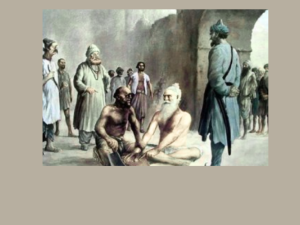
Guru Har Rai Ji embodied a profound understanding of power rooted in compassion rather than domination. Although he maintained a trained Sikh force to protect the community, he never employed it for conquest or political ambition. His strength was expressed through mercy, restraint, and service. A notable example of this compassionate power was his decision to send rare medicinal herbs to heal the Mughal prince Dara Shikoh, despite the empire’s hostility toward the Sikhs. This act demonstrated that compassion transcends political boundaries and personal grievances.
For Guru Har Rai Ji, power was not about asserting superiority but about alleviating suffering. His authority flowed naturally from moral integrity and empathy. He taught that fear-based control ultimately weakens society, while compassion strengthens social bonds and nurtures trust.
In the modern world, where power is often equated with wealth, influence, or coercive control, Guru Har Rai Ji’s life presents an alternative vision. Compassionate leadership, whether in governance, organizations, or families, creates environments of cooperation, resilience, and dignity. The lesson is clear: true power lies in the ability to protect, heal, and uplift others without violence or ego. Such power builds lasting harmony rather than temporary dominance.
2. Environmental Responsibility is a Spiritual Duty
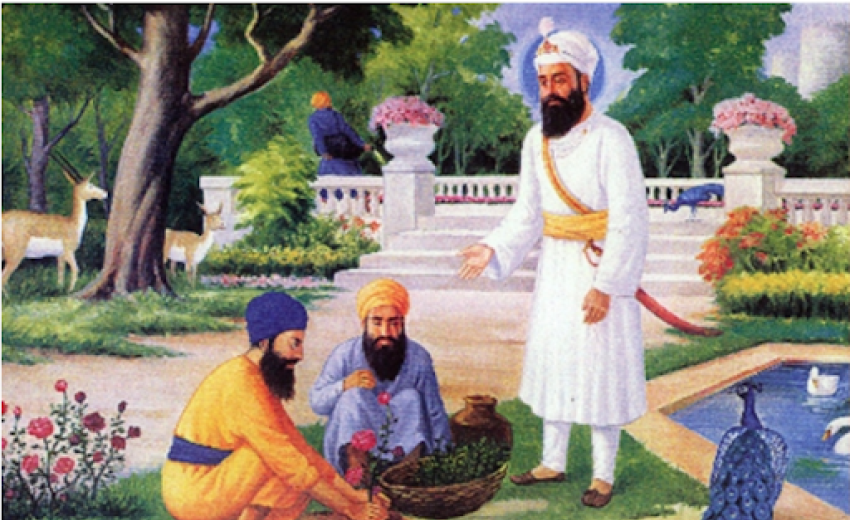
Guru Har Rai Ji demonstrated deep ecological awareness long before environmental ethics became a global concern. He maintained large gardens, herbal sanctuaries, and animal care centers, reflecting his belief that nature is a sacred manifestation of the Divine. He is remembered for walking with extreme care, conscious not to harm plants or living beings, and teaching Sikhs to live gently upon the Earth.
In Sikh philosophy, nature is not separate from spirituality; it is imbued with divine presence. Guru Har Rai Ji embodied this worldview by integrating environmental stewardship into daily spiritual practice. His care for medicinal plants also emphasized sustainability and respect for biodiversity.
Today’s world faces climate change, deforestation, pollution, and mass extinction driven by unchecked consumption. Guru Har Rai Ji’s life reframes environmental responsibility as a moral and spiritual obligation rather than a political choice. Protecting ecosystems, conserving resources, and respecting animal life are expressions of humility before creation.
This lesson encourages modern individuals and institutions to adopt sustainable lifestyles and policies rooted in reverence rather than exploitation. Environmental care, as taught by Guru Har Rai Ji, is not merely about survival; it is about honouring the sacred interconnectedness of all life.
3. Moral Courage Without Hatred
Guru Har Rai Ji exemplified moral courage guided by wisdom and restraint. During a time of increasing Mughal authoritarianism under Emperor Aurangzeb, he refused to compromise Sikh principles or distort Gurbani for political convenience. When his son Ram Rai altered the interpretation of a verse from Guru Granth Sahib to appease the Mughal court, Guru Har Rai Ji disowned him from succession, demonstrating that truth could not be sacrificed for power or favour.
Yet, his resistance was never fueled by hatred or revenge. He did not incite rebellion, nor did he foster hostility toward the state. Instead, he upheld truth with calm firmness, showing that ethical resistance need not become aggressive or destructive.
In contemporary society, individuals often face pressure to conform, to manipulate the truth, or to remain silent in the face of injustice. Guru Har Rai Ji’s example teaches that moral courage involves standing by one’s values with dignity and clarity, without dehumanizing others.
This lesson is especially relevant in an era of misinformation, polarization, and ideological extremism. Ethical integrity combined with emotional restraint allows individuals to challenge injustice constructively, preserving both truth and humanity.
4. Healing the Body and the Mind Together
Healing was central to Guru Har Rai Ji’s vision of seva, or selfless service. He promoted the use of natural medicine and maintained herbal dispensaries to treat the sick, regardless of social or religious background. His approach to healing was holistic, recognizing the interconnection between body, mind, and spirit.
Guru Har Rai Ji understood that physical illness often reflects deeper imbalances in lifestyle, emotional well-being, and spiritual awareness. By fostering environments of care, calmness, and compassion, he addressed the root causes of suffering rather than merely its symptoms.
In the modern era, healthcare systems often focus narrowly on treatment while neglecting mental health, preventive care, and emotional support. Guru Har Rai Ji’s model encourages an integrated approach that values empathy, community support, and harmony with nature alongside medical science.
With rising levels of stress, anxiety, and burnout, his teachings remind us that healing is not solely clinical; it is relational and spiritual. True well-being emerges when individuals are nurtured physically, emotionally, socially, and spiritually, creating balance within themselves and society.
5. Leadership Rooted in Humility and Service
Guru Har Rai Ji’s leadership was marked by humility, simplicity, and devotion to service. Despite his spiritual authority, he lived modestly and avoided personal glorification. His decisions consistently reflected accountability to Sikh principles rather than personal or political gain.
He viewed leadership as a responsibility rather than a privilege. By placing ethical conduct above dynastic loyalty, as seen in his rejection of Ram Rai, he reinforced that leadership must remain aligned with truth and collective well-being. His authority emerged from trust, not fear.
In today’s world, leadership is often driven by ego, visibility, and personal ambition. Guru Har Rai Ji offers a contrasting paradigm of servant leadership, one that prioritizes the welfare of others, protects the vulnerable, and remains grounded in moral values.
This lesson applies across sectors, including politics, education, business, and community life. Leaders inspired by humility foster inclusive cultures, encourage collaboration, and build institutions that endure beyond individual personalities. Guru Har Rai Ji’s example reminds us that the most impactful leadership is quiet, ethical, and service-oriented.
Conclusion
The life and legacy of Guru Har Rai Ji offer a timeless moral compass for navigating the complexities of modern life. His teachings reveal that strength and gentleness are not opposites but complementary forces when guided by spiritual wisdom. In an age marked by environmental crises, ethical uncertainty, mental health challenges, and aggressive leadership models, Guru Har Rai Ji presents a vision of balanced, compassionate living.
By emphasizing compassion as true power, he challenges contemporary notions of dominance and control. His deep reverence for nature elevates environmental care from activism to sacred duty. His moral courage demonstrates that truth can be upheld firmly without hatred or violence. His holistic approach to healing anticipates modern integrative health models, while his humility-based leadership offers a corrective to ego-driven authority.
Guru Har Rai Ji’s life was not centered on spectacle or conquest but on quiet transformation of individuals, communities, and values. His legacy encourages modern society to reimagine progress not merely in technological or economic terms, but in ethical and spiritual growth.
By integrating these lessons into personal conduct, institutional frameworks, and global discourse, humanity can move toward a more just, sustainable, and compassionate future. Guru Har Rai Ji reminds us that lasting change begins with inner discipline, reverence for life, and unwavering commitment to truth. His message remains a gentle yet powerful guide for building a world rooted in harmony, dignity, and service.