
2026 Women of Faith Conference on “Pride in Place”
University of Birmingham Women of Faith Summit Elicits a Call to Action in an Effort to Halt Hate Crimes, Reduce Escalating Social Divisions, and Ease Deprivations
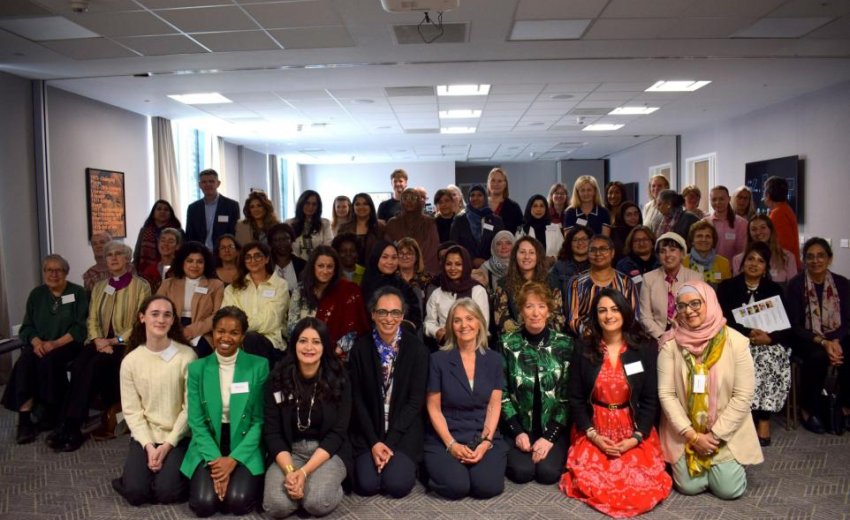
Professor Jagbir Jutti-Johal OBE, hosted a delegation of women of faith from across the UK, who convened to confront the many challenges faced by their communities. Nearly 100 women delegates representing Christian, Muslim, Jewish, Hindu, Sikh, and Bahá’í, faith-based leadership, met with academics, community organizers, and government officials in late May of 2026.
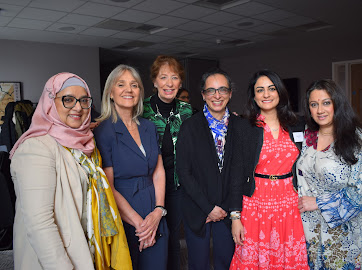
Speaker Dame Sarah Healey, Permanent Secretary at the Ministry of Housing, Communities and Local Government addressed the delegate as a representative of the “Pride in Place Programme”, a UK government initiative to promote trust in local communities by offering up to £5.8 billion to hundreds of locations, over a span of 10 years. Each area is eligible for up to £20 million to put towards improving their communities. Areas of allotment include:
- Analyzing the impact of community pride.
- Assessing community needs and aspirations.
- Cleaning up streets and abandoned buildings.
- Creating communal greenspaces, parks, play areas, and public art.
- Developing metrics to measure community engagement and satisfaction.
- Engaging local businesses, schools, and residents, for collaborative input.
- Evaluating existing programs effectiveness in promoting pride.
- Identifying successful initiatives in similar regions.
Rt Reverand, Dr Jane Steen, Bishop of Lynn spoke, highlighting the challenges that rural farming communities face with isolation, and deprivation, and the resulting suicide, while stressing the vital role of women as the “bedrock” in the foundation of communal rural life.
Delegate panels examined the difficulties confronting interfaith relationships faced with increasingly polarized social issues, mistrust, and division, along with the efforts of faith-based women in leadership roles to countermand the resulting loneliness, and the conditions brought about by poverty.
Reflecting on two recent tragedies, Joy Madeiros, Global CEO of Oasis Educational Trust and a founding member of the Women’s Faith Forum, commemorated the victims of recent hate crimes, recalling the brutal antisemitic attack on a young Jewish man in Golders Green, and the fatal shooting of Muslim worshippers at a mosque in San Diego CA. Both episodes occurred in the 48 hours preceding the summit.
Delegates stressed the vital importance of human connections amongst divided communities. Individual connection is a sentiment which cannot be adequately conveyed when delivered in an email, but requires personal attention, intention, and intervention.
Sajna Ali of Darlington pondered the importance of identifying with and having a sense of belonging in the modern society of Britain, saying “There are many ways to be British – for me it’s snooker, football, a halal pie, and a pint of orange juice.”
Laura Marks CBE, a co-founder of the Women’s Faith Forum, remarked on the role of women of faith, how they hold communities together against a tide or rising hate crime and social division, “They are trusted voices, bridge-builders, and problem-solvers – yet too often excluded from decision-making.” She stressed that a government which hopes to create real change while communities face continuous pressure, “must work in genuine partnership with faith groups and ensure women’s voices are heard.” Women closely connected to their communities are aware of who is most vulnerable and at risk, they know who is hungry, and who feels isolated or lonely.
Organizer, Professor Jagbir Jhutti-Johal OBE, a co-founder of the Women’s Faith Forum observed the important role of faith-based institutes. “In every region of the country, faith organizations provide trusted spaces — leadership, volunteering networks, social action, wellbeing support, food provision, youth engagement, social prescribing, interfaith dialogue, and community care. And they have demonstrated repeatedly that they can mobilize quickly and effectively in times of challenge. Today showcases some great examples of that work.” She stressed the importance of connection, where policy is based on local experience.
More on Practicalities of the Pride in Place Programme from Professor Jagbir Jhutti-Johal OBE
Sikhnet posed a couple of questions to Professor Jagbir Jhutti-Johal (J J-J) concerning the practicalities of transitioning from the talking and planning phases to the doing phase.
- How does conversation with policy translate to action that impacts a community?
J J-J: “When I read about the Pride in Place Programme and the areas that have received funding, it is clear to me that turning policy conversation into meaningful community impact depends on how far it is grounded in the lived experience, relationships and leadership already present within communities.
No single organisation, sector or institution can rebuild communities alone. Local government, civil society, health services, faith groups, education providers, charities, businesses and residents all have a role to play. But meaningful partnership only works when communities are not treated as an afterthought and when people are genuinely involved in shaping the future of their neighbourhoods. This means actively listening to voices that are too often overlooked, particularly women of faith, grassroots women leaders, and communities whose contributions are frequently invisible despite their impact.
Much of the work that sustains communities happens quietly but consistently. Women are organising support networks, running food and wellbeing initiatives, caring for families and neighbours, leading local projects and interfaith work, and creating spaces of safety, dignity and belonging. Yet these contributions are often under-recognised in formal policy spaces. If Pride in Place is to succeed, it must bring this leadership into the centre of decision-making.
Policy only becomes action when it is shaped and delivered in partnership with those already doing the work on the ground. Women’s organisations and faith communities must therefore be engaged as equal partners throughout the process, not only as consultees, but as active contributors within Pride in Place boards, governance structures and local delivery partnerships. This ensures programmes build on existing community strengths rather than duplicating or replacing them.
In practical terms, women of faith should have a place in every phase of Pride in Place, from planning and decision-making through to delivery, evaluation and long-term sustainability. Their involvement helps will ensure that policy translates into approaches that are trusted, realistic and responsive to local need.
There is a strong focus on regeneration in the programme but regeneration is not only about buildings or infrastructure. It is about people, relationships, identity, participation and belonging, and ensuring communities feel ownership over the future of the places where they live.
Women of faith often act as bridge-builders across communities, cultures and generations. They strengthen trust, support civic participation, provide informal but essential support networks and create spaces where people feel heard, included and valued. This makes their insight critical in shaping how policy is experienced in practice.
If we are serious about building stronger neighbourhoods and delivering the ambitions of programmes like Pride in Place and “Protecting What Matters”, then women of faith, faith communities and grassroots organisations must be recognised as key partners, not just consulted occasionally, but meaningfully involved in shaping priorities, strengthening cohesion, supporting wellbeing and delivering solutions.
The challenge now is how these conversations translate into action: how we build stronger partnerships, ensure local voices are heard, and create space for women from these communities to shape the future of their neighbourhoods.
These are not small questions, but this conference has shown there is both the experience and commitment to find answers together. The opportunity now is to ensure policy connects more closely with lived experience, especially women’s, and that communities are recognised not as problems to solve, but as partners with strengths, ideas and leadership to build strong, thriving places.”
- Will Women of Faith have a place during every phase from planning through completion?
J J-J: “The Pride in Place funding is being directed to a wide range of neighbourhoods across the UK, rather than whole towns or cities, with over 250 communities identified nationally. These are areas selected on the basis of need, particularly where there are higher levels of deprivation and weaker social infrastructure. Funding is being allocated at neighbourhood level, meaning specific estates and localities within larger local authority areas are supported, including parts of Stoke-on-Trent, Newcastle, Hull, and other towns and cities across England, Scotland and Wales. For example, in Birmingham the areas receiving funding include Hawkesley, Druids Heath, Glebe Farm, Kingstanding South East, Woodgate, Sparkbrook North, Fox Hollies, Nechells, and Handsworth West. This approach is intended to ensure investment is targeted where it can have the greatest impact on strengthening local pride, improving social cohesion and supporting long-term community resilience.
When I look at these areas, I know many women of faith and women-led organisations already doing vital work, building connection, supporting vulnerable families, tackling deprivation, reducing isolation and creating hope in their communities. With this in mind, I hope that women, especially women of faith, will be represented on Pride in Place Boards and fully included throughout every phase of the programme in the areas receiving funding, from planning and decision-making through to delivery, evaluation and completion. Conversation with policy only translates into meaningful action when communities are not simply consulted, but actively involved in shaping, delivering and sustaining the solutions that affect them.
Social cohesion and thriving communities cannot be created through policy alone. They are built through trusted relationships, shared responsibility, long-term investment and the lived experience of those already working at grassroots level. This is where women’s organisations, women of faith and wider faith communities are already making a significant contribution.
Every day, women-led and faith-based organisations strengthen communities through grassroots leadership, volunteering, family support, youth engagement, neighbourhood networks and community initiatives that build resilience, belonging and social connection. These organisations are often deeply embedded within communities and trusted by people who may not otherwise engage with statutory services or formal programmes, giving them vital insight into local needs, barriers and opportunities.
Yet too often, women’s organisations are delivering this work without adequate core funding or infrastructure support. If their impact is to be sustained and scaled, they must be properly resourced through Pride in Place funding.
Without their involvement, there is a real risk that policy becomes disconnected from lived experience and fails to deliver sustainable impact. Pride in Place has an opportunity to avoid this by recognising and building on existing community capacity, rather than creating parallel structures or reinventing the wheel.
This approach is consistent with the Government’s “Protecting What Matters” framework, which emphasises the importance of building confident, cohesive and resilient communities that can respond to local challenges, strengthen trust and foster belonging. If those ambitions are to be realised, engagement must go beyond traditional gatekeepers and include the women who are already sustaining community life through practical action, trusted relationships and local leadership.
It is clear to me, and to many of the women I have spoken with, that women of faith and women-led organisations must not only be consulted, but engaged as equal partners throughout the entire Pride in Place programme and represented on the PiP Boards if we are to ensure that the aims of the programme are met.”
Women’s Faith Forum
The Women's Faith Forum, founded just 6 years ago, brings women of diverse faith-based backgrounds together to support and strengthen social connections, to practice tolerance, while tackling prejudice in communities which face increasing pressures and widening division. Various faiths represented within the Women’s Faith Forum include:
- Christianity
- Islam
- Judaism
- Hinduism
- Buddhism
- Sikhism
- Bahá'í Faith
- Jainism
- Indigenous Spiritualities
- Unitarian Universalism