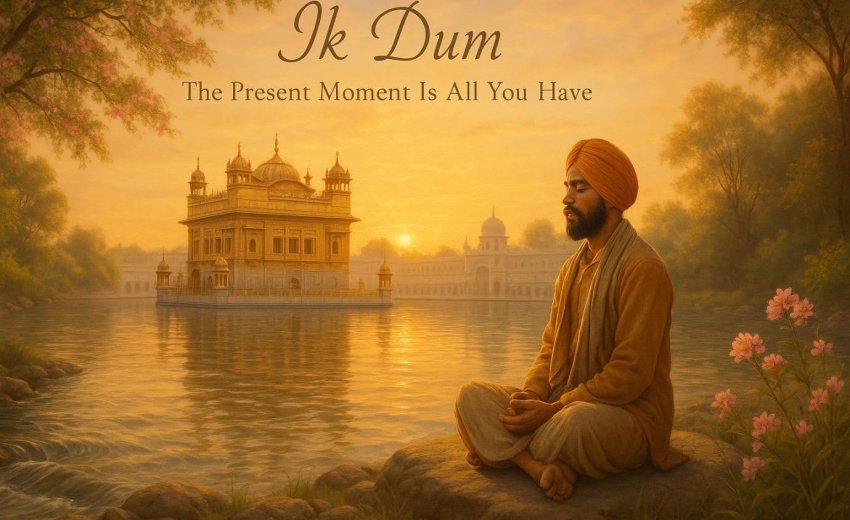

HOW GURU NANAK'S REVOLUTIONARY TEACHING ANTICIPATED MODERN MINDFULNESS
ਹਮ ਆਦਮੀ ਹਾਂ ਇਕ ਦਮੀ ਮੁਹਲਤਿ ਮੁਹਤੁ ਨ ਜਾਣਾ ॥
Ham Aadhamee Haan Eik Dhamee Muhalath Muhath N Jaanaa ||
We, humans, are beings of the One (present) Moment, unaware of the time
of our departure.
ਧਨਾਸਰੀ (ਮਃ ੧) (੨) ੧:੧ - ਗੁਰੂ ਗ੍ਰੰਥ ਸਾਹਿਬ : ਅੰਗ ੬੬੦ ਪੰ. ੧੧
ਨਾਨਕੁ ਬਿਨਵੈ ਤਿਸੈ ਸਰੇਵਹੁ ਜਾ ਕੇ ਜੀਅ ਪਰਾਣਾ ॥੧॥
Naanak Binavai Thisai Saraevahu Jaa Kae Jeea Paraanaa ||1||
Prays Nanak, serve the One, to whom our soul and breath of life belong. ||1||
ਧਨਾਸਰੀ (ਮਃ ੧) (੨) ੧:੨ - ਗੁਰੂ ਗ੍ਰੰਥ ਸਾਹਿਬ : ਅੰਗ ੬੬੦ ਪੰ. ੧੧
Five centuries before "mindfulness" and “now” became buzzwords in Western spirituality, a quiet revolution was already unfolding in the dust of 15th-century Punjab. Guru Nanak Dev Ji wasn’t interested in the death-obsessed rituals of his time. He didn’t care for the spiritual "somewhere else." His teaching was a sharp, sudden pivot toward the here and now—a vision so immediate it still feels slightly dangerous to our restless, future-fixated world.
While the traditions around him were busy prepping for the afterlife, Guru Nanak was pointing at the dirt beneath his feet. Sikhi, for him, wasn't an escape; it was a return. He spoke of the "accepted" seeker as someone simply awake to the present—not passively resigned but actively participating in the unfolding moment with a kind of quiet, grounded gratitude. It’s the difference between drifting through life and actually meeting it as it arrives.
We live, he reminded us, one breath (ik dum) at a time. Nothing is promised beyond the next inhale.
He called it Saas Saas—becoming aware of each breath, not just as a biological function, but as an anchor. Modern neuroscience likes to talk about the "monkey mind" looping through memory and leaping into anxiety, but the enlightened Guru saw the same machinery 500 years ago. He didn't suggest we go to war with our thoughts or try to silence them. He just asked us to see them for what they are: ghosts. He recognized that the present isn't just one moment among many—it’s the only place life actually happens.
The word Guru Sahib chose was: Hukam. It’s often translated as "Divine Will," but in the context of presence, it’s more like the natural flow of things—the gravity of reality. To live in the now is to stop arguing with that flow. Resistance tightens the mind; acceptance opens it. When you stop fighting the moment, life stops being something you have to control and starts being something you move with.
What makes Guru Nanak’s "mindfulness" so gritty and relevant is that he didn't find it in a mountain cave. He found it in the kitchen, in the fields, in the marketplace. He didn't ask anyone to leave the world to find the truth; he asked them to step more fully into it.
In the current age of infinite distraction, his insight is most relevant. When we leave the present, we leave life itself. Everything else is just smoke—memories on one side, imagination on the other. Guru Nanak’s gift isn't complexity; it’s amazing clarity. He pointed to the obvious truth we keep overlooking because it's right in front of us: this moment is all we ever have. And it is enough.