
Voices of Shabad: An Introduction by GAAVANI
In honor of the 350th commemorative year of Guru Tegh Bahadur, this special essay series on SikhNet is organized by GAAVANI. The collection brings together the voices of Sikh women from across the community, each reflecting on her personal journey with Sikh spirituality and the living presence of the Guru’s Shabad in everyday life.
Through these essays, the writers share how Gurbani becomes more than something to revere from a distance, it becomes a companion, guide, and source of wisdom in modern life.
Beginning on International Women's Day (March 8), one essay will be released every two days, inviting the Sangat to reflect on a living relationship with the Guru’s Shabad.
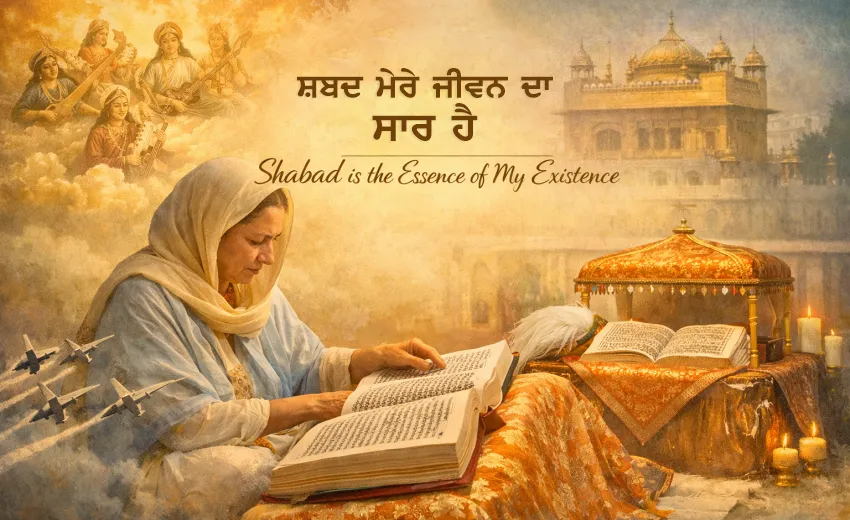
Shabad is the Essence of my Existence
Beyond the Palki & Rumaalay
Shabad has been the essence of my existence from the instant I first heard Gurbani kirtan sung in 1978. I had been invited to “Do Sadhana” at an ashram. When the yoga ended and singing began, I read an English interpretation of the words:
ਰਾਗ ਰਤਨ ਪਰਵਾਰ ਪਰੀਆ ਸਬਦ ਗਾਵਣ ਆਈਆ ॥
raag ratan parvaar pareeaa sabad gaavan aaeeaa ||
Through the gem like measures and their families,
the celestial fairies have come to hymn the Guru’s word.
I thought to myself, “This is not yoga, this is religion!” and decided to go for it then and there. Around that time, I had been invited to a home and found a small book titled “Peace Lagoon” (English rendition of Nitnem). I picked it up and read it from cover to cover. Not long after I went to The Pilgrims Way, a tiny hidden book store scented with incense and looked for anything that related to Sikh. I found a treasure titled, “The Sacred Writings of the Sikhs.” Alone in my little cabin at the top of the world, I would make up tunes and sing some of its verses translated to English:
“As Water is precious to the traveler in Marwar,
As the hungry camel yearns for the creeper,
As the wild deer at night Hearken enrapt to the hunter’s bell,
So is God the object of the yearning of my soul.”
I had been told that “Waheguru” is like the energy of a jet plane. One day five jets flew past my window that over looked the hills to the sea. I wrote the verse,
“God’s name flies by on five jet planes.”
About 1980, I obtained a harmonium and began to learn simple shabads like:
“ਇਕੁ ਉਤਮ ਪੰਥੁ ਸੁਨਿਓ ਗੁਰ ਸੰਗਤਿ ਤਿਹ ਮਿਲੰਤ ਜਮ ਤ੍ਰਾਸ ਮਿਟਾਈ ॥
ik utam panth sunio gur sangat teh milant jam traas mittaiee ||
I have heard that the most exalted Path is Guru's Congregation. Joining it, the fear of death is shed.”
I bought four English volumes of Guru Granth Sahib translated by Dr Gopal Singh from the Bodhi Tree book store. Later I purchased a shoji screen and partitioned a section of a room where I could read. I then acquired the eight volumes steek of Manmohan Singh, which conveniently matches English words to Gurbani by number.
I slowly, slowly, painstakingly learned to read Gurmukhi, using homemade flash cards. When we got our first computer I spent days making a matching game of Gurmukhi alphabet pixel by pixel, which my boys deleted after only two weeks “to make more memory.” I did not give up! I continued to learn from reading “shabad sheets”.
We built a house and framed the Baba Ji’s room on Baisakhi Day 1990. Our first “all night kirtan” we had just a handful of sangat, one of them Bhai Sahib Bhai Jiwan Singh of Akhand Kirtan Jetha. We began going to kirtan, rainsabahee, and Gurmat camps in the new gurdwaras being built in the Bay Area. In the winter of 1993, we received Amrit at one of the camps.
Shortly after, the late Jagjit Kaur gifted me Laridar Saroop of Guru Granth Sahib. For the next eight years we housed various Sikh sangat from Punjab and attended Akhand Kirtan nearly every weekend. During that time, I received one on one reading lessons. I would read aloud for half an hour from various bani and be corrected on each and every mistake in pronunciation. My teacher instructed me to begin reading sahaj paath.
Our small local sangat began reading sahej paath together. We read daily for eight years. Eventually I became fluent reading, though much slower than someone who learned from the cradle. Sangat gifted me many books about Sikhi, and I also acquired translations of Guru Granth Sahib by Pritam Singh Chahal, and Gurbachan Singh Talib.
Though I loved kirtan immensely, eventually I began to hear my mistakes so gave it up as I had no teacher. I shifted my focus to writing on Sikh topics and reading Sahej Paath.
I am currently involved in reading Laridar Sahej paath at home, and three others paaths from Sikhi to the Max app in WhatsApp groups. I structure my life around these and listening to shabads and banis from YouTube videos. I have lost my closest sangat to death, but am never alone with Shabad which keeps me supported whatever happens. Shabad is literally the essence of my existence