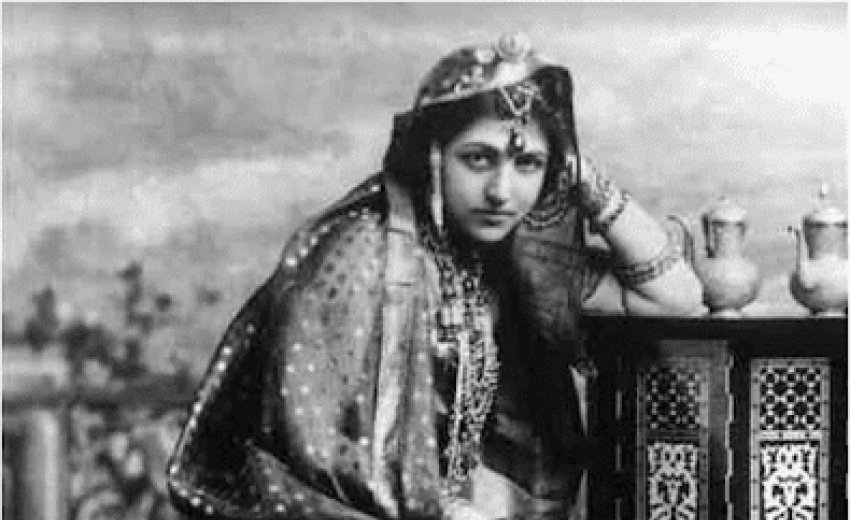

The Last Torchbearer of the Legacy of Maharaja Ranjit Singh.
Co Authors: Hardev Singh Virk and KDS Sindhu
This paper describes the story of the enigmatic Sikh princess, Bamba Duleep Singh, who was a rebel by nature and preferred to live in Lahore (instead of London), the capitol of Khalsa Raj of Maharaja Ranjit Singh, her grandfather. She was longest living offspring of Maharaja Duleep Singh, who was deported to England and converted to Christianity. Authors discuss his marriage to Bamba Muller, life and legacy of Princess Bamba, and her contribution to building a museum of rare artifacts of Darbar-e-Khalsa in Lahore Fort.
The Maharaja and an Egyptian Damsel: An Unexpected Union
Maharaja Duleep Singh, the youngest progeny of the indomitable Maharaja Ranjit Singh, has had an everlasting imprint on the annals of the Sikh history. His youth was entangled with the political designs of the British East India Company, culminating in the Punjab's annexation post the Second Anglo-Sikh War of 1849. Stripped from his cultural tapestry and coerced into Christianity, the British took him under their tutelage. His destiny intersected with Bamba Müller's—an exotic damsel— in Cairo, while he was enroute from India post his mother's ash immersion. This lady, sired by Ludwig Müller, a German banker, and Sofia, of Abyssinian (Ethiopian) descent, would soon adorn the title of his wife. Their intertwining fates became an emblem of history's unforeseen trajectories.
The English authority which ruled over Cairo did not recognize Jewish marriages. Duleep brought Bamba back to England as his wife as he was deeply impressed by her piety, beauty, and reserve. Queen Victoria had unsuccessfully tried to persuade Duleep to marry a princess of Coorg (known as Kodagu in present day Karnatka), a Christian convert, who was kidnapped from India in the same way as Duleep Singh. Duleep Singh and son of Queen Victoria, future King Edward were best friends. Both enjoyed hunting and dinning parties. Princess Bamba was a great favourite of King Edward who was a frequent visitor to their home, Elveden Hall. When Bamba and her siblings became orphans, King Edward arranged for their life support and education in London through Arthur Oliphant, whose father was Duleep’s trusted and loyal equerry. Bamba was intelligent as a student. She joined Somerville College, Oxford and then went to the United States to study at Northwestern University Woman's Medical School in Chicago. She completed three years of medical education with distinction till the university closed the school for the reasons unknown. Bamba opted to return to Lahore, instead of living in London.
Born on a crisp September day in 1869 in London, Princess Bamba made her entrance as the eldest daughter of Maharaja Duleep Singh. Christened Bamba Sofia Jindan Daleep Singh, her name was a testament to both her maternal and paternal roots, embodying a bridge between the old and the new. Among several siblings, Bamba held a unique position. As time unfurled, while her siblings assimilated into the English nobility, Bamba, the elder sentinel, outlived them all. Sophia, her sister, often steals the limelight for her fierce activism in the British suffragette movement. Yet, Bamba's bearing, reflecting the intricate weave of their Sikh ancestry against the backdrop of a transforming Indian subcontinent, remains an understated chapter.
A Life Divided Between Two Worlds
Upon her decision to venture to India, Princess Bamba felt the need for a dependable female confidante and caretaker, prompting her to place an advertisement in a newspaper. Responding amongst a flurry of interested candidates was Marie Antoinette, a Hungarian aristocrat with formal training in music and opera. Their mutual journey wove their fates together, alternating between Lahore and Simla, the British Raj's summer haven. Through Bamba's intervention, Marie and Umrao Singh Shergill— a Jat Sikh aristocrat— crossed paths, a meeting that quickly culminated in marriage. They subsequently settled in Budapest, where, in 1913, they welcomed their daughter, Amrita Shergill, destined to become one of India's pioneering artists.
Meanwhile, Princess Bamba felt a continual pull to her ancestral lands, frequently traveling between England and India. Bamba was a rebel who wanted to liberate India. It is a rumour that she wanted to settle in India after marriage with some Sikh prince of cis-Sutlej states or some scion of Sikh aristocracy related to her grandfather. But she failed in her mission as Sikh rulers and Sikh aristocracy were afraid of British ire if they married Princess Bamba, a rebel to the British Raj in India. Ultimately, she married Doctor DW Sutherland, Principal of King Edward College, Lahore in 1915. Dr. Sutherland moved to Scotland but Princess Bamba refused to leave Lahore citing love for the country of her ancestors. She was widowed in 1939 in Lahore.
Legacy of Princess Bamba
Bamba Sutherland died on 10 March 1957, in Lahore, surrounded by her friends. She refused to leave Lahore despite partition in 1947 as she was against the division of the country into India and Pakistan. She was a revolutionary, a suffragette, and beloved to the Sikh community. Before her death, she visited East Punjab and met Master Tara Singh, the Akali leader. She also paid obeisance at Golden Temple, which was gilded by Maharaja Ranjit Singh, her grandfather.
Bamba Sutherland left a large quantity of important historical items to her secretary, Pir Karim Bakhsh Supra of Lahore, who gave them to the Pakistani government to be put on display publicly. The collection consists of eighteen paintings, fourteen watercolours, 22 paintings on ivory, and a number of photos and other articles. The collection was sold to the Pakistani government, and it is kept in Lahore Fort. During December 2024, Hardev Singh Virk Ji visited Princess Bamba Collection in Maharani Jinda Haveli of Lahore Fort. It has original paintings of Lahore Darbar of Maharaja Ranjit Singh, Duleep Singh and his mother, Maharani Jindan, as prize possessions.
‘Gulzaar’, the former residence of Princess Bamba Sutherland in Model Town, Lahore, has been demolished and sold, but Hardev Singh Virk made it a point to visit her tomb in “Gora Kabristan” (Christian cemetery) on Jail Road, Lahore. The tombstone reads: “Here lies in eternal peace The Princess Bamba Sutherland, the eldest daughter of Maharaja DALEEP SINGH and grand-daughter of Maharaja RANJIT SINGH of Lahore”. The Persian inscription on her gravestone translates to: “The difference between royalty and servility vanishes, the moment the writing of destiny is encountered.
If one opens the grave, None, would be able to discern rich from poor”
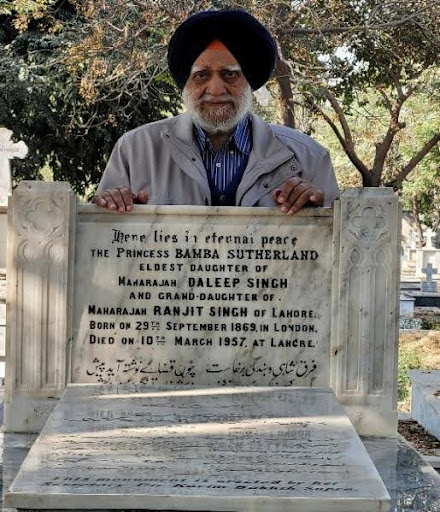
Prof. HS Virk at tombstone of Princess Bamba Sutherland, Christian Cemetery (Gora Qabristan), Lahore
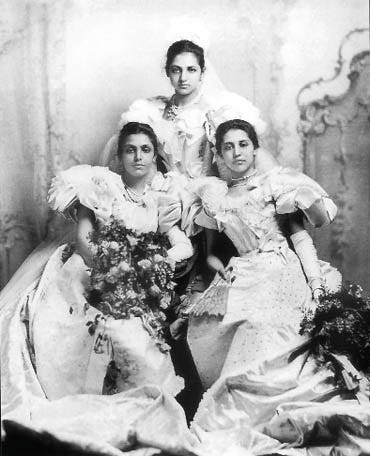
Princess Bamba on left, with her sisters, Catherine (center) and Sophia (1892)
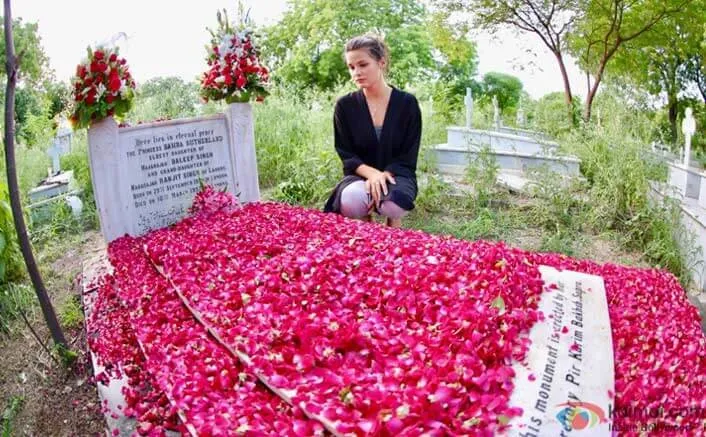
Tomb of Princess Bamba visited by the team of the movie “The Black Prince”, the biopic of Maharaja Duleep Singh(2017)
Bibliography
-
SIKHIWIKI: www.sikhiwiki.org
-
Singh Gurhapal, Sikhs in Britain: the making of a community. Darshan Singh Tatla. Zed Books, 2006, p. 274.
-
Princess Bamba Collection, Maharani Zinda Haveli, Shahi Qila, Lahore.
-
Virk Hardev Singh, Pakistan Da Safarnama, Rozana Spokesman, Chandigarh, Jan. 2025.