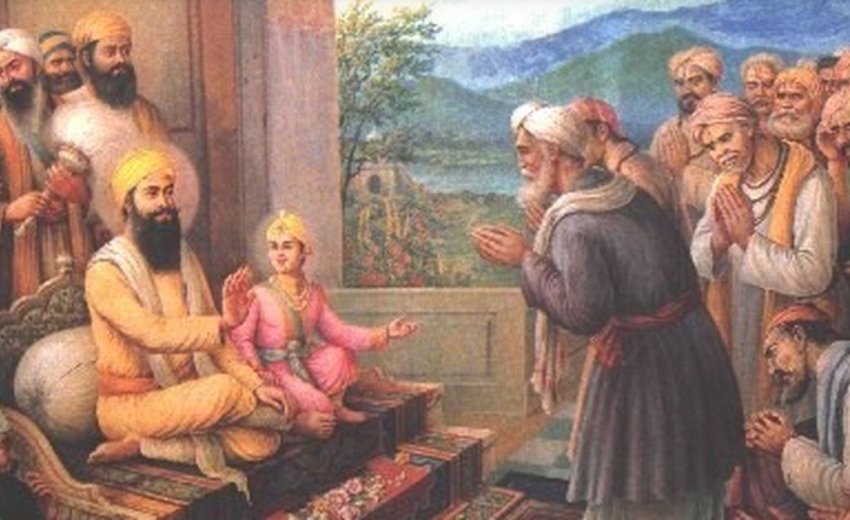

The martyrdom of Guru Tegh Bahadur Ji represents a profound milestone in the global history of religious freedom, standing as an unparalleled example of the Sikh commitment to protecting the rights of others to practice their faith without fear. In 17th-century Kashmir, under Mughal Emperor Aurangzeb’s oppressive religious policies, a delegation of Kashmiri Pandits, led by Bhai Kirpa Ram Dutt of Mattan, sought the Guru’s protection against forced conversions and persecution. Guru Tegh Bahadur’s response and ultimate martyrdom in 1675 CE not only defended the cultural and religious rights of Kashmiri Pandits but also inspired the founding of the Khalsa under Guru Gobind Singh Ji, signaling an era of resistance against tyranny. This paper examines Bhai Kirpa Singh Dutt’s role in this historical episode, the socio-political environment of Mughal India, and the spiritual resolve exemplified by Guru Tegh Bahadur Ji’s sacrifice, utilizing primary sources including Bhat Vahi, Guru Kian Sakhian, Bachittar Natak, and contemporary Sikh historiography.
The 17th century in India was marked by intense religious and political turmoil. Under Aurangzeb’s rule, the Mughal Empire adopted the policy of transforming India from Dar-ul-Harb to Dar-ul-Islam. This policy entailed forced religious conversions, the imposition of jizya tax, and the destruction of temples. Kashmir, in particular, became the focal point of these actions, being home to Pandits who were the representatives of India’s intellectual tradition. In 1669 CE, Aurangzeb issued orders across the country to demolish religious places and build mosques in their place while imposing jizya on non-Muslims. His objective was to weaken the economic, social, and religious structure of Hindu society, thereby forcing them to convert to Islam. The governor of Kashmir, Iftikhar Khan, tried to implement these orders using force and oppression (1).
The Pandits of Kashmir, who had been centers of Vedic and Sanskrit learning since ancient times, became a specific target of this policy of religious conversion. As they were regarded as intellectual leaders in society, it was believed that if the Pandits converted to Islam, the rest of the Hindus would also abandon their faith.
Aurangzeb presented his plan of converting India into Dar-ul-Islam before Guru Tegh Bahadur and sought his support for the mission. He argued that if the Guru embraced Islam, the Hindu leaders of Benares, Kurukshetra, Haridwar, and Kashmir would also accept Islam. He even offered Guru Ji high positions and rewards. Aurangzeb asked, “Why do you support the Brahmins when you do not even believe in the Varna Ashram?” Guru Ji replied that he stood for the defense of faith and freedom. This question initiated a profound dialogue between Guru Tegh Bahadur and Aurangzeb, which, according to tradition, was later destroyed by the authorities. This dialogue was between the tyrannical ruler and the unyielding, enlightened voice of a liberated prophet. Guru Ji explained that Guru Nanak Dev Ji had critiqued the pride and religious narrow-mindedness of the Brahmins, but he was never against their religious principles. Guru Nanak Dev Ji opposed hatred in the pursuit of human welfare and the realization of God, and was against any ideology that sought to destroy human freedom, for such an ideology could not be considered true religion (2).
Guru Ji clearly stated that he had come to Delhi to demonstrate a form of bravery the emperor had never witnessed before. Bhai Mati Das mentioned that at the age of fourteen, Guru Ji had already won battles against the Mughal armies. Understanding the transience of worldly pomp, Guru Ji chose martyrdom for the sake of religion and truth.
Aurangzeb’s new religious policy was considered dangerous. In this context, a delegation of 16 Brahmins (some sources mention 500), led by Kirpa Ram of Mattan, Kashmir, approached Guru Tegh Bahadur. Kirpa Ram understood the Sikh movement’s capacity to resist Mughal oppression. Aurangzeb viewed Guru Tegh Bahadur’s support for the idol-worshipping Brahmins as partiality, issuing a secret order for the Guru’s arrest. This order was sent to the Nawab of Sirhind, who then dispatched the Kotwal of Ropar, Mirza Nur Muhammad Khan, whose jurisdiction included Chak Nanaki. He awaited an opportunity.
Guru Tegh Bahadur appointed his son, Gobind Rai (born 18 December 1661), as the next Guru, and, along with his companions Bhai Mati Das, Bhai Sati Das, and Bhai Dayal Das, set out towards Delhi. On 12 July 1675, he was arrested at the village of Malikpur Rangharan, Pargana Ghanaula (3). They were sent to Sirhind, where they were kept for four months before being sent to Delhi on the orders of Aurangzeb, who was then at Hasan Abdal.
Bhai Kirpa Ram Dutt, a descendant of Brahm Das and a renowned scholar of Sanskrit, came to Guru Tegh Bahadur Ji along with his companions, seeking protection for their faith:
“With folded hands, Kirpa Ram said,
The Dutt Brahmin from Mattan village.
We have no strength left now,
O Guru Tegh Bahadur Rai!
O liberator who freed the elephant from chains,
You are the incarnation of Guru Nanak.
Just as you saved the honour of Draupadi,
You fulfilled Sudama’s wishes.” (4)
Guru Tegh Bahadur Ji decided to sacrifice his life to protect the freedom and religious rights of the Kashmiri Pandits. The most authentic source regarding Guru Tegh Bahadur Sahib is his own bani enshrined in Sri Guru Granth Sahib. In the context of this history, we can see the manglacharan written by Guru Gobind Singh Ji in the concluding portion of Ardas:
“Meditate upon Guru Tegh Bahadur,
And the nine treasures shall rush to your home.
He shall aid you everywhere.” (5)
In Bachittar Natak by Guru Gobind Singh Ji, after describing the unified spirit of the first eight Gurus, the martyrdom of the ninth Guru is described vividly:
“He protected the sacred thread and the tilak,
And performed a great act in this dark age.
For the sake of righteousness, he sacrificed himself,
Giving his head but not his resolve.
For the cause of faith, he created a stir,
Giving his head but not bowing to tyranny.
He shattered the pot of Delhi’s arrogance,
And departed to the abode of the Divine.
Tegh Bahadur’s unique act, no one else could perform,
His departure brought sorrow to the world,
While the heavens rejoiced.” (6)
Under the leadership of Bhai Kirpa Ram, this delegation reached Anandpur Sahib in 1675 CE. The Guru Kian Sakhian records this plea in detail:
“In Jeth Sudi Ekadashi, Samvat 1732, the congregations came to seek the Guru’s audience. On this day, Kirpa Ram, son of Aru Ram Dutt of Mattan, arrived with a group of Brahmins from Kashmir, pleading with the Guru: ‘O benefactor of the poor, the governor of Kashmir is forcibly converting us to Islam; please protect us. We have come to your court as we have no one else to turn to.’ Guru Ji consoled them, saying that Baba Nanak would aid them, and then looked towards the sky.
After a moment, looking back at the congregation, Guru Ji said: ‘This mission will not succeed without a head being offered. Previously, Guru Arjan gave his head; now, I must give mine.’ Saying this, Guru Ji entered deep meditation.” (7)
The Kashmiri Pandit delegation informed Guru Ji that the governor of Kashmir, Iftikhar Khan, was enforcing mass religious conversion. Hearing this, Guru Ji fell into deep contemplation. At that moment, young Gobind Rai asked about the matter, to which Guru Ji explained that the sacrifice of a great soul was required. Gobind Rai responded, “Father, who could be a greater sacrifice than you?” Hearing this, Guru Ji resolved to offer himself (Bhatt Vahi, Guru Kian Sakhian, Sakhi 28).
Guru Ji advised the Kashmiri Pandits to tell their rulers that if Guru Tegh Bahadur embraced Islam, they would also convert.
This information eventually reached Aurangzeb, who, through the governor of Lahore, issued the order for Guru Ji’s arrest. On 8 July 1675, Guru Ji passed the guruship to Guru Gobind Singh Ji and set out from Chak Mata Nanaki on 10-11 July. Near Ropar, at Malikpur Rangharan, Guru Ji was arrested on 12 July 1675 by Mirza Nur Muhammad and sent to the Faujdar of Sirhind, Dilawar Khan, where he was kept under house arrest for nearly four months (8).
Thus, Guru Ji’s martyrdom was solely for the defense of the universal right to religious freedom. Guru Tegh Bahadur Ji’s martyrdom strengthened the principle of religious freedom in India and instilled courage among the oppressed. Guru Gobind Singh Ji carried this resolve forward by founding the Khalsa Panth in 1699, signaling the breaking of societal and religious shackles. Later, Bhai Kirpa Ram received amrit and became Bhai Kirpa Singh Dutt, joining the Khalsa, and attained martyrdom in the Battle of Chamkaur.
Guru Sahib, along with his companions, was arrested and brought to Delhi. The Subedar of Delhi said to Guru Ji:
“We have three conditions for you; choose whichever you find acceptable:
- Display a miracle.
- Accept Islam.
- Be ready to die.”
After hearing these three conditions of the Delhi ruler, Guru Ji said, “I do not accept the first two conditions. If your intention is sincere, I accept the third condition.” Upon hearing this, the Governor of Delhi remarked, “Such firm faith! He is ready to die but not willing to abandon his faith and live. Seeing this, the Qazi said, ‘I have already stated that unless he accepts Islam, no leniency should be shown to him.”(9)
Thus, in front of Guru Sahib, first, the three devoted Sikhs of the Guru were martyred.
“First, Dyal Das was bound and killed. Then Mati Das was sawn alive. Then Guru Ji’s third companion, Sati Das, was wrapped in cotton and burned alive. Guru Ji witnessed these martyrdoms with His own eyes. He proclaimed, ‘Blessed is Sikhism, blessed is Sikhism.’ He further said that the martyrdom of these Sikhs has shaken the very foundations of the Turkic rule, and this rule will not last long.”(10)
Guru Tegh Bahadur Sahib was martyred at Chandni Chowk, Delhi, in this manner.
“First, the True Guru recited the five stanzas of Japji Sahib and the final Salok aloud, then tied His hands and bowed His head. The executioner struck, and the head was separated from the body. The thread tied around His neck did not catch fire. People witnessing this were astonished.”(11)
Thus, Guru Tegh Bahadur Sahib was martyred on the orders of Aurangzeb. In the court of Guru Gobind Singh Sahib, the Sikhs of Jammu and Kashmir held great respect and status. Guru Nanak Sahib, Guru Hargobind Sahib, and Guru Har Rai Sahib had blessed the land of Kashmir with their sacred presence, and Guru Gobind Singh Ji had visited Jammu, Basohli, and other towns.(12)
Guru Sahib had sent several devoted Sikhs to Jammu and Kashmir for preaching. When the history of the Five Beloved Ones (Panj Pyare) is narrated in Sikh history, the names of five Kashmiri Brahmin Sikhs are prominently mentioned in the first list.(13)
“Kashmir Singh became unparalleled,
Of the Brahmin caste, like a precious gem.
Known as Kripa Singh,
Ram Singh, wise in thought,
Gurmukh Singh, the third with devotion,
Sanmukh Singh, the fourth, was greatly fortunate.
When Guru’s grace descended,
Daya Singh, the fifth, brought joy.”(14)
The jewel of Kashmir’s Sikh heritage, Bhai Kripa Singh, was born in Matan (Kashmir). Although the exact date of his birth is not known, the date of his martyrdom is well documented. His family were Datt Brahmins, who had close associations with the Sikh Gurus. Like the Chhibber and Rajput families, the Bhatts frequently visited their home. The Datt family of Matan was known as Guru’s Sikhs for generations. His great-grandfather, Pandit Brahm Das, had met Guru Nanak Sahib during His visit to Kashmir. This meeting took place on a platform in the middle of the pond near the springs of Machbhavan in Matan. Listening to the Guru’s spiritual wisdom, Pandit Brahm Das bowed at Guru Ji’s feet and became His disciple. This connection is recorded in the Pandavahi at Haridwar:
“Kripa Ram, Shiv Das, Chola Ram – sons of Aru Ram, grandson of Narain Das, great-grandson of Brahm Das, of the lineage of Thakur Das. Shiv Das came in Samvat 1723, bringing flowers of Mother Saraswati to the Ganga, accompanied by Kabula, and Praga Das, son of Chhibber, also came.”
When, in Kashmir, under the orders of Aurangzeb, Governor Iftikhar Khan enforced forced conversions, the prominent Pandit scholars were greatly distressed. Many considered it better to convert to Islam under this pressure. Finally, after deliberation, the Pandits decided that only Guru Tegh Bahadur Sahib, the ninth embodiment of Guru Nanak, could save them from this tyranny. A group of sixteen learned Pandits, led by Bhai Kripa Ram, set out for Anandpur Sahib. It is worth noting here that Iftikhar Khan was the Governor of Kashmir from 1671 to 1676 CE.(15)
Regarding the Pandits’ visit to Anandpur, it is recorded in “Guru Kian Sakhian”:
“Guru Ji was at Chak Nanaki, and two years had passed there. In Jeth Sudi Ekadashi, Samvat 1732, congregations came from various places for the Guru’s darshan. On this day, Kripa Ram, son of Aru Ram Datt of Matan, Kashmir, arrived with a group of Brahmins and pleaded, ‘O Merciful One! The ruler of Kashmir is forcibly converting us to Islam; please help us. We have no one else to turn to.’ Guru Ji consoled them, saying, ‘Baba Nanak will protect you, let us see what happens.’ Guru Ji then looked towards the sky, and after a moment, addressing the congregation, said, ‘Without sacrificing one’s head, this cause will not be successful. Previously, Guru Arjan gave His life; now, it will be my turn.’ Saying this, He entered a state of deep meditation.”(16)
Guru Tegh Bahadur, the Ninth Nanak, gave hope to the Kashmiri Pandits, stating that without sacrifice, it is difficult to stop oppression. This is also clearly mentioned in the Bhat Vahi:
“Bhai Kripa Ram, son of Aru Ram, grandson of Narain Das, great-grandson of Brahm Das, of the Datt Brahmin lineage, resident of Matan, Kashmir, arrived at Chak Nanaki, Pargana Kahloor, at the court of Guru Tegh Bahadur on Jeth Sudi Ekadashi, Samvat 1732, along with a group of Brahmins, seeking help. Guru Ji consoled them, saying, ‘Baba Nanak will protect you.”(17)
A Pandavahi written in Sharada script from Matan, Kashmir, also records:
“Brahm Das, Har Charan Das (sons of Thakur Das), Narain Das (son of Brahm Das), Aru Ram, Alu Ram (sons of Narain Das), Kripa Ram, Shiv Das, Chela Ram (sons of Aru Ram), Dharm Chand, Ishar Das (sons of Kripa Ram) came to Matan Martand Tirth for a ritual bath with Mother Saraswati and wife Sumitra Devi on Kartik Purnima, Samvat 1727.”
Shiv Das’s other name was Sanmukh, who is the younger brother of Kirpa Ram . Bhai Kripa Ram later served as a teacher to Guru Gobind Singh Ji, instructing Him in Sanskrit and other languages. He held an important position in the Anandpur court, serving with dedication. In 1699 CE, Bhai Kirpa Ram and his brother Sanmukh took Khande di Pahul from Guru Gobind Singh Sahib in 1699 and became Kirpa Singh and Sanmukh Singh . During the Battle of Chamkaur, on 8 Poh 1762 BK (7 December 1705 CE), Kirpa Singh and his brother Sanmukh Singh attained martyrdom while fighting bravely. Guru Gobind Singh Ji Himself performed the last rites for Kirpa Singh and the other fallen Sikhs.
Bhai Kirpa Singh and Bhai Sanmukh Singh, who were brothers, both achieved martyrdom in the Battle of Chamkaur. It is recorded in the Bhat Vahi:
“Kirpa Singh, son of Aru Ram, and Sanmukh Singh, son of Aru Ram, grandsons of Narain Das, of the Datt Brahmin lineage, fought bravely at Chamkaur in the Pargana of Ropar, facing the Mughal army and attained martyrdom. What followed, only the Guru knows.”
Among others martyred in the Battle of Chamkaur was Bhai Jawand Singh, grandson of Makhan Shah Lubana, a resident of Mota Tanda (Pargana Muzaffarabad). Similarly, Ram Singh Kashmiri, who served as a chaur-bardar (fan-bearer) for Guru Gobind Singh Ji, was martyred at Nirmoh Garh on 12 Kartik 1755 BK. Likewise, Man Singh, who was appointed the ruler of Kashmir, was martyred at Muktsar. Kushal Singh, son of Makhan Shah Lubana, was also martyred at Lohgarh.
This is why, even later, Sikh religious leaders personally or through their representatives visited Kashmir to undertake pilgrimages to sacred sites and to bring back those who had been forcibly converted to their original faith. During the rule of Raja Sukh Jiwan Mal (1753–62), many Punjabi Hindus, Sikhs, and Sansis migrated with him, some joining his army while others worked in the revenue department. After his tragic death, many of these people decided to settle permanently in Kashmir. Punjabi settlers in Kashmir established new colonies in remote, hilly areas.
According to the Encyclopaedia of Sikhism,“Kirpa Singh Datt (d. 1705) was the son of Bhai Aru Ram, a Sarasvat Brahmin from Matan (65 km east of Srinagar). Aru Ram had met Guru Har Rai during the latter’s visit to Kashmir in 1660. In May 1675, Kashmiri Brahmins, oppressed by Aurangzeb’s harsh religious policies, came to Guru Tegh Bahadur at Anandpur, led by Kripa Ram, and conveyed their grievances regarding forced conversions, increased taxation, and threats to the honour of their women. Guru Ji told them that such actions could only be stopped through a great sacrifice. Guru Ji’s son, Gobind Rai (later Guru Gobind Singh), asked, ‘Who is greater than you, Father?’ Thereafter, Guru Tegh Bahadur decided to sacrifice Himself to protect the faith. Guru Ji instructed the Kashmiri Brahmins to tell Aurangzeb that if their Guru could be converted, they would all accept Islam.” Kripa Ram delivered this message to Aurangzeb. Guru Tegh Bahadur Ji was subsequently summoned to Delhi and martyred. Kripa Ram returned to Anandpur. From 1675 to 1690, Guru Gobind Singh Ji studied Sanskrit, Persian, Arabic, and Punjabi, with Pandit Kripa Datt assisting Him. Inspired by the legacy of sacrifices by His ancestors, Guru Gobind Singh founded the Khalsa Panth on 31 March 1699 at Anandpur Sahib. Pandit Kripa Ram Datt took Khande di Pahul and was renamed Kripa Singh. Towards the end of 1699, Anandpur Sahib was besieged. When the fort was evacuated, the Mughals attacked, breaking their promises. Guru Ji, with forty Sikhs, reached the fort of Chamkaur, where Bhai Kripa Singh of Matan was martyred in the battle on 7 December 1705.”
The martyrdom of Guru Tegh Bahadur Ji stands as a unique symbol in world history for the protection of religious freedom, justice, and ideals. It is an exceptional example of Sikhism’s liberal and humanistic ideals, continuing to inspire the cause of human rights even today. The intervention by Guru Tegh Bahadur Ji, prompted by Bhai Kirpa Ram Dutt’s delegation, remains a unique example in world history where a spiritual leader sacrificed his life for the religious rights of another community. This act is emblematic of the Sikh principle that true spirituality entails active defense of justice, freedom, and human dignity. The subsequent foundation of the Khalsa Panth by Guru Gobind Singh Ji was deeply rooted in this legacy of resistance and martyrdom, providing a structural and spiritual framework for the struggle against oppression. Today, Guru Tegh Bahadur Ji’s martyrdom continues to inspire global movements for human rights and religious freedom, offering a model of ethical courage, interfaith solidarity, and commitment to the dignity of all individuals, regardless of faith.
References
1. Sangat Singh—The Sikhs in History, Delhi,2002,p.57
2. Gurbachan Singh Talib —Guru Tegh Bahadur , PU Patiala ,1976 ,p.295-313
3. Parmu R K—A History of Sikh Rule in Kashmir, Srinagar, 1977,p. 299-313
4. ਸੇਵਾ ਸਿੰਘ— ਸ਼ਹੀਦ ਬਿਲਾਸ, ਲੁਧਿਆਣਾ ,2007, ਅੰਕ 60
5. ਚੋਣਵੀਂ ਬਾਣੀ ਦਸਮ ਗ੍ਰੰਥ (ਸੰਪ. ਲਾਲ ਸਿੰਘ), ਪੰਜਾਬੀ ਯੂਨੀਵਰਸਿਟੀ, ਪਟਿਆਲਾ, ਅੰਕ 309.
6. ਬਚਿਤ੍ਰ ਨਾਟਕ, ਸ਼੍ਰੋਮਣੀ ਗੁਰਦੁਆਰਾ ਪ੍ਰਬੰਧਕ ਕਮੇਟੀ, ਅੰਮ੍ਰਿਤਸਰ, 2006, ਅੰਕ 58-59,
7. ਗੁਰੂ ਕੀਆਂ ਸਾਖੀਆਂ, ਕਿ੍ਤ ਭਾਈ ਸਰੂਪ ਸਿੰਘ ਕੌਸ਼ਿਸ਼ (ਸੰ ਪਿਆਰਾ ਸਿੰਘ ਪਦਮ), ਅੰਮ੍ਰਿਤਸਰ,1991,ਅੰਕ 79.
8. Gandhi Surjeet Singh –History of the Sikh Gurus, Delhi,1978, P. 233)
9. ਗੁਰੂ ਕੀਆਂ ਸਾਖੀਆਂ, ਉਹੀ, ਅੰਕ 81-82
10.ਉਹੀ,ਅੰਕ 83
11. ਉਹੀ, ਅੰਕ 84
12. ਸਰਨਾ ਜਸਬੀਰ ਸਿੰਘ - ਜੰਮੂ ਕਸ਼ਮੀਰ ਦੀ ਸਿੱਖ ਤਵਾਰੀਖ਼, ਯੂਨੀਸਟਾਰ ਚੰਡੀਗੜ੍ਹ,2020,P.29-30
13. ਪਦਮ ਪਿਆਰਾ ਸਿੰਘ - ਚਾਲੀ ਮੁਕਤੇ, ਪਟਿਆਲਾ, 1991, ਅੰਕ: 19
14.ਕੁਇਰ ਸਿੰਘ -ਗੁਰਬਿਲਾ ਪਾਤਸ਼ਾਹ10,ਅਧਿਆਇ 8 ,ਭਾਸ਼ਾ ਵਿਭਾਗ ਪਟਿਆਲਾ , (1751 ਈ.)
15. ਭੱਟ ਵਹੀ ਮੁਲਤਾਨੀ ਸਿੰਧੀ
16. Parmu,R K, Ibid,
17. Harbans Singh (Ed.), Encyclopedia of Sikhism, Punjabi University, Patiala, Vol. II, p. 147-151