
Reweaving an Intertwined Legacy
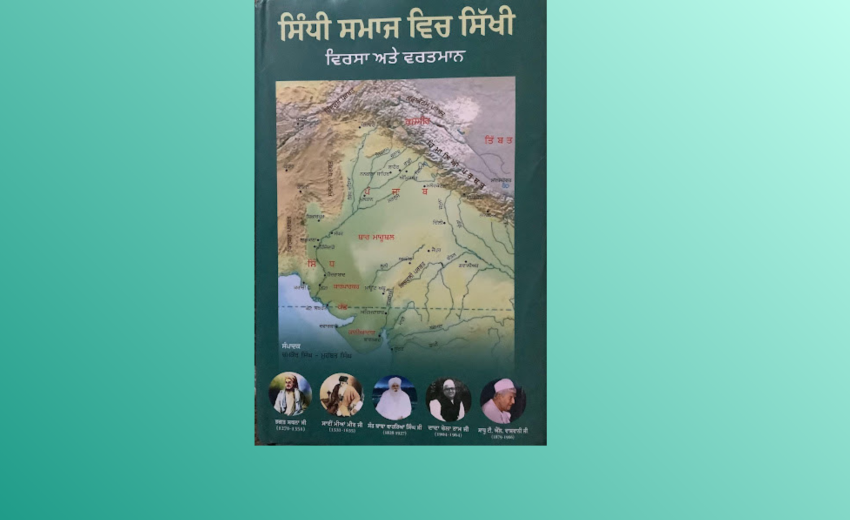
Guru Nanakpanthi Heritage Series: Volume One is an ambitious and meticulously curated compendium that seeks to recover, document, and reinterpret the profound yet understudied relationship between Sindh and the Sikh tradition. Edited by Chamkaur Singh and Mohabbat Singh, this 756-page volume stands as a monumental scholarly contribution—perhaps the first of its scale in Gurmukhi—dedicated to the religious, linguistic, cultural, and historical interconnections that have shaped Sindhi Nanakpanthi identity over several centuries.
The book emerges from a contemporary moment of tension, marked by the 2023 Indore incident surrounding the removal of Saroops of Sri Guru Granth Sahib from Sindhi darbars. Instead of remaining confined to the controversy, the editors use it as an intellectual and emotional catalyst to explore broader issues of heritage, belonging, and identity. The result is an encyclopedic work that engages more than sixty contributors across disciplines—history, linguistics, theology, musicology, anthropology, and community studies.
The volume is organized thematically, covering the Sindhi–Sikh connection across multiple axes:
• Historical foundations: Guru Nanak’s travels in Sindh, the participation of Sindhi Sangats across the Guru period, Udasi and Nirmala engagements, and Sikh influences during the era of Maharaja Ranjit Singh.
• Linguistic and literary affinities: multiple essays illuminate the shared vocabulary between Gurmukhi/Punjabi and Sindhi, the significance of the Khudabadi script, and the linguistic presence of Sindhi in Gurbani and Sikh lexicons.
• Cultural memory and diaspora: detailed surveys of Sindhi Sikhs across India—from Mumbai to Mount Abu—and glimpses of surviving communities in Pakistan present a unique sociological mapping of post-Partition trajectories.
• Personalities and hagiography: biographies of figures such as Dada Chelaram, Sai Mian Mir, Bhai Makhan Shah Lubana, and numerous Sindhi saints and scholars demonstrate the enduring spiritual and intellectual exchanges between the two regions.
• Contemporary concerns: the volume closes with reflections on institutional engagement, religious discipline, youth involvement, and the urgent need for Sindhi–Gurmukhi linguistic bridges.
The book’s richness lies in its diverse contributors. Foundational essays by scholars such as Dr. Gurmail Singh, Dr. Himadri Banerjee, Dr. Rattan Singh Jaggi, Dr. Kirpal Singh, and Dr. Ganda Singh provide historical depth on Guru Nanak’s travels, Sindhi Sikh memory, and Maharaja Ranjit Singh’s policies toward Sindh. Linguistic and literary affinities between Sindhi, Gurmukhi, and Gurbani are explored with nuance by experts including Dr. Buta Singh Brar, S. Amarjit Singh Dhawan, Dr. Sikandar Singh, and Bibi Manpreet Kaur.
One substantive article, extending to approximately seventy-three pages, offers a rigorously researched and critically referenced study of Sindhi culture and history. Drawing upon a wide range of primary and secondary sources, Jagmohan Singh (Kolkata) situates Sindhi civilisation within its historical, socio-cultural, and intellectual contexts, contributing meaningfully to South Asian historiography. Cultural and community perspectives receive equal attention.
Cultural and community perspectives receive equal attention. For example, Dr. Harpreet Kaur, S. Inderjit Singh, Dr. Mandeep Kaur Kochhar, Dr. Harneet Kaur, and S. Ratanjit Singh document the lived experiences of Sindhi Sikhs across Mumbai, Ulhasnagar, Gujarat, and Madhya Pradesh. Essays by Dr. Jasbir Kaur Badhani, Dr. Balwinderpal Singh, and S. Tarlochan Singh highlight the devotional, educational, and reform movements that have sustained Sindhi Nanakpanthi identity after Partition.
The volume’s strength also lies in its biographical portraits of personalities such as Sai Mian Mir Ji, Bhagat Sadhna Ji, Bhai Makhan Shah Lubana, Dada Chelaram, and Sant Baba Atar Singh Mastuana—entries contributed by writers including S. Sukhdev Singh Shant, Dr. Muhammad Habib, Lt. Col. Gulcharan Singh, and Dr. Gobind Singh Mansukhani.
What distinguishes this magnum opus is its emotional clarity: it is both a scholarly project and a heartfelt appeal for reconnecting fragmented identities. The editors neither homogenize differences nor impose ideological positions; instead, they foreground plurality, allowing divergent perspectives to coexist. The work’s central theme—reconciliation of divided communities through shared heritage—gains power through its interdisciplinarity and the depth of its primary research. If the book has any limitations, they stem from its expansive scope: certain areas inevitably remain underdeveloped, and some repetition occurs across essays—an expected feature of edited volumes. Yet these minor imperfections do little to diminish its overall contribution.
In essence, Guru Nanakpanthi Heritage Series: Volume One is a landmark resource for scholars of Sikh studies, Sindhi studies, South Asian linguistics, and diaspora history. More importantly, it is a bridge-building text—an invitation to Punjabis and Sindhis alike to rediscover centuries-old bonds of spiritual, cultural, and linguistic kinship. It richly deserves its characterization as a “magnum opus” and sets a high standard for future scholarship in this emerging field