A Pioneer of Conservation Science and Custodian of Sikh Heritage
Sardar S. P. Singh stands among the most distinguished conservation scientists of India, whose professional life spanning over five decades has significantly shaped the preservation of India’s cultural and religious heritage. Trained in scientific conservation at a time when the discipline was still evolving in India, Singh combined rigorous chemical knowledge with deep cultural sensitivity. His work has left an enduring imprint on museums, archives, archaeological monuments, and, most notably, on the conservation of Sikh heritage—manuscripts, paintings, sacred architecture, and museum collections—across India and abroad.
Born on 20 April 1950, Sardar S. P. Singh pursued higher education in the sciences at one of India’s most prestigious institutions. He obtained his Master of Science in Chemistry from the Indian Institute of Technology (IIT), Delhi, in 1971, laying a strong scientific foundation for his later work in conservation chemistry.
Recognizing the growing importance of heritage conservation, Singh underwent specialized professional training in the Conservation of Museum and Archaeological Objects at the National Museum, New Delhi, from February to November 1971. This intensive training equipped him with interdisciplinary expertise spanning chemistry, material science, art history, and conservation ethics.
Sardar S. P. Singh devoted approximately 38 years of distinguished service to India’s premier cultural institutions, including:
- The National Museum, New Delhi
- The Archaeological Survey of India (ASI).The National Archives of India
Within the Archaeological Survey of India, where he served for 11 years, Singh was entrusted with some of the most sensitive conservation challenges facing historic monuments exposed to environmental and anthropogenic stress. His posting in Agra proved especially significant, where he served for eight years as Head of the Air Pollution Laboratory. During this tenure, he played a critical role in addressing the deterioration of the Taj Mahal caused by industrial pollution and environmental factors.
He retired with distinction as Director (Conservation), National Museum, New Delhi, a position reflecting both his technical authority and institutional leadership.
Among Singh’s most notable scientific achievements is the development of the “Clay Pack Technique” for the chemical cleaning of the Taj Mahal’s marble surface. This method represented a landmark innovation in conservation science, offering a non-invasive, reversible, and monument-friendly solution to surface discoloration caused by pollutants. The technique has since gained national and international recognition and continues to influence conservation practice.Over a career spanning nearly 50 years, Singh contributed extensively to the development of conservation methodologies for:Wall paintings and murals,Manuscripts on paper, birch bark, and palm leaf,Stone, metal, and composite artifacts,Museum collections and archival records.
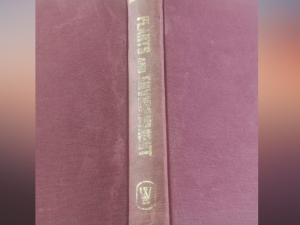
Sardar S. P. Singh is also a prolific scholar whose publications have enriched conservation literature in India and beyond. His major works include:
- Conservation of Cultural Property in India (2000), Studies in Art and Archaeological Conservation (2004),
- Ajanta Paintings: Their Composition, Technique, Deterioration and Preservation (2007),Preservation of Buddhist Monuments at Bamiyan in Afghanistan, In addition to these, Singh has authored numerous research papers dealing with conservation science, preventive conservation, and heritage management.
- A particularly significant and enduring aspect of Sardar S. P. Singh’s career has been his dedicated work for the preservation of Sikh heritage. Combining professional expertise with personal commitment, he worked extensively on Sikh manuscripts, paintings, museums, and sacred monuments.
- At Sri Darbar Sahib, Amritsar, Singh contributed to the conservation of historical paintings, manuscripts, and associated heritage materials. His approach emphasized minimal intervention, respect for religious sanctity, and the use of scientifically tested materials compatible with traditional media. His work helped stabilize and preserve invaluable Sikh visual and textual traditions housed within the shrine complex.
- At Dera Baba Nanak, a site intimately connected with Guru Nanak Dev Ji, Singh’s conservation interventions addressed both manuscript preservation and heritage documentation, ensuring the longevity of sacred objects associated with early Sikh history.
- At Takht Sri Hazur Sahib, Nanded, Singh contributed to the conservation of religious paintings, manuscripts, and museum objects, safeguarding artifacts associated with Guru Gobind Singh Ji and the late Guru period. His work ensured that conservation practice remained sensitive to ongoing ritual use.
- At Takht Sri Patna Sahib, the birthplace of Guru Gobind Singh Ji, Singh’s expertise supported the preservation of rare Sikh artifacts, manuscripts, and paintings, reinforcing the historical narrative of Sikhism in eastern India.
- Singh also worked on Sikh heritage sites in Dhaka and other international locations, contributing to the conservation of material culture that bears witness to the transregional history of Sikhism. His international engagement strengthened cross-border heritage awareness and professional collaboration.
Sardar S. P. Singh has been actively involved with several national and international professional bodies. He served as Secretary and Vice-President of the International Association for the Study of Conservation (IASC) for a decade. He is also a Life Member of:
I.C.B.C.P.,Museum Association of India,INTACH (Indian National Trust for Art and Cultural Heritage).
He has delivered lectures, participated in conferences, and curated exhibitions across numerous countries, including the USA, UK, Germany, France, Italy, Russia, Japan, Australia, Singapore, Hong Kong, Bangladesh, Afghanistan, Sri Lanka, Thailand, and Czechoslovakia, among others.
Singh’s exceptional service has been formally recognized at the highest levels:Certificate of Honour from the President of India, Dr. A. P. J. Abdul Kalam, for the restoration of paintings in Ashoka Hall, Rashtrapati Bhavan.
Certificate of Appreciation from the Home Secretary, Government of India, for setting up museums in the North and South Block on the theme of the Formation of New Delhi City.
Chairman, Kasturba Gandhi Museum, Gandhi Ashram, Delhi.
Sardar S. P. Singh’s career represents a rare synthesis of scientific excellence, institutional leadership, and cultural commitment. His contributions to conservation science have safeguarded some of India’s most iconic monuments, while his dedicated work on Sikh heritage—particularly at Sri Darbar Sahib, Dera Baba Nanak, Takht Sri Patna Sahib, Takht Sri Hazur Sahib, and Sikh gurdwaras in South Asia—has ensured the preservation of Sikh material culture for future generations. His legacy stands as a benchmark in the ethical and scientific conservation of religious and cultural heritage.