
Introduction
Mian Muhammad Bakhsh occupies an eminent position in Punjabi Sufi literature as a poet-philosopher whose verse synthesizes mystical metaphysics, folk narrative, and ethical instruction. Best known for Saiful Malūk, he stands as one of the last great representatives of classical Punjabi Sufi poetry, bridging oral folk tradition with written literary culture. His life reflects the Qadri Sufi ethos of asceticism, devotion, and love-centered spirituality.
Birth and Early Life
Mian Muhammad Bakhsh was born in 1246 AH (c. 1830 CE) in Khadri Sharif (later known as Khadri), located in the Mirpur district of the former princely state of Jammu and Kashmir (now in Pakistan). According to Maula Baksh Kushta and other biographical sources, his full identification is as follows:
- Name: Mian Muhammad
- Known as: Mian Muhammad Bakhsh
- Father: Hazrat Mian Shams-ul-Din Qadri
- Residence: Village Khadri, District Mirpur, State of Jammu
His birthplace lies approximately one mile north of the River Jhelum, near Chak Thakur, within a mountainous landscape that frequently appears—directly or symbolically—in his poetry.
Spiritual Lineage and Sufi Affiliation
Mian Muhammad Bakhsh belonged to a distinguished Qadri Sufi lineage, tracing its spiritual descent to Shaykh Abdul Qadir Jilani (d. 1166 CE), the founder of the Qadriyya order. His spiritual genealogy proceeds as follows:
- Shaykh Abdul Qadir Jilani
- Hazrat Sakhi Jalal Ala Hayat
- Hazrat Muhammad Muqeem (Hazra Sharif)
- Hazrat Shah Ghazi Qalandar Qadri
- Hazrat Mian Din Muhammad Shahid
- Hazrat Mian Shahbaz Sahib
- Hazrat Mian Jiwan Wali Sahib
- Hazrat Mian Shams-ul-Din Sahib
- Hazrat Mian Muhammad Bakhsh Sahib
This lineage firmly situated him within the Qadri–Qalandari spiritual tradition, emphasizing inner purification (tazkiya), divine love (ishq-e-haqiqi), and renunciation of worldly attachment.
Education and Spiritual Formation
Mian Muhammad Bakhsh received his early religious education at home under the supervision of his father. His upbringing was deeply infused with Qur’anic learning, Persian mystical literature, and oral Punjabi lore. Though not formally attached to royal or institutional patronage, his intellectual depth reflects sustained engagement with:
- Classical Persian Sufi poets (Rumi, Attar, Jami)
- Punjabi Sufi masters (Bulleh Shah, Sultan Bahu, Waris Shah)
- Islamic metaphysics and ethical philosophy
He remained unmarried throughout his life and devoted himself entirely to spiritual discipline, poetry, and contemplation.
Personality and Physical Appearance
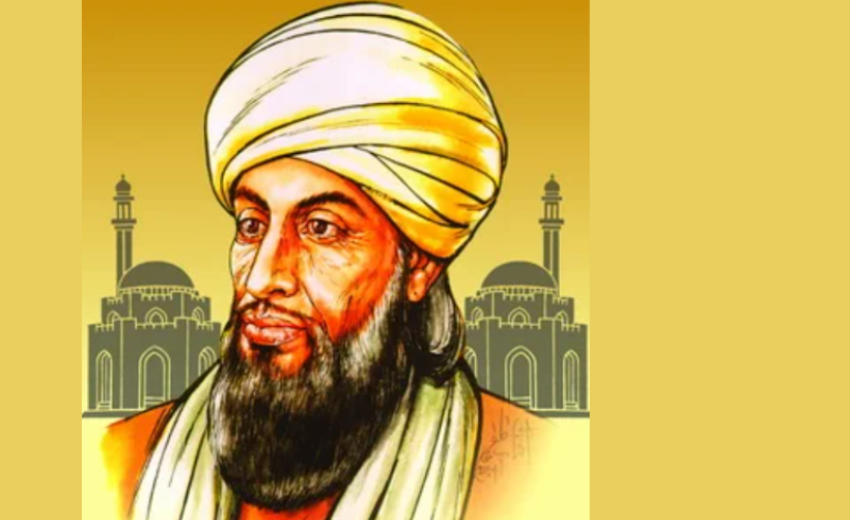
Contemporary descriptions portray Mian Muhammad Bakhsh as a man of tall stature, strong physique, and dignified bearing. He had a wheatish complexion, broad forehead, thick beard, and penetrating eyes. Despite his ascetic life, he was physically active and fond of wrestling, horse riding, and exercise.
Local traditions recount that he could leap across the well near his shrine and often arranged horse-dancing exhibitions (raqs-e-asb) in Panjan. These activities illustrate his appreciation of vitality, balance, and the aesthetics of movement—qualities mirrored in the rhythm of his verse.
Ascetic Life and Ethical Outlook
Mian Muhammad Bakhsh lived an extremely simple and disciplined life. His diet was frugal, often consisting of plain bread soaked in water. He deliberately avoided luxury, wealth, and political power. His poetry repeatedly warns against greed, hypocrisy, and attachment to material gain, stressing that:
“The world gives no lasting shelter;
Only the Name of God remains.”
His ethical worldview is grounded in humility, patience (sabr), remembrance (zikr), and love (ishq).
Literary Works
Mian Muhammad Bakhsh is credited with approximately fifteen works, though only a few survive in complete form. His major compositions include:
1. Saiful Malūk
His magnum opus and one of the longest narrative poems in Punjabi Sufi literature, comprising over 9,000 verses. While based on a folk-romantic tale, the poem is a profound allegory of spiritual love, where ishq-e-majazi (earthly love) transforms into ishq-e-haqiqi (divine love). The work stands parallel to Persian masnavis in structure and depth.
2. Tofa Rasuliya (1281 AH / 1861 CE)
A devotional work dedicated to the praise of Prophet Muhammad ﷺ, written after prolonged spiritual absorption. It reflects orthodox Islamic devotion blended with Sufi reverence.
3. Shah Mansur
A poetic retelling of the life and martyrdom of Mansur al-Hallaj, presenting the doctrine of annihilation (fana) and divine unity.
Other attributed works include Sandal Malūk, Lapat, and shorter mystical compositions.
Sufi Philosophy and Literary Significance
Mian Muhammad Bakhsh’s poetry represents a culmination of Punjabi Sufi thought, where metaphysics, folklore, and ethics converge. His originality lies in:
- Interpreting folk romance as spiritual allegory
- Critically engaging earlier Punjabi Muslim poets within his narratives
- Articulating Wahdat al-Wujud (Unity of Being) in accessible Punjabi idiom
Scholars regard Saiful Malūk as a unique synthesis of Persian Sufi aesthetics and Punjabi narrative realism.
Final Days and Death
In the winter of 1324 AH (January 1907 CE), Mian Muhammad Bakhsh suffered a paralytic stroke while engaged in wazifa after the Asr prayer. He remained unconscious for a day and night and passed away on 7th of Jawwal 1324 AH, marking the end of a luminous spiritual life.
He was laid to rest in Khadri Sharif, where his shrine continues to be a center of devotion and cultural memory.
Conclusion
Mian Muhammad Bakhsh remains a towering figure in Punjabi literature and Sufi spirituality. His life exemplifies renunciation, devotion, and creative transcendence, while his poetry continues to guide readers from the illusion of form to the reality of divine love. His legacy endures not merely as literature, but as lived wisdom.
Selected References
-
Kushta, Maula Baksh. Tazkira-e-Sufiya-e-Punjab. Lahore.
-
Bakhsh, Mian Muhammad. Saiful Malūk. Various Manuscripts and Printed Editions.
-
Fard al-Mahtab. Kitab-ul-Kitab.
-
Schimmel, Annemarie. Mystical Dimensions of Islam. University of North Carolina Press.
-
Malik, Hafiz Muhammad. Punjabi Sufi Poetry. Lahore.
-
Rizvi, S.A.A. A History of Sufism in India. Vol. I