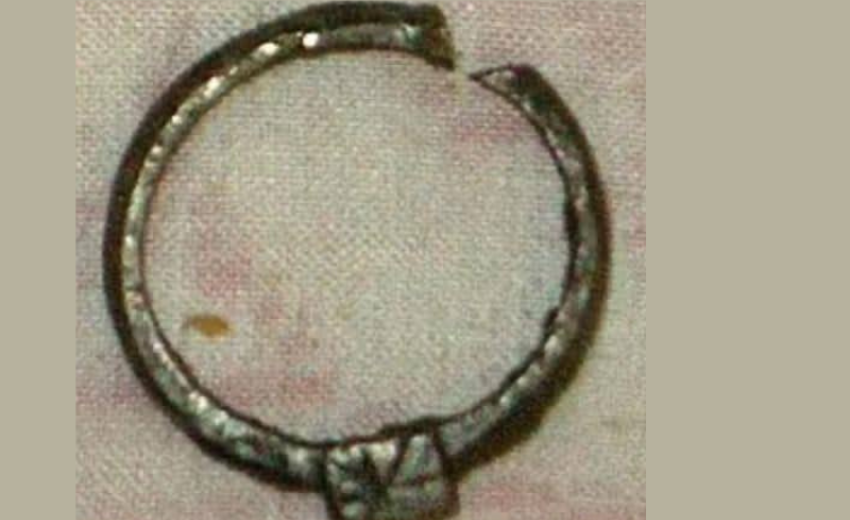

Gulsatrān (Archer’s Thumb Ring) and Sikh Martial Tradition
Archery—the art and science of shooting arrows with a bow—has been practiced since antiquity for hunting, warfare, and sport. In South Asia, it acquired refined technical and cultural dimensions, particularly within Indo-Persian martial traditions. Among the Sikhs, archery formed an essential component of shastar-vidyā (martial discipline), especially during the time of Guru Gobind Singh Ji.
The principal components of archery equipment include the bow (comprising limbs, riser, grip, bowstring, and string nocks), the arrow (shaft, arrowhead, fletching, and nock), and protective gear such as the finger tab or thumb ring. The thumb ring, known in Persian and Indo-Islamic military terminology as angushtāna or gulsatrān, was widely used by archers employing the thumb-draw technique. Crafted from metal, horn, or stone, this ring protected the thumb and enhanced control during repeated release of arrows.
Gurdwara Chhalla Sahib, Patshahi Dasvin, situated in village Mohi near Jagraon in present-day Ludhiana district, commemorates a local tradition associated with Guru Gobind Singh Ji during His movement through the Malwa region following the Battle of Chamkaur (1704–1705). According to Sikh oral tradition (sākhī paramparā), Guru Gobind Singh Ji engaged in prolonged archery after Chamkaur, as a result of which His thumb became swollen. At that time, He is believed to have been wearing a gulsatrān (archer’s thumb ring), which became lodged on His thumb due to the swelling.
While traveling from Machhiwara through Malwa, Guru Gobind Singh Ji is traditionally said to have halted near a grove outside village Mohi, close to a natural pond (dhāb). Local villagers, upon learning of His presence, offered milk and water and asked how they might serve Him. Guru Sahib requested the assistance of a blacksmith to remove the ring. Bhai Jawala Ji, a local artisan, carefully cut the ring using a rasp (reti), exercising exceptional skill and caution so as not to cause pain. Pleased with his devotion and craftsmanship, Guru Gobind Singh Ji is believed to have bestowed the iron ring (sarabloh chhalla) upon Bhai Jawala Ji as a sacred token and blessed his family.
The site associated with this episode subsequently developed into Gurdwara Chhalla Sahib. Over time, the original pond was transformed into a sarovar. Local tradition further maintains that the cut ring and the rasp used in the process have been preserved by the descendants of Bhai Jawala Ji, now residing in village Bhamipura near Jagraon, and that these relics (nishāniyāṅ) are occasionally shown to devotees.
From a historiographical perspective, this episode does not appear in contemporary Persian chronicles or early Sikh literary sources such as Sri Gur Sobha or Bachittar Natak. Nevertheless, it accords with the broadly accepted historical trajectory of Guru Gobind Singh Ji through the Malwa region after Chamkaur, including Machhiwara, Alamgir, and Dina. The tradition thus illustrates the manner in which Sikh sacred geography and collective memory evolved through localized devotional narratives. Although such accounts are not always corroborated by primary documentation, they remain an integral part of Sikh historical consciousness and lived religious heritage.