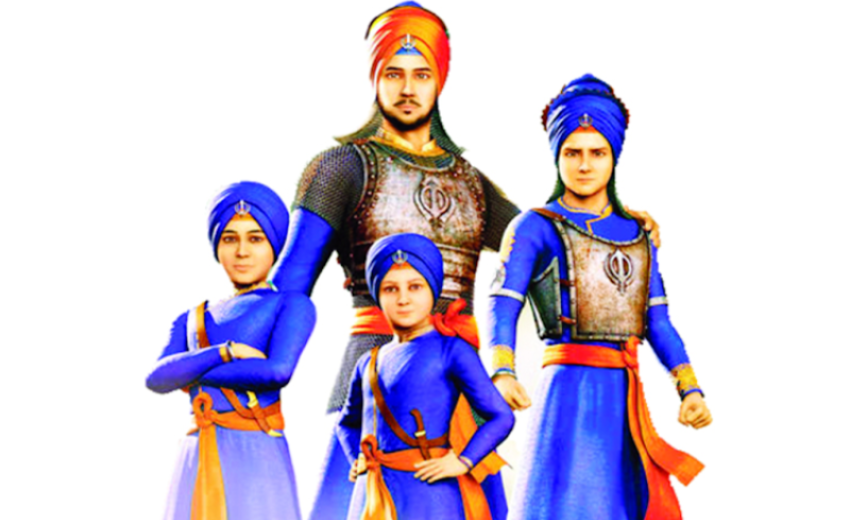

The life and mission of Guru Gobind Singh Sahib occupy a luminous and decisive place in world history. As a spiritual visionary, poet, and revolutionary leader, Guru Gobind Singh transformed ethical ideals into lived resistance against tyranny. His life was not merely a sequence of battles but a continuous moral struggle aimed at liberating humanity from fear, injustice, and mental enslavement. The martyrdom of his four sons—the Sahibzadas—during the turbulent events of December 1705 stands as one of the most poignant and ethically profound episodes in the annals of human history.
By the middle of 1705, Anandpur Sahib, the spiritual and political centre of the Sikhs, had been under siege for nearly eight months by combined Mughal forces and allied hill chiefs. The siege resulted in extreme scarcity of food and water; even horses and pack animals perished from starvation. Within the fort were nearly 460 Sikhs, including women, children, and the aged. Despite the hardship, the Sikh spirit remained unbroken. Ultimately, under unbearable conditions and following solemn assurances sworn by the besieging forces on the Qur’an and the cow, Guru Gobind Singh Sahib agreed to vacate Anandpur Sahib. On the stormy night of 5–6 December 1705, in cold winter rain and darkness, the Guru led the convoy out of the fort. The assurances of safe passage proved treacherous. As the Sikh jatha moved toward the flooded Sirsa River, Mughal and hill forces attacked. In the chaos of battle and the violent currents of the river, the Sikh caravan was scattered. This moment marked the beginning of a tragic yet heroic sequence of separations, sacrifices, and supreme moral triumph.
Guru Gobind Singh Sahib, accompanied by a small band of devoted Sikhs and his two elder sons, Sahibzada Baba Ajit Singh and Sahibzada Baba Jujhar Singh, eventually reached Chamkaur. There, surrounded by an overwhelmingly large enemy force, they took shelter in a fortified house. The ensuing Battle of Chamkaur occupies a singular place in military and ethical history. A handful of Sikhs confronted thousands, not for territorial gain, but to uphold dignity, faith, and freedom of conscience.
Sahibzada Baba Ajit Singh, barely eighteen years old, sought and received his father’s permission to enter the battlefield. Trained in horsemanship, archery, and swordsmanship, he fought with exceptional bravery, striking terror into the enemy ranks before attaining martyrdom. Sahibzada Baba Jujhar Singh, only fourteen, followed his elder brother into battle. His youthful courage, spiritual composure, and fearless charge against seasoned soldiers remain an enduring symbol of inspired sacrifice. By nightfall, most of the Sikhs, including the two elder Sahibzadas, had laid down their lives. On the collective counsel of the remaining Sikhs, Guru Gobind Singh Sahib left Chamkaur under cover of darkness, preserving the leadership of the Khalsa for the future.
While these events unfolded at Chamkaur, an even more heartrending tragedy was taking shape elsewhere. Mata Gujri Ji, the revered mother of Guru Gobind Singh Sahib, and the two younger Sahibzadas—Baba Zorawar Singh and Baba Fateh Singh—had been separated from the main group during the Sirsa crossing. They were given shelter by Gangu, a Brahmin who had once served in the Guru’s household. Motivated by greed, he betrayed them to the Mughal authorities at Sirhind.
At Sirhind, the young Sahibzadas were imprisoned in the freezing cold tower (Thanda Burj) and subjected to psychological pressure, threats, and temptations. They were offered wealth and rank if they would renounce their faith and accept Islam. Despite their tender age—Baba Zorawar Singh was nine and Baba Fateh Singh not yet seven—the brothers displayed extraordinary spiritual clarity and moral courage. Calmly and resolutely, they refused to abandon their faith.
The governor of Sirhind, Wazir Khan, under the instigation of his officials, ordered an act of cruelty that has few parallels in history. On 12 December 1705, the two Sahabzadas were bricked alive within a wall. When the wall collapsed due to their frail bodies, they were executed. Soon after, Mata Gujri Ji, having endured unbearable grief and harsh confinement, attained martyrdom in the same cold tower.
The martyrdom of the younger Sahibzadas stands as a unique moral landmark in world history. Never before had children so young consciously embraced death rather than compromise their faith and principles. Their sacrifice demonstrated that spiritual sovereignty is not bound by age, and that moral courage can shine with the greatest intensity in the most fragile bodies.
Guru Gobind Singh Sahib later addressed Emperor Aurangzeb in his Zafarnama, declaring that although all four of his sons had been martyred, the Khalsa remained alive, resilient, and invincible. This statement was not an expression of personal grief but a profound philosophical assertion: ideas rooted in justice and truth cannot be extinguished by violence.
The final rites of Mata Gujri Ji and the younger Sahibzadas were performed by Diwan Todar Mal, who purchased land at Sirhind by laying gold coins edge to edge—a gesture symbolising the immeasurable value of their sacrifice. Today, Gurdwara Fatehgarh Sahib stands at this sacred site, commemorating not defeat, but moral victory.
The saga of the Sahibzadas is not merely a chapter of Sikh history; it is a universal narrative of resistance against tyranny, the sanctity of conscience, and the triumph of ethical courage over brute power. In an age when expediency often eclipses principle, the martyrdom of the Sahibzadas continues to inspire humanity to uphold truth, freedom, and dignity—whatever the cost.