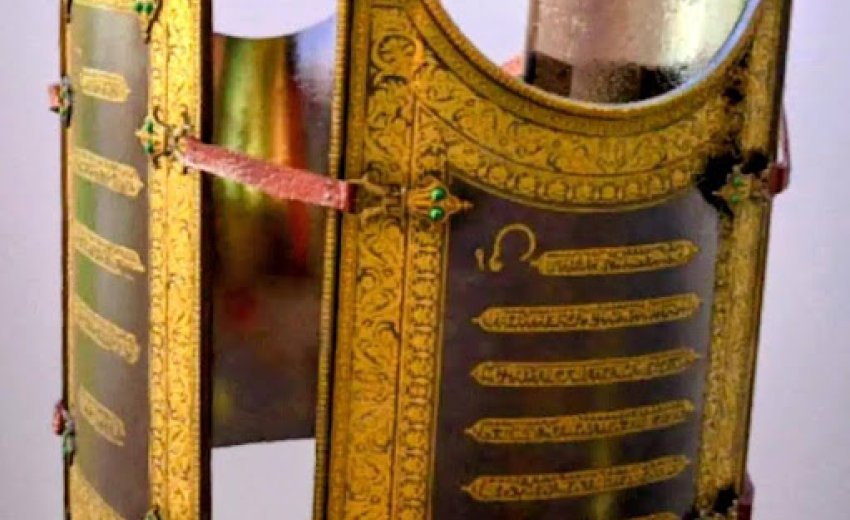

The Charaina of Guru Gobind Singh at the Battle of Bhagani: Martial Armour, Sacred Inscription, and the Sikh Ideal of the Saint-Soldier
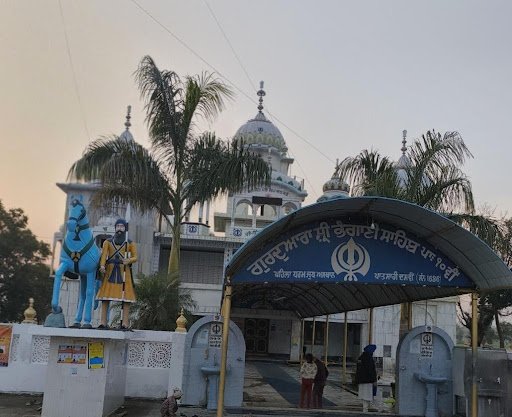
The Battle of Bhagani (Bhangani), fought in 1688 near Paonta Sahib, occupies a seminal position in Sikh history as the first major military engagement led by Guru Gobind Singh. More than a contest of arms, the battle symbolized the emergence of a distinct Sikh martial consciousness rooted in spiritual sovereignty, ethical warfare, and resistance against oppression. Among the various martial accoutrements associated with Guru Gobind Singh during this engagement, the Charaina occupies a place of particular historical and symbolic significance.
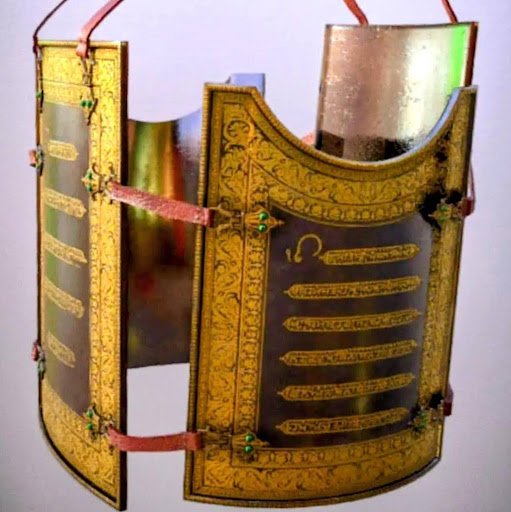
The term Charaina (also rendered Chaar-Aina) is derived from the Persian words chahar (four) and aina (mirror), literally meaning “four mirrors.” It referred to a form of body armour consisting of four steel plates—covering the chest, back, and sides—fastened together with leather straps. Such armour was widely used across Central and South Asia during the seventeenth century and provided effective protection while preserving mobility in battle. Sikh tradition associates one such Charaina with Guru Gobind Singh during the Battle of Bhagani.
What distinguishes the Guru’s Charaina from ordinary military armour is the presence of sacred inscriptions engraved upon its metal plates. Japji Sahib composition of Guru Nanak Dev Ji also inscribed on a plate of the 'Charaina'.
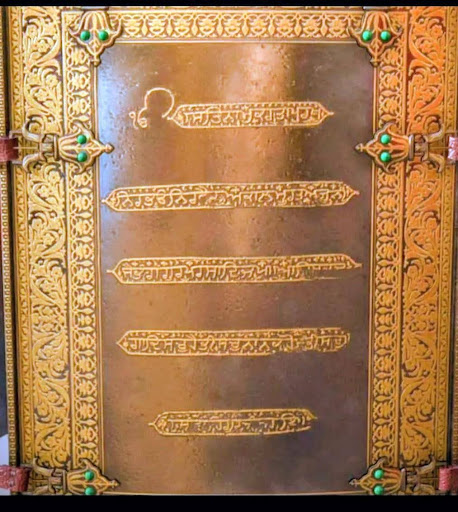
Surviving traditions and museum studies indicate that verses from Akal Ustat, one of the celebrated compositions of Guru Gobind Singh preserved in the Dasam Granth, were inscribed upon the armour. .These inscriptions transformed the Charaina into a profound synthesis of spirituality and warfare, reflecting the Guru’s vision that military action must remain subordinated to divine consciousness and moral purpose.
The opening verses of Akal Ustat glorify the Timeless One (Akal Purakh), the transcendent and universal Divine beyond sectarian boundaries. By engraving sacred invocations upon the armour, Guru Gobind Singh symbolically enveloped the warrior’s body within remembrance of the Divine. The Charaina thus functioned not merely as physical protection but also as a visible affirmation that the Sikh warrior entered the battlefield under the sovereignty of the Eternal.

The inscriptions further reveal an important dimension of Sikh martial philosophy. In the Guru’s worldview, warfare was never pursued for territorial conquest or personal glory. Rather, it was justified only as a defence of righteousness (dharam yudh), human dignity, and religious freedom. The sacred words engraved upon the armour served as a constant reminder that courage must remain inseparable from ethical restraint and spiritual discipline.
Scholars of Sikh military history have frequently observed that Guru Gobind Singh redefined the concept of the warrior. The ideal Sikh fighter was not merely a soldier but a Sant-Sipahi—a Saint-Soldier whose external arms were guided by inner devotion. The Charaina embodied this synthesis. Steel protected the body, while sacred verse fortified the spirit. The armour thus became a physical manifestation of the Guru’s broader project of creating a disciplined community capable of confronting tyranny without abandoning spiritual values.
The Battle of Bhagani itself vividly illustrates this ideal. In his autobiographical narrative contained in the Bachittar Natak, Guru Gobind Singh describes the intensity of the conflict and the courage displayed by his companions. The Guru’s appearance on the battlefield, adorned in martial dress and protected by armour bearing divine praises, projected both temporal authority and spiritual legitimacy.
The Charaina therefore emerged not merely as military equipment but as a symbol of Sikh sovereignty rooted in the remembrance of Akal Purakh.Some traditions further associate the martial ethos of the Guru with the celebrated composition:
“Deh Shiva Bar Mohe Ihai, Shubh Karman Te Kabhun Na Taron.”
This prayer seeks the strength never to abandon righteous action and to remain fearless in battle. Although the verse belongs to Chandi Charitar rather than Akal Ustat, it expresses the same spiritual and martial ideals that the inscribed Charaina represented: unwavering courage, moral steadfastness, and willingness to sacrifice oneself in the defence of justice.
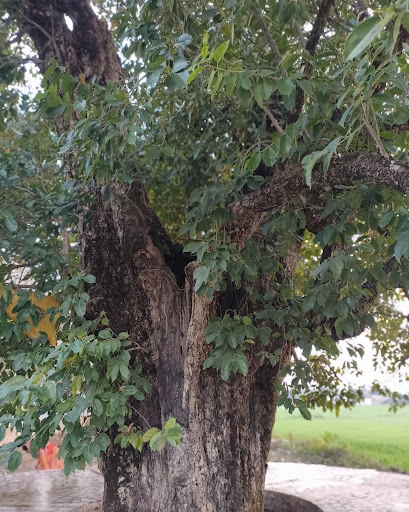
The Charaina of Guru Gobind Singh consequently occupies a unique position within Sikh historical memory. It stands at the intersection of scripture, warfare, devotion, and sovereignty. The engraved words upon its steel plates demonstrate that Sikh martial culture was never divorced from spirituality. Instead, the warrior’s armour itself became a medium of divine remembrance, sanctifying the struggle against injustice.
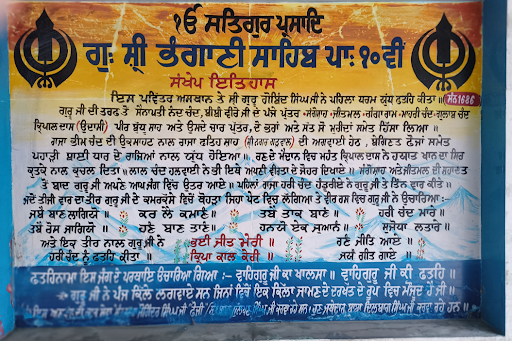
In conclusion, the Charaina worn by Guru Gobind Singh at the Battle of Bhagani represents far more than a relic of military history. Its inscribed sacred verses reveal the Guru’s profound integration of faith and warfare, illustrating the Sikh ideal that true strength arises not merely from weapons or armour, but from unwavering commitment to righteousness under the guidance of the Eternal. The Charaina remains a powerful symbol of the Saint-Soldier tradition and of the spiritual foundations upon which Sikh martial identity was forged. The surviving armour plate traditionally attributed to Guru Gobind Singh is especially significant because it preserves engraved lines from Akal Ustat, offering rare material evidence of how sacred literature and martial culture were interwoven in early Sikh history.