
Bhai Vir Singh and Gulmarg
Mysticism, Memory, and the Sikh Sacred Landscape in Kashmir
Among the celebrated hill stations of Kashmir, Gulmarg occupies a unique place in the literary, spiritual, and cultural imagination of modern Sikh history.
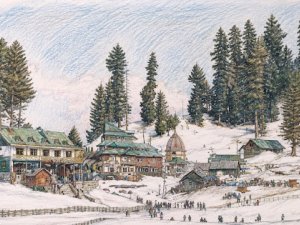
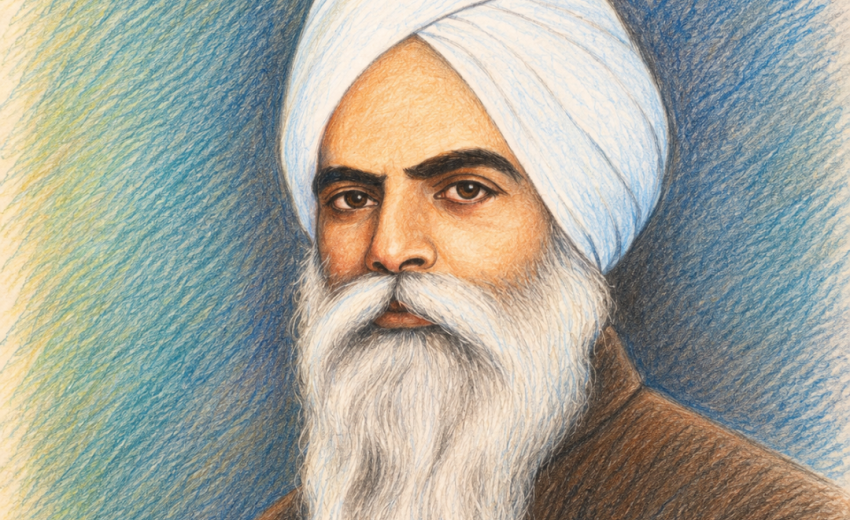
Surrounded by dense forests and embraced by the lofty heights of Apharwat and Khilanmarg, Gulmarg emerged not merely as a picturesque tourist destination but also as a site of contemplative experience for Bhai Vir Singh, the great mystic-poet of Punjabi literature. His visit to Gulmarg in 1922 reckoning in traditional references, though historically associated with the early twentieth century left a profound impression upon him, inspiring poetic reflection and eventually contributing to the establishment of a Sikh sacred centre in the valley.
Gulmarg as a Landscape of Spiritual Ascent
Bhai Vir Singh spent several weeks in Gulmarg at different intervals, where the serene mountain landscape, dense forests, and tranquil atmosphere deeply inspired his literary imagination. Immersed in the natural splendour of Kashmir, he contemplated nature as a manifestation of the Divine and composed significant portions of his reflective and spiritual writings amidst the calm environs of Gulmarg. His association with the region reveals not merely a traveller’s admiration for scenic beauty, but a profound intellectual and spiritual engagement with the natural world, which found eloquent expression in his literature.
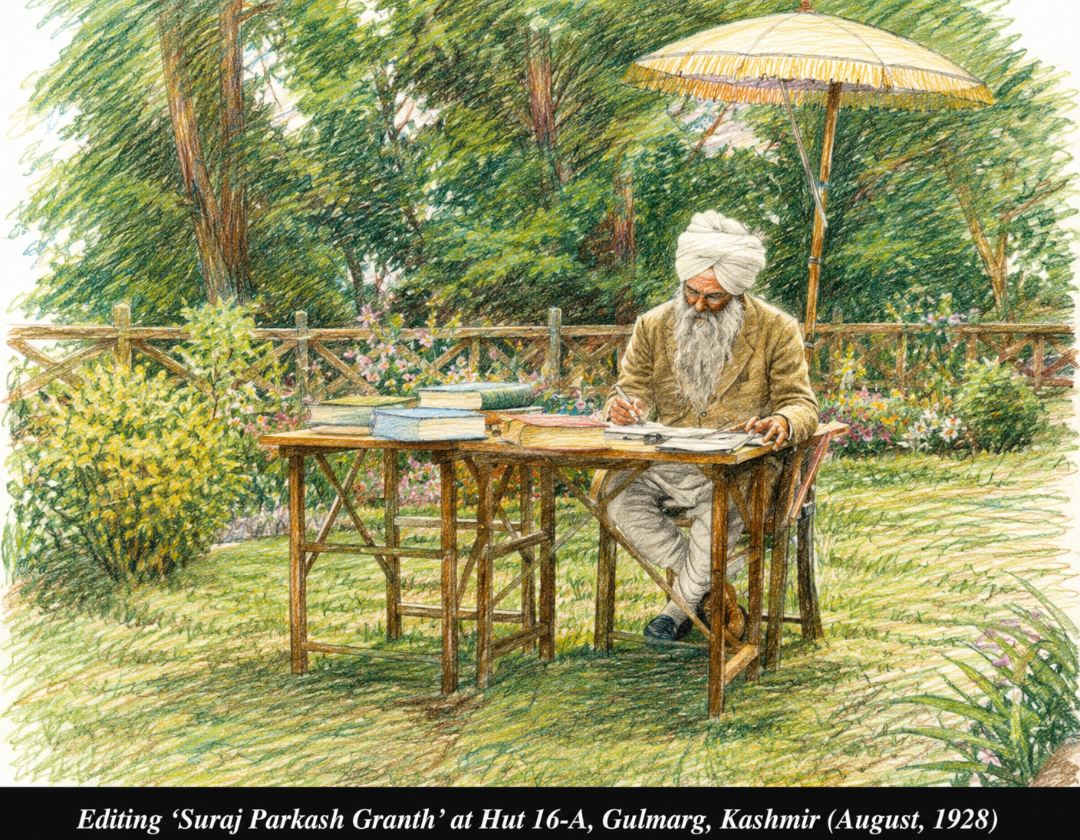
When Bhai Vir Singh visited Gulmarg along with Principal Bhai Jodh Singh and Sardar Harbans Singh Attari, he encountered not simply a mountain resort but a realm of sublime tranquility. The beauty of the meadow, spread like green velvet amidst snow-clad mountains, awakened in him a mystical sensibility that found expression in one of his evocative lyrical compositions:
ਗੁਲ ਮਰਗ
ਹੋਰ ਉਚੇਰਾ, ਹੋਰ ਉਚੇਰਾ
ਚੜ੍ਹ ਫਿਰ ਪੱਧਰ ਆਈ,
ਮਖ਼ਮਲ ਘਾਹ ਸੁਹਾਵੀ ਕਿਣਮਿਣ
ਠੰਡ ਠੰਡ ਹੈ ਛਾਈ,
ਤਪਤਾਂ ਤੇ ਘਮਸਾਨਾਂ ਛੁਟੀਆਂ
ਉੱਚੇ ਹੋਇਆਂ ਠਰ ਗਏ
ਠਰਨ, ਜੁੜਨ ਰਸ-ਮਗਨ ਹੋਣ ਦੀ
ਚਉਸਰ ਵਿਛੀ ਇਥਾਈਂ ।
The poem presents Gulmarg not merely as a geographical elevation but as a metaphor of inward ascent. The repeated phrase “ਹੋਰ ਉਚੇਰਾ” (“higher still”) signifies the spiritual movement of the soul toward serenity and transcendence. Significantly, the ascent culminates in a “ਪੱਧਰ” — a level ground — symbolizing equilibrium, repose, and inner harmony. In Bhai Vir Singh’s mystical vision, true elevation does not produce restlessness but spiritual calm.The imagery of “ਮਖ਼ਮਲ ਘਾਹ” (velvet-like grass) and cool moist air conveys a healing natural atmosphere where worldly anxieties dissolve. The contrast between “ਤਪਤਾਂ ਤੇ ਘਮਸਾਨਾਂ” (heat and conflict) and “ਠਰ ਗਏ” (becoming calm) suggests liberation from the turbulence of temporal existence. Nature, in this poetic rendering, becomes a sacred medium of divine grace.The concluding metaphor — “ਚਉਸਰ ਵਿਛੀ ਇਥਾਈਂ” (“a chequered board is spread here”) — is especially profound. It transforms Gulmarg into a cosmic arena of union, contemplation, and aesthetic-spiritual delight.
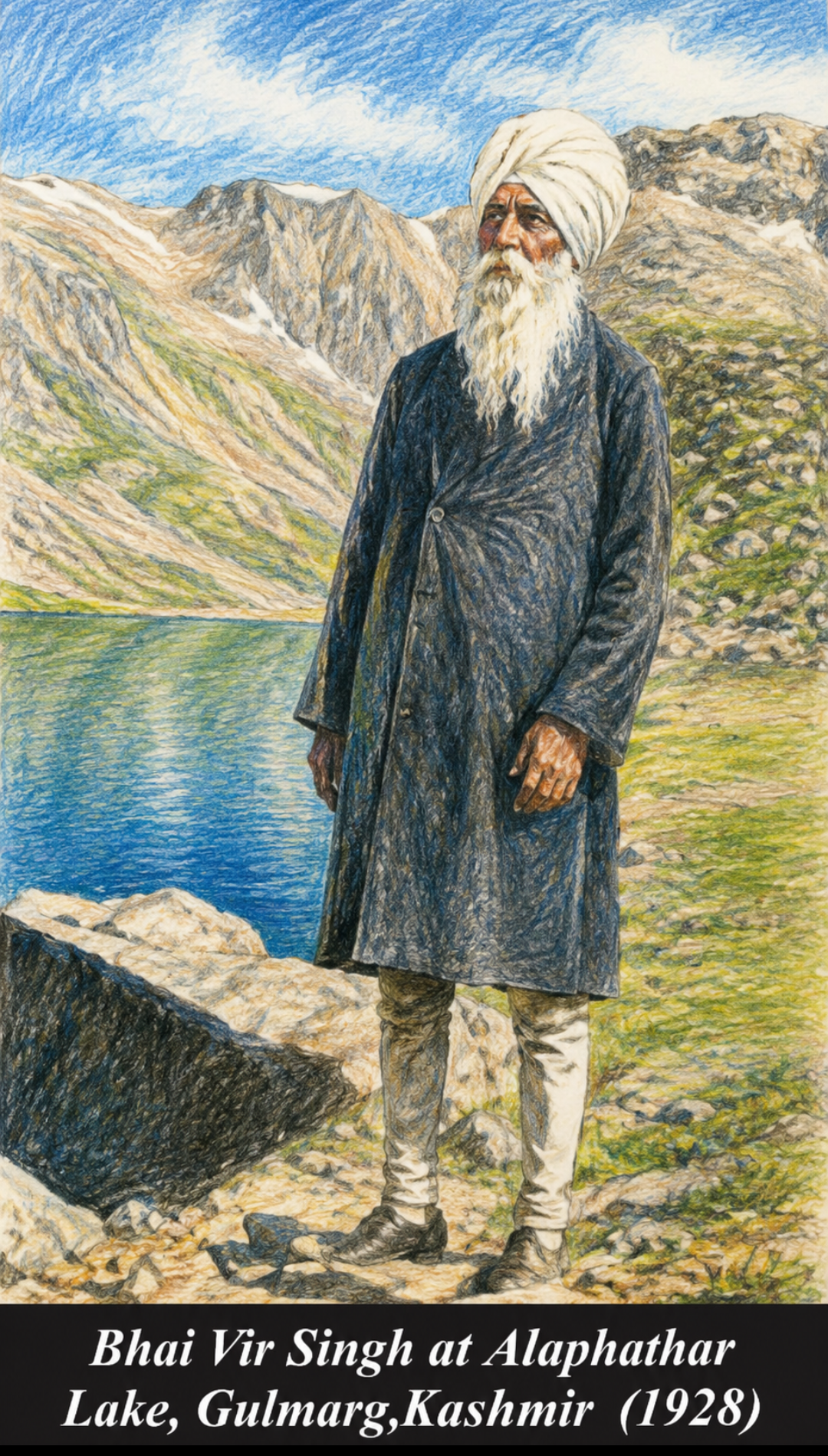
The meadow becomes a mystical space where the human soul experiences cooling, reconciliation, and divine absorption. Such symbolism reflects Bhai Vir Singh’s characteristic fusion of landscape and spirituality, whereby Kashmir appears as a geography of inward realization.
Foundation of Gurdwara Singh Sabha, Gulmarg
The spiritual impact of this visit extended beyond poetry into institutional and communal life. During the same period, Sardar Mohar Singh Resident Commissioner, who had arrived from Srinagar, deeply felt the absence of a Gurdwara at this internationally renowned destination visited by travelers from across the world. Recognizing the need for a Sikh place of worship and community gathering, he undertook efforts to secure land for the construction of a Gurdwara Sahib.
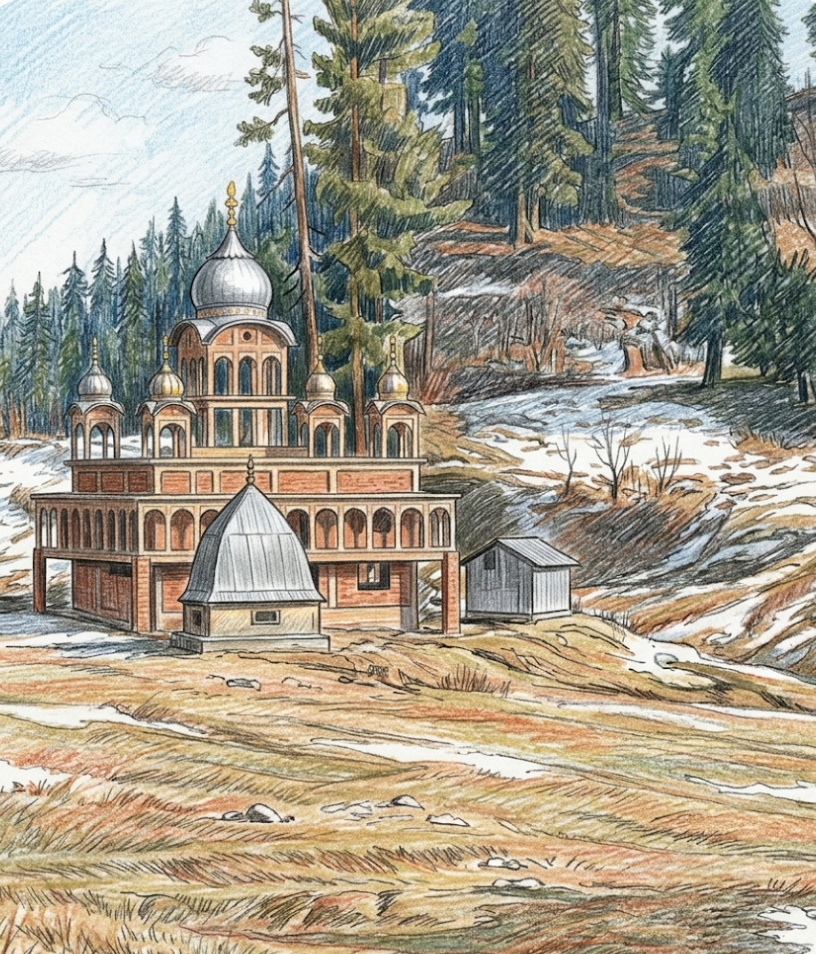
Through his influence and with the support of the local Sangat, some kanals of land were acquired at a beautiful site in Gulmarg. The foundation stone of the Gurdwara was laid in 1922 by renowned figure Sardar Harbans Singh Attari. The combined efforts of Bhai Vir Singh, Principal Jodh Singh, S. Mohar Singh , Bhai Sher Singh Kashmir, Dr Ganda Singh Engineer ,S.Gurmukh Singh Engineer and the Sikh Sangat led to the construction of the Gurdwara building, which was completed in 1925.
This sacred institution came to be known as Gurdwara Singh Sabha Gulmarg, later associated in memory with Bhai Vir Singh due to his inspiration and involvement. The first Granthi appointed there was Bhai Mangal Singh of Kanahama village, remembered for his devoted service and spiritual dedication. A formal committee structure was also established for effective management. S.Bhagat Singh Kanahama served as President, S. Nirmal Singh Bali of Baramulla as Secretary, and S. Harbans Singh Attari as Convener.
Sikh Institutional Life in Colonial Kashmir
The establishment of the Gurdwara in Gulmarg represented more than a religious construction; it marked the extension of Sikh institutional presence into the mountainous cultural landscape of Kashmir. During the late nineteenth and early twentieth centuries, Sikh reformist and educational movements increasingly sought to strengthen communal organization in frontier regions. The Gulmarg Gurdwara emerged as a symbol of Sikh identity, hospitality, and spiritual continuity amid the changing socio-political environment of Kashmir.
Subsequently, Principal Bhai Jodh Singh (Khalsa College Amritsar) also served as President of the management committee, while S.Nirmal Singh Bali continued as Secretary. Their service reflected the intellectual and reformist ethos associated with the Singh Sabha movement.S. Harbans Singh Attari devoted himself tirelessly to religious propagation until his death, after which S. Bhagat Singh Kanahama continued the administration of the Gurdwara with devotion until 1947.
To ensure financial sustainability and accommodation for visiting pilgrims, additional rooms and shops were constructed. Bhai Lachhman Singh of village Biawa later served as Granthi with notable dedication. Over time, the Gurdwara came under the jurisdiction of the District Gurdwara Management Committee, Baramulla, which appointed successive local committees for maintenance and development.
Destruction, Reconstruction, and Continuity
Like many Sikh institutions in Kashmir, the Gulmarg Gurdwara also suffered during periods of political disturbance and instability. The original building was eventually burnt down under adverse conditions. Nevertheless, the resilience of the Sikh community ensured its reconstruction. A new structure along with additional shops was later erected, preserving the continuity of Sikh religious life in the region.
The District Gurdwara Management Committee, Baramulla, continued supervising repairs and administration through various sub-committees. During 1975–1981, committees headed by S. Aya Singh Ghundi Berwa and S. Jaswant Singh Salial Dardapura undertook major repairs, including tin roofing and structural renovation. Later committees under S. Harbhajan Singh Dardapura continued these efforts. Granthis such as Bhai Aya Singh of village Biawa maintained uninterrupted religious service with devotion and humility.
In recent decades, the institution has been guided by a body of well-educated and socially conscious members who have remained steadfast in their commitment to serving the Sikh community with honesty, transparency, and dedication. Through its sustained efforts, it has played a significant role in the preservation of Sikh religious heritage, the promotion of community welfare, and the strengthening of inter-communal harmony in the Kashmir Valley.
Among those who rendered distinguished service to the institution at different periods were S. Harbhajan Singh Dardpura, S. Saporan Singh, S. Janak Singh Sodhi, Dr. Ajit Singh, S. Tanjeet Singh, S. Gurpurab Singh, and, in the present period, Dr. Balwinder Singh Dardpura.
After assuming charge of the newly constituted Gurdwara Prabandhak Committee Baramulla in July 2022, the foremost priority of the Committee was the restoration and renovation of the old Gurdwara building, which had fallen into a highly dilapidated condition over the years. Through the collective efforts of the sangat and by the gracious blessings of Waheguru Ji, the renovation work was successfully completed. Thereafter, on 26 October 2024, the sacred Parkash ceremony of Sri Guru Granth Sahib Ji was solemnly performed in the newly renovated Gurdwara Sahib.
Prior to this development, the Gurdwara at Gulmarg functioned on a temporary and seasonal basis. During the summer months, religious activities were conducted at Gulmarg; however, owing to the severe winter conditions and heavy snowfall, Sri Guru Granth Sahib Ji was respectfully shifted every winter to Gurdwara Sahib Tangmarg for proper care and continuity of religious observances.
Simultaneously, the Committee initiated the formal process for securing governmental permission for the construction of a new Gurdwara building at Gulmarg. After obtaining the requisite revenue documents from Tehsil Gulmarg, an area measuring 4.9 kanals of land was duly demarcated, following which the official process for construction approval was undertaken. Subsequently, the Government accorded permission for the construction on a conditional basis.
The foundation work for the new Gurdwara building commenced on 25 September 2024 with the support and guidance of Karsewa Wale Baba Harbans Singh Ji (Delhi). Due to the limited construction season in the high-altitude region of Gulmarg, only the foundational and preliminary structural works could be completed during the initial phase. Construction activities resumed in June 2025, and at present, the principal structure of the Gurdwara Sahib has been fully completed, while the interior embellishment and finishing works are presently in progress.
Bhai Vir Singh’s Kashmir Vision
The story of Gulmarg occupies an important place in understanding Bhai Vir Singh’s engagement with Kashmir. Unlike colonial travel writers who often viewed Kashmir through exotic or imperial lenses, Bhai Vir Singh perceived the valley as a spiritual landscape capable of awakening divine consciousness. His poetic response to Gulmarg reveals how natural beauty could become an avenue toward mystical stillness and spiritual reconciliation.
Simultaneously, his inspiration contributed to the creation of a living Sikh institution in the valley. Thus, the relationship between Bhai Vir Singh and Gulmarg is both literary and historical: the poet transformed Kashmir into sacred metaphor, while the community transformed poetic inspiration into enduring institutional reality. A modest reference library, to be named the “Bhai Vir Singh Library,” should be established within the premises of the Gurdwara in honour of the great visionary, poet, theologian, and literary luminary Bhai Vir Singh. Such a library would serve not only as a tribute to his enduring intellectual and spiritual legacy, but also as a valuable centre for the study of Sikh history, literature, theology, and the cultural heritage of Kashmir.
Today, Gurdwara Singh Sabha , Bhai Vir Singh ,Gulmarg stands not merely as a place of worship but as a memorial to the spiritual imagination of Bhai Vir Singh and the collective devotion of the Sikh Sangat of Kashmir. In its history converge poetry, pilgrimage, institutional service, and the enduring Sikh presence amidst the majestic mountains of Kashmir.