
Shaheedi Asthan Baba Banda Singh Bahadur, Mehrauli (Delhi):Execution and Memory
Introduction: Site, Memory, and Historical Importance
The Shaheedi Asthan of Baba Banda Singh Bahadur at Mehrauli, located in South Delhi near the Qutb complex, commemorates the execution of Baba Banda Singh Bahadur (1670–1716), founder of the First Sikh State (1710–1716) and a pivotal figure in early eighteenth-century Sikh political history.¹ The site is traditionally associated with a Sultanate-era stone gate, now known as the Shaheedi Gate, situated in proximity to the dargah of Khwāja Quṭb-ud-Dīn Bakhtiyār Kākī. Persian court records and later Sikh tradition both situate the execution in this locality during the reign of the Mughal emperor Farrukhsiyar (r. 1713–1719).²
The execution of Banda Singh Bahadur marked the formal collapse of the first organised Sikh polity. At the same time, it inaugurated a powerful paradigm of shaheedi (martyrdom) that deeply influenced Sikh political thought, collective memory, and resistance throughout the eighteenth century.³
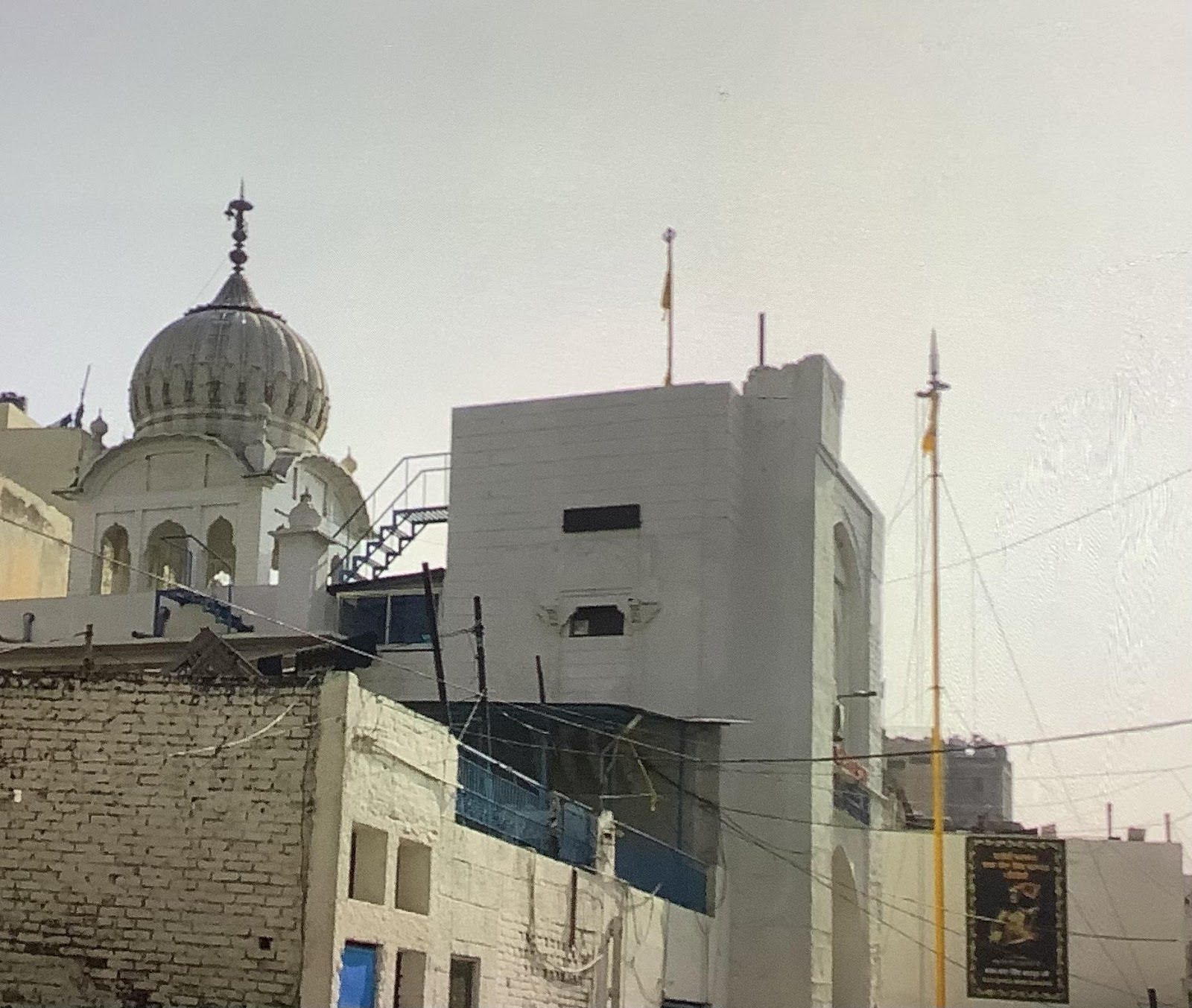 ( Gurdwara Shaheedi Asthan Baba Banda Singh Bahadur,Mehrauli,Photo by Author)
The Rise of Banda Singh Bahadur and the First Sikh State
Following the conferment of authority (hukam-nama) by Guru Gobind Singh in 1708, Banda Singh Bahadur emerged as the military and political leader of the Sikh movement. Between 1709 and 1715, Sikh forces dismantled Mughal administrative structures across eastern Punjab, abolished aspects of the zamindari system, redistributed land to cultivators, and issued coins in the name of the Sikh Gurus.⁴ The capture of Sirhind in 1710 and the execution of Wazir Khan symbolised the apex of this revolutionary movement.⁵
Mughal authority, already weakened after the death of Aurangzeb, responded with increasing severity. A prolonged imperial campaign culminated in the siege of Gurdas Nangal, where Banda Singh Bahadur was captured in late 1715 by forces led by Abdus Samad Khan, governor of Lahore.⁶
Capture, Procession, and Imperial Spectacle
In early 1716, Banda Singh Bahadur and several hundred Sikh companions were transported to Delhi. Contemporary sources describe this transfer as a carefully orchestrated imperial spectacle designed to reaffirm Mughal authority through public humiliation and terror. Persian court newsletters (Akhbārāt-i-Darbār-i-Muʿallā) record daily executions and the public display of severed heads.⁷
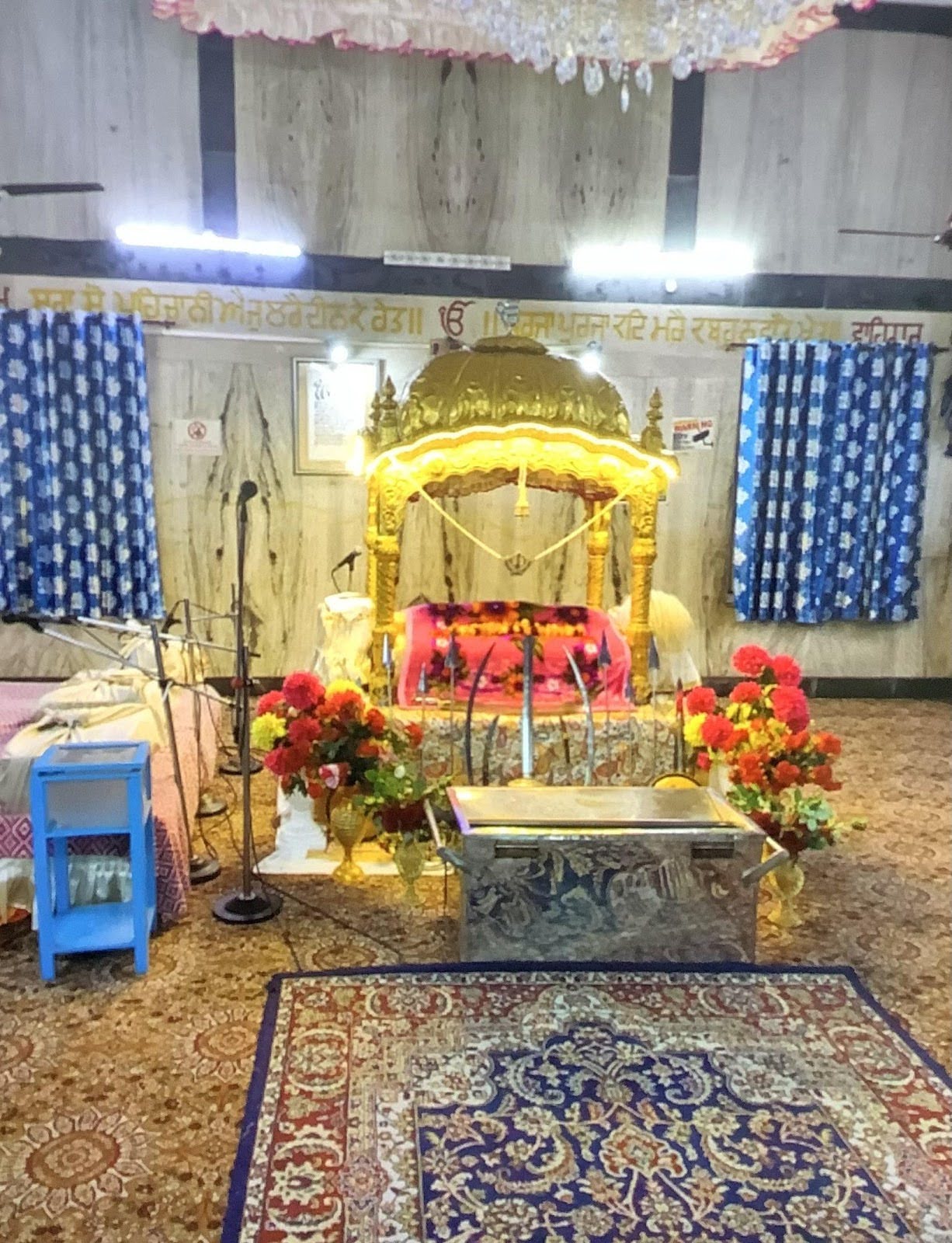 ( Gurdwara Sahib inside view,Photo by Author )
A letter dated 10 March 1716, written from Delhi by John Surman and Edward Stephenson—envoys of the East India Company—provides a rare non-Sikh, non-Mughal eyewitness account. Describing the entry of the prisoners into Delhi on 27 February 1716, they note:
*“First came the heads of the executed Sikhs, stuffed with straw, and stuck on bamboo… After him came the other prisoners, seven hundred and forty in number… Not all the insults that their enemies had invented could rob the teacher and his followers of their dignity.”⁸
The letter further records that offers of life were extended to those willing to renounce their faith, yet “none would prove false to their Guru,” and that Sikh prisoners repeatedly implored the executioner, *“Kill me first.”⁹
Execution at Mehrauli: English and Persian Eyewitness Accounts
The execution of Banda Singh Bahadur took place in June 1716 at Mehrauli, near the tomb of Khwāja Quṭb-ud-Dīn Bakhtiyār Kākī and the mausoleum of Emperor Bahādur Shāh.¹⁰ The Surman–Stephenson letter records the final episode with harrowing clarity:
*“They dressed him, as on the day of his entry… placed his child in his arms and made him kill it… they ripped open the child before its father’s eyes… and hacked him to pieces limb by limb.”¹¹
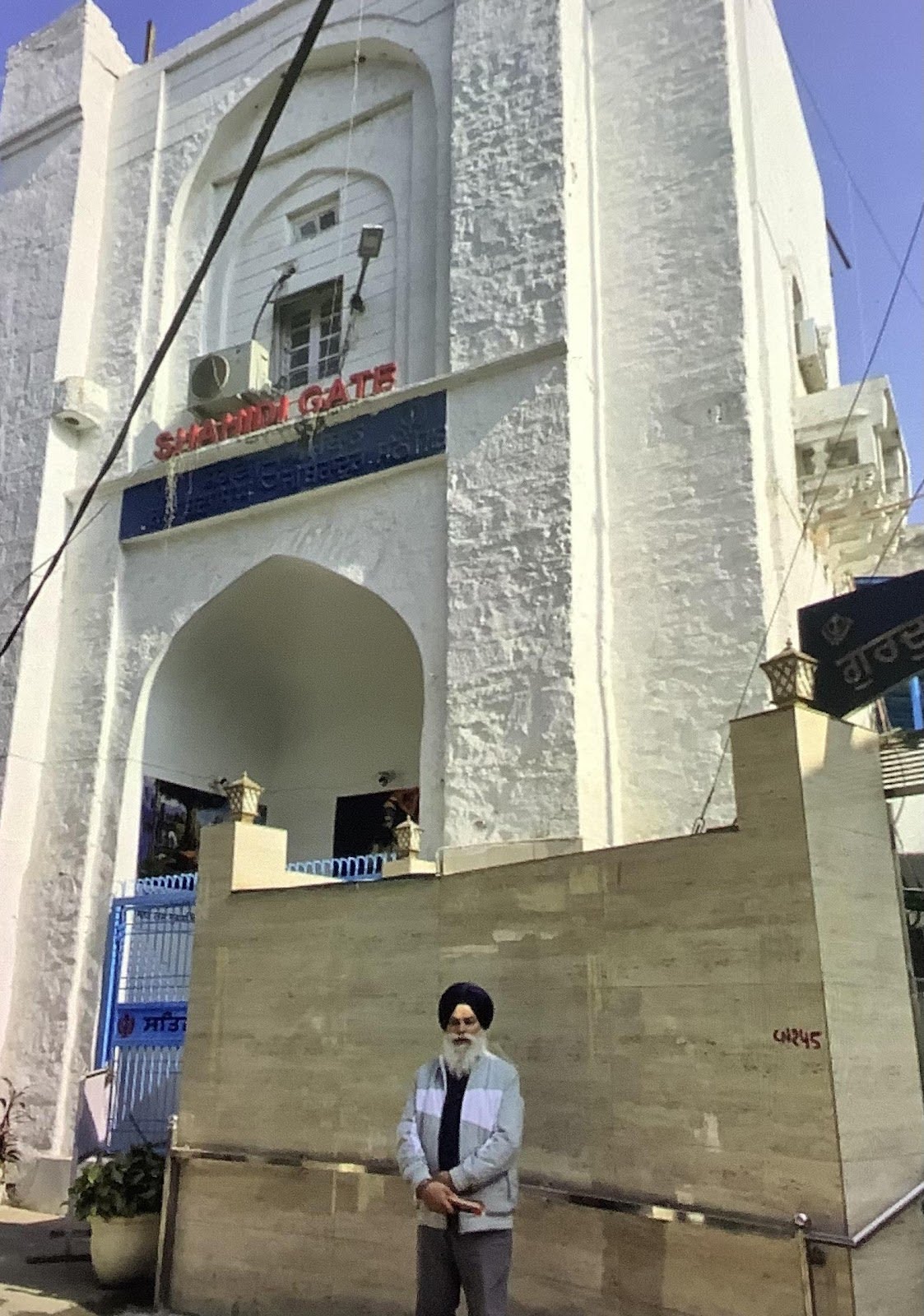 (Left side of the Sultanate Gate,now part of Gurudwara, Author)
Persian court newsletters corroborate these events with bureaucratic precision. An entry dated 29 Jamādī-us-Sānī, regnal year five of Farrukhsiyar (9 June 1716 CE), records the imperial command that Banda Singh Bahadur be taken *“to the vicinity of the tomb of His Holiness Khwāja Quṭb-ud-Dīn… and there gouge out his eyes, cut out his tongue, flay his skin… and kill his son.”¹²
The following day’s report confirms that the emperor’s orders were carried out, stating that Banda Singh Bahadur’s son was executed first and placed before his eyes, after which Banda Singh Bahadur himself was subjected to prolonged torture and put to death along with his companions.¹³
Persian Chronicle Parallels and Public Witness
Several independent Persian chronicles reinforce this account. Mirzā Muḥammad Hārshī’s ʿIbrat-Nāmah describes the procession through the old city and notes that *“hardly any resident of the city refrained from watching this brutal display.”¹⁴ Despite hostile language, the chronicler observes that many Sikhs faced death singing hymns and declaring fearlessness.
Sayyid Qāsim Lāhorī similarly records that Banda Singh Bahadur and his young son were executed “near the mausoleum of His Holiness Khwāja Quṭb-ud-Dīn Bakhtiyār Kākī.”¹⁵ Khāfī Khān, in Muntakhab al-Lubāb, preserves a striking exchange in which Banda Singh Bahadur interprets his own role as an instrument of divine justice, asserting that when injustice exceeds limits, the True Judge appoints agents—even tyrants—to punish corruption.¹⁶
Khāfī Khān also recounts the episode of a Sikh youth whose mother sought his release. When the reprieve arrived at the execution ground, the youth declared: “My mother speaks falsely. I am, with heart and soul, a devoted Sikh… Let me be martyred quickly.”¹⁷
The Dargah of Khwāja Quṭb-ud-Dīn Bakhtiyār Kākī and Spatial Context
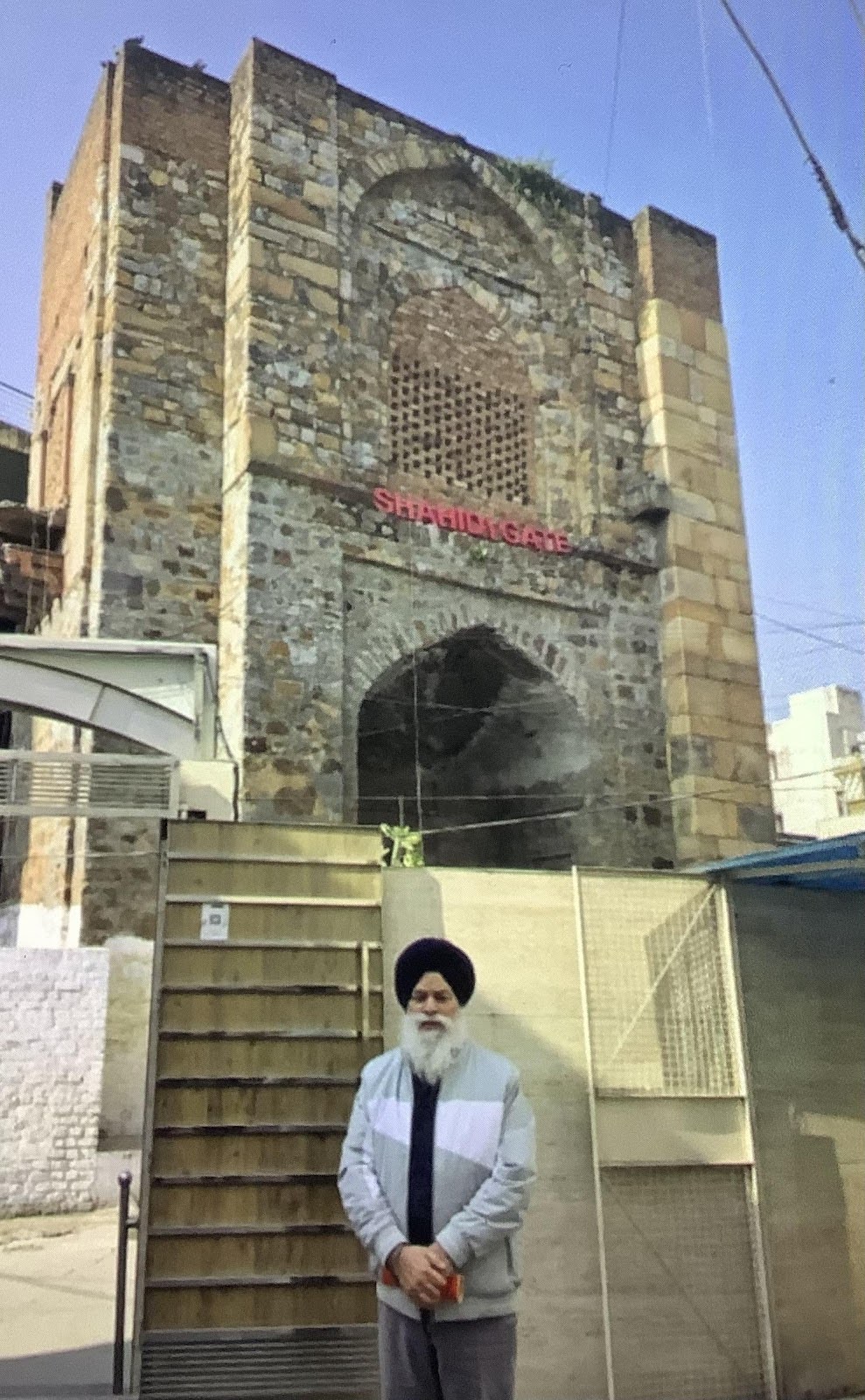 (Right side of the Shaheedi Gate,now under Archives Deptt, Author)
The execution site’s proximity to the dargah of Khwāja Quṭb-ud-Dīn Bakhtiyār Kākī is historically significant. The shrine, founded in the early thirteenth century, was expanded over time, including additions commissioned during Farrukhsiyar’s reign in 1717–18.¹⁸ Persian sources repeatedly situate the execution “near the shrine of Khwāja Quṭb,” firmly anchoring the event within Mehrauli’s sacred topography.¹⁹
Historical Meaning and Sikh Memory
While Mughal sources frame the execution as the lawful suppression of rebellion, Sikh tradition interprets it as shaheedi—martyrdom in defence of religious and political principles.²⁰ The convergence of Persian court records and European eyewitness testimony confirms not only the historicity of the Mehrauli execution, but also the extraordinary composure, collective discipline, and ideological resilience displayed by Banda Singh Bahadur and his followers.²¹
Far from extinguishing Sikh resistance, the execution transformed the memory of the First Sikh State into a moral and political foundation for later eighteenth-century resurgence, culminating in the rise of the Sikh misls and eventually the Sikh Empire under Maharaja Ranjit Singh.²²
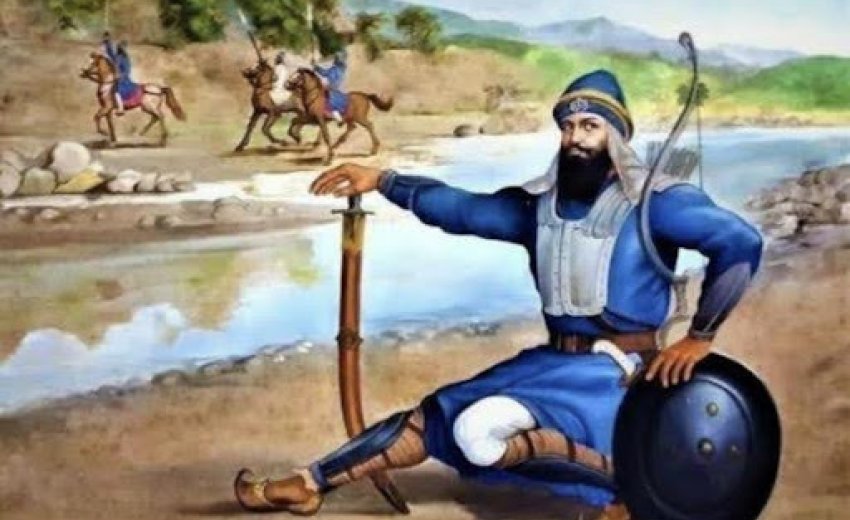
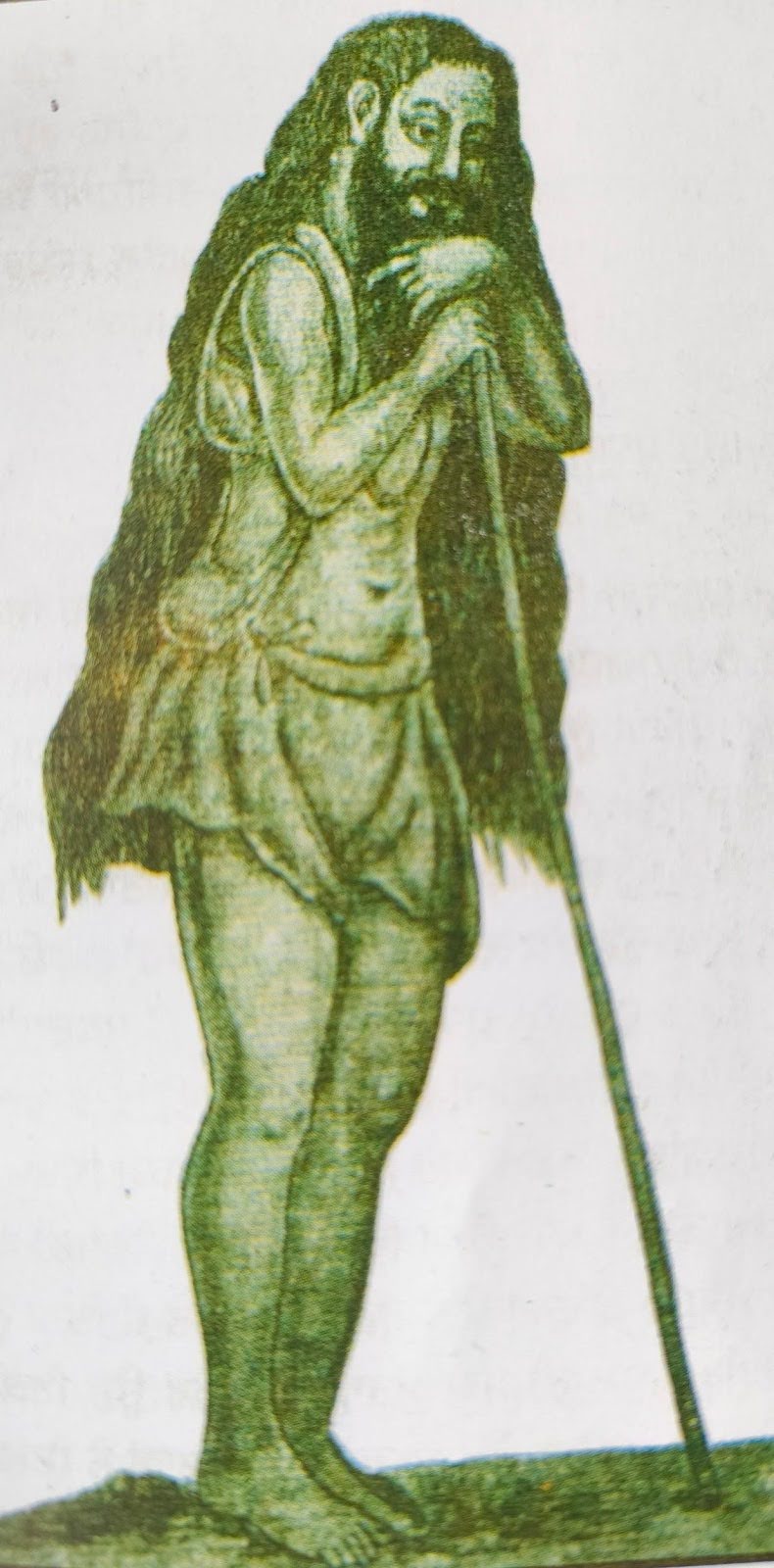 (Discovered by Dr. Ganda Singh in 1933 at Patna among Mughal-era portraits, this image is believed to depict Baba Banda Singh
Bahadur in the final days of his captivity. On 9 June 1716 CE, he was taken for execution near the shrine of Khwaja Qutbuddin
Bakhtiar Kaki. Prolonged imprisonment, starvation, and torture had left him extremely frail, reportedly forcing him to limp and to rely
on a stick for support.)
Conclusion
The Shaheedi Asthan Baba Banda Singh Bahadur at Mehrauli stands not merely as a site of execution, but as a place where imperial power, religious conviction, and historical memory intersect. Through a rare convergence of Sikh tradition, Persian court chronicles, and European eyewitness accounts, the martyrdom of Banda Singh Bahadur emerges as one of the most vividly documented episodes of early eighteenth-century Indian history—an episode that impressed even hostile observers with the courage and steadfastness of those who faced death without renouncing their faith.²³
End Notes
-
Harbans Singh, ed., The Encyclopaedia of Sikhism, s.v. “Banda Singh Bahadur” (Patiala: Punjabi University, 1992).
-
Akhbārāt-i-Darbār-i-Muʿallā, regnal year 5 of Farrukhsiyar (1716 CE), National Archives of India, New Delhi.
-
J. S. Grewal, The Sikhs of the Punjab (Cambridge: Cambridge University Press, 1990), 72–79.
-
Indu Banga, “Agrarian System of Banda Singh Bahadur,” Journal of Sikh Studies 3, no. 1 (1976): 1–18.
-
Ganda Singh, Life of Banda Singh Bahadur (Patiala: Punjabi University, 1935; repr., 1990), 92–118.
-
Satish Chandra, Medieval India: From Sultanat to the Mughals, Part II (New Delhi: Har-Anand Publications, 2005), 270–272.
-
Akhbārāt-i-Darbār-i-Muʿallā, entries for February–March 1716, National Archives of India, New Delhi.
-
John Surman and Edward Stephenson to the Court of Directors, East India Company, Delhi, 10 March 1716, in J. D. Irvine, ed. and trans., Later Mughals, vol. 1 (Calcutta: Government of India Central Publication Branch, 1922), 98–100.
-
Surman and Stephenson, letter of 10 March 1716, in Irvine, Later Mughals, 100–102.
-
Sayyid Qāsim Lāhorī, Ibrat-Nāmah (Lahore: Nawal Kishore Press, 1865), 88–92.
-
Surman and Stephenson, letter of 10 March 1716, in Irvine, Later Mughals, 101–102.
-
Akhbārāt-i-Darbār-i-Muʿallā, entry dated 29 Jamādī-us-Sānī, regnal year 5 of Farrukhsiyar (9 June 1716), National Archives of India, New Delhi.
-
Akhbārāt-i-Darbār-i-Muʿallā, entry dated 30 Jamādī-us-Sānī, regnal year 5 of Farrukhsiyar (10 June 1716), National Archives of India, New Delhi.
-
Mirzā Muḥammad Hārshī, ʿIbrat-Nāmah, cited in Jadunath Sarkar, History of Aurangzib, vol. 5 (Calcutta: M. C. Sarkar & Sons, 1924), 412–415.
-
Sayyid Qāsim Lāhorī, Ibrat-Nāmah, 90–91.
-
Khāfī Khān, Muntakhab al-Lubāb, trans. H. M. Elliot and John Dowson, in The History of India as Told by Its Own Historians, vol. 7 (London: Trübner & Co., 1877), 596–598.
-
Khāfī Khān, Muntakhab al-Lubāb, 599–601.
-
Muzaffar Alam and Sanjay Subrahmanyam, The Mughal State, 1526–1750 (New Delhi: Oxford University Press, 1998), 261–263.
-
Akhbārāt-i-Darbār-i-Muʿallā, multiple entries for June 1716 referencing the shrine of Khwāja Quṭb-ud-Dīn Bakhtiyār Kākī, National Archives of India, New Delhi.
-
Rattan Singh Bhangu, Panth Prakāsh, ed. and trans. Ganda Singh (Patiala: Punjabi University, 1967), 312–320.
-
J. S. Grewal, The Sikhs of the Punjab, 78–79.
-
Ganda Singh, Life of Banda Singh Bahadur, 230–245.
-
J. D. Irvine, Later Mughals, vol. 1 (Calcutta: Government of India Central Publication Branch, 1922), 95–105.