
Professor Emeritus Desh Bhagat University
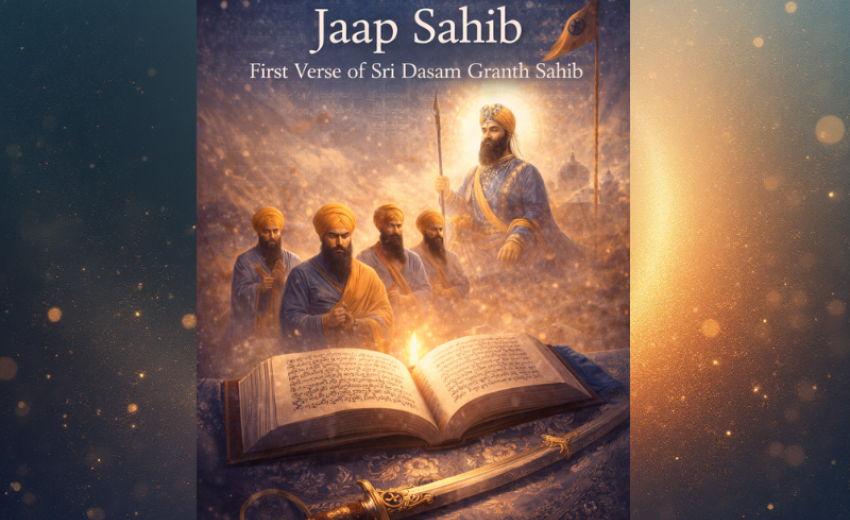
Dasam Granth Sahib is a compiled collection of the writings of Guru Gobind Singh Ji. Jaap Sahib is the opening verse of Sri Dasam Granth Sahib. It is one of the five verses of daily Sikh prayer, and one of the verses recited at the time of giving the Khande Baate da Pahul. The tradition of reciting Jaap Sahib after Japuji Sahib has been going on since ancient times. The Rehatnamas have strictly instructed to recite both Japji and Jaap Sahib:
Jap Jaap Pade Bina Jo Jevai Prasad. So Vista Ka Kirm Hoi Janam Gavaai Baad. Rehatnama Bhai Desa Singh. (Whosoever takes his meal without reading Japji and Jaap Sahib; will be a worm of filth in his next life.)
It is recited by the Panj Pyaras (five beloved ones) while preparing Amrit on the occasion of take Amrit Sanchar (Initiation), which is a ceremony held to initiate a Sikh as Khalsa.
When and where was Jaap Sahib written?
Jaap Sahib, Swaiye and Akal Ustat (the three verses) were recited at the sacred place of Paonta Sahib on the banks of the Yamuna River from 1684 to 1687; Jaap Sahib is believed to have been composed in 1685 when the Guru was 19 years old.
All the hymns of Guru Gobind Singh Ji were compiled in the Vidya Sagar Granth, i.e. ‘the Sea of Knowledge’. It was a great literary collection composed at Anandpur Sahib under the patronage of Guru Gobind Singh Ji. This Granth contained the writings of the Guru as well as fifty-two of his poets and scholars. It weighed nine maunds (about 320 kilograms). After the evacuation of Anandpur Sahib in 1705, it was lost in the Sarsa River while Guru Gobind Singh and the Sikhs were crossing it. The works that became part of the Dasam Granth and the Sarbloh Granth later, were parts of it. These were saved and copied during Anandpur stay and preserved earlier by devotees. Jaap Sahib was part of Dasam. Therefore, when the Khalsa was formed on Vaisakhi in 1699, these verses had already been memorized by the Sikhs. Therefore, many Singhs who recited these verses at the time of taking Amrit were found to have memorized these verses orally.
Change and Variation of Shabad Saroops
Since Dasam Granth was prepared after the death of Dashmesh Ji, different writers appeared while compiled Dasam Granth according to their own knowledge and practice, which has disrupted the uniformity of Shabad Saroops. The change of many word forms in different editions of the Gutkas published by the Shiromani Committee through blocks is a symbol of the fact that we do not have any authentic oner to correct this Bani. It is the primary duty of the central Sikh institutions to engage scholars and wise men in this service and establish the authentic form of the Bani of Jap Sahib so that the uniformity of word forms can be established.
Japji Sahib is easy to recite, while Jap Sahib is equally difficult because a lot of words from Sanskrit, Brij Bhasha, Arabic and Persian have been included in this Bani. Especially, the repetition of words with the same form in many verses confuses the reciter, due to which many Sikhs who recite it get confused. Therefore, it is very important to be fully concentrated while reciting this Bani.
Jaap is a Sanskrit word meaning "to utter, whisper, murmur (especially prayers or incantations) in a low voice; to call or call out in a low voice". Some accepted meanings of jaap are to recite, repeat or chant.[2] Jaap also means to understand. Gurbani refers to the verse
ਐਸਾ ਗਿਆਨ ਜਪੋ ਮਨ ਮੇਰੇ, ਹੋਵੋ ਚੱਕਰ ਸੱਚੇ ਕੇਰੇਗਿਆਨ ਜਪੋ ਮਨ ਮੇਰੇ, ਹੋਵੋ ਚੱਕਰ ਸੱਚੇ ਕੇਰੇ.
where the word jaap means to understand the intellect.[3] The form of the word here is japu, which means "meditate" on the Name of the God.
Jaap Sahib is a rhythmic verse that is woven like a necklace of pearls and gems, beautifully arranged around a string: the string is the Supreme God; the pearls and gems are His qualities, excellences and glory.
It basically helps the reader to greet God daily in 199 verses, just as we greet each other. The Jaap Sahib contains the following forms of verses in which there are 950 descriptive names of the formless divine being:
Chhapai Chand - 1 time
Ruaal Chand - 1 time
Rasaval Chand - 1 time
Harbolmana Chand - 1 time
Ik Achhri Chand - 1 time
Charpat Chand - 2 times
Madhubhar Chand 2 times
Bhagwati Chand 2 times
Chachari Chand - 5 times
Bhujang Prayat Chand 6 times
The description of God is Nirgun
God is described in the Nirguna and Sarguna forms.
In the Nirguna form, ‘Chakra Chihan Aru Barna Jaati Aru Pati Nahin Jih’
ਚਕ੍ਰ ਚਿਹਨ ਅਰੁ ਬਰਨ ਜਾਤਿ ਅਰੁ ਪਾਤਿ ਨਹਿਨ ਜਿਹ ॥
And in the Sarguna form, ‘Twa Sarb Naam Kathay Kawan Karma Naam Barnaat Sumati’ ਤ੍ਵ ਸਰਬ ਨਾਮ ਕਥੈ ਕਵਨ ਕਰਮ ਨਾਮ ਬਰਣਤ ਸੁਮਤਿ[[.
Both aspects of God, what He is and what He is not, have been highlighted.
The qualities are described beautifully like a beautiful necklace in which the beads of the negative and positive qualities of reality have been so closely and artistically assembled artistically that it becomes a rare example of the Guru’s vocabulary and poetic ingenuity.
Jaap Sahib also begins with Mangal Charan ‘Shri Vaheguru Ji Ki Fateh ॥‘
; Sri Mukhwak Patsahi 10 ॥ ‘indicates that it is the composition of Dashmesh Ji.
Guru Gobind Singh shows his astonishment at the nonexistence of any visible signs like are, creed, caste, body marks or body forms or dress of God. He further says ‘You You being ever existent, your light is from yourself and your power is beyond any estimation. colour above all kings ruling all the three worlds and beyond divine personalities. The entire nature and Your creation believe in your limitless and incomparable spread.
ਚਕ੍ਰ ਚਿਹਨ ਅਰੁ ਬਰਨ ਜਾਤਿ ਅਰੁ ਪਾਤਿ ਨਹਿਨ ਜਿਹ ॥
ਰੂਪ ਰੰਗ ਅਰੁ ਰੇਖ ਭੇਖ ਕੋਊ ਕਹਿ ਨ ਸਕਤਿ ਕਿਹ ॥
ਅਚਲ ਮੂਰਤਿ ਅਨਭਉ ਪ੍ਰਕਾਸ ਅਮਿਤੋਜ ਕਹਿਜੈ ॥
God has no Chakra means round lines on the fingers of the hands or soles of the feet, symbol, colour, and shape. God is spiritual, timeless, eternal, unborn, uncreated, self-existent, and without form, attribute, colour, or form. Therefore, God cannot be described or depicted totally, nor can anyone make an image or statue of something that is not defined.
God's manifestations are universal. God cannot be limited to any particular place, land, country, religion, race, dress, body, or name.
God is the creator of the universe and the laws that govern it. No one can ever be outside the scope of these laws, nor can anyone have the power to oppose them. God's law and justice are righteous and final.
God is pervasive in everything 'He' has created, yet God also extends beyond 'His' creations; Thus, God is pervasive in His creation and at the same time transcends it.
God is omnipotent, omnipresent and omnipresent; nothing, whether good or bad, can happen outside the will of the Creator; God is the Creator-Sustainer-Declarer of His creation. God is the Life of life, the Death of death, the Darkness of darkness, the Light of light.
Guru Gobind Singh further reveals the fact that “O God, who can recite all Your names? The wise men have described those names of only which that have been seen or visualised. Inspired by Your grace, I first recite the names associated with Your works by which we know You”.
ਤ੍ਵ ਸਰਬ ਨਾਮ ਕਥੈ ਕਵਨ ਕਰਮ ਨਾਮ ਬਰਣਤ ਸੁਮਤਿ ॥੧॥
By reciting the attributes of God on earth, in waves after waves, Guru Gobind Singh gives his Sikhs an experience of God that is far beyond the rational capacity of man.
Jaap Sahib analyses the impersonal and the personal, the supernatural and the extraordinary, the nirgun and the sargun aspects. Jaap is a self-revelation of God, a divine act of grace that offers to man that he need not understand God, but only accept and acknowledge and connect with Him. Jaap Sahib was written not to be understood intellectually, but to be experienced spiritually. It is a source of knowledge in its poetic dimension, like the rapid clatter of horses' hooves; bringing the listener as well as the speaker into the experience of God.
Form of the verse
Jaap Sahib is the first hymn of the Dasam Granth. The Jaap Sahib begins with "Shri Mukhwak Patshahi Dasvi", "Through the holy mouth of the tenth Guru". It authenticates the writings of Guru Gobind Singh Ji.
MacAuliffe says, "The Hindus have a composition called Vishnu Sahasar Naama, 'The Thousand Names of Vishnu'. The Jaap Sahib was composed to provide the Sikhs with the improved number of epithets as the Creator."
Language
The language of Jaap Sahib is close to classical, with words and compounds borrowed from Sanskrit, Brij Bhasha, Arabic and Urdu. The content of Jaap Sahib is divided into different verses named after the relevant metre according to the verse system prevalent in India at that time. These verses are in the form of rhymed couplets and the vocabulary and ingenuity are magnificent.
Jaap Sahib is a complete introduction to an impersonal Creator, or Nature itself, or the forces of the universe, or the laws of nature.
The opening verse is typical: "You have no form or feature, no caste or lineage; no one can describe your appearance, colour, marks or attire."
There is a universality that keeps surfacing. "All existence" or universal seems to be the key word.
"You are the source of all light, and the object of all praise; You are the Supreme Lord of all, and the moon of the universe." - Verse 119
"Your understanding is perfect. All turn to You for refuge. You are the great companion; You are the absolute God." - Verse 123
The zeal of the true devotee is expressed in praising the Immortal as the companion of man. Some of the devotion to the nature of the Guru reaches its climax in the concluding verse:
"You fill and nourish the whole universe, You are the self-existent, the auspicious and the one with all. You are the embodiment of mercy; You are the deliverer from birth and death. You are the constant companion of man. Eternal is Your glory!"
There are 750 names of God. Of these names, seventy-five are Muslim names. Only a few of these, such as Rahim and Karim, Razakai (the Nourisher), Aruv (the Pardoner), and Salamai (the Peaceful), are among the Muslim nicknames of Allah: but all the names used will be familiar to the Punjabi Muslim. The Muslim tongue and ear will surely hear Allah and Nirshreek; Karimur Rahim; Husnul Chirag, Garibun Niwaz; Kamal Karim; Razak Rahim; Bahishtun Niwas; And many more will rejoice in it.
Content
For Guru Gobind Singh there is sometimes a 'Total Universal', far beyond human understanding, before whom man can bow down again and again. As the successive waves of negative qualities roll over man, it may be difficult to think how any communication with this unknown entity can take place. The answer is that He has accompanied man by His grace, so that man need not understand, but only accept and worship.
“Sikhism offers a new path of salvation in addition to the traditional paths of knowledge, work and devotion - Naam, the path of the Name. Meditation on the Name creates wonder, amazement; and poetry like Japa Sahib which aims to create a mood of aesthetic delight”: Sher Singh writes in his Philosophy of Sikhism: "It is the poetry and music of the content of the Granth which expresses the simple and direct truth that attracts the reader of Gurbani ... and can bring peace to the soul." “It is the aesthetic sense that leads man to reality through appearance.” Meditation on the Name is fundamental to Sikhism, and so in this opening hymn of the Dasam Granth, humans are given a thousand names to meditate on.
The entire meaning of Jaap Sahib
No words can describe the real form of God, nor can that real form be understood through any religious book. No picture of God can be made because His body is not like the body of worldly beings. That is why no idol of Him can be made, nor can He be placed in any temple like the idols of gods. His form is not made of the five elements that create the world; therefore, He cannot be pleased by sacrificing any five-element animal. There is no need to perform religious rituals or even the rituals of a Varna Ashram to meet Him. He is the embodiment of love and asks for the offering of love. All the resources of the creation of the world are in God's own hands, but He does not have to do anything special for the sake of this world. He has made such rules and laws in which there is no contradiction and which no living being can oppose.
He is performing the duty of maintaining the world with such joy that he serves as a model for the living beings. God is like a drummer who has gathered the world fair by playing the drum. He himself is a great and beautiful festivity, but two opposing natures are visible in the world, which are actually His ‘beauty’ and ‘glory’. He is also the form of love and the form of destruction. Having created the world, God is neither sitting alone in any separate place nor is He simply mixed up in His nature. He is both pervasive in all and the most unique; He is speaking to all. Yet, even though He is present in every kind of good and bad being, He is the light itself and the love itself. The great thing is that the world is formed and collapses, but He Himself never dies. If we start counting the qualities of God, then there is no end to them. Wise people, as they see His works, take on new forms. In a few words, let us say that He is the creator of the world, He is also the sustainer, and He is also the destroyer. He is also the sustainer in such a way that he never stops anyone's livelihood because he is angry with the bad deeds of the living beings, he loves everyone.
The start of Jaap Sahib with ‘Ik Okar Satgur Prasad’ the Guru begins the composition of this Bani by the grace of that Guru who is the Akal Purakh who is eternal and will remain forever. The name of the Jaap Bani which is to be chanted repeatedly is Shri Pramukh Mukhu Vak Patshahi Tenth This Bani has been recited from the holy mouth of the Tenth Patshahi. The name of the verse is Tavai Prasad. By your grace I recite this Bani. Chakras and burns are not caste-based. If the chakras are on the fingers of the hands or the soles of the feet, the gold-gira marks on the fingers of the hands or the soles of the feet, the colour of the feet is not the color of the eyes