
Abstract
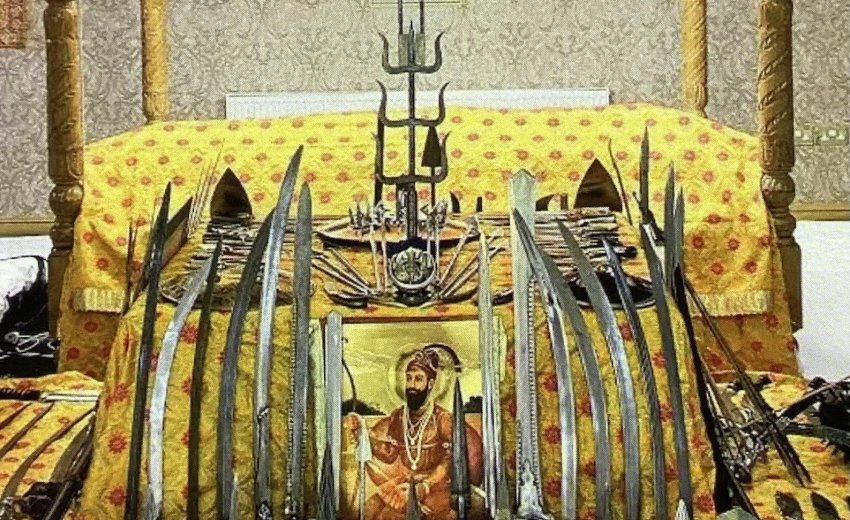
This study examines the representation of weaponry in the Dasam Granth Sahib, traditionally attributed to Guru Gobind Singh. Situating the text within the broader history of arms and warfare, it analyzes the physical, cultural, and symbolic significance of weapons in Sikh martial tradition (shastar-vidyā). The study demonstrates that weapons in the Dasam Granth are not merely instruments of combat but are imbued with ethical and spiritual meanings, functioning as embodiments of divine power and justice.
Introduction
The history of weapons is closely intertwined with the development of human civilization, reflecting transformations in technology, warfare, and social organization. In early societies, humans relied on rudimentary tools such as stones, wooden clubs, and spears for hunting and protection. With the emergence of metallurgy during the Bronze and Iron Ages, weapons became more durable and effective, leading to the widespread use of swords, daggers, and axes.
Ancient civilizations such as India, Persia, Greece, and Rome developed advanced military systems, including chariots, composite bows, and siege machinery. During the medieval period, the refinement of edged weapons, armor, and cavalry tactics marked a significant stage in martial evolution. The introduction of gunpowder revolutionized warfare, gradually replacing traditional arms with firearms and artillery.
Within this historical framework, the Dasam Granth Sahib occupies a distinctive position. Traditionally attributed to Guru Gobind Singh, the text provides extensive references to weapons .In the modern period, industrialization accelerated the development of advanced weaponry, fundamentally altering the scale and nature of conflict. It not only documents a wide array of weapons but also imbues them with deep symbolic, ethical, and spiritual meanings within the Sikh martial tradition (shastar-vidyā).
Weapons in the Dasam Granth Sahib
The Dasam Granth Sahib contains extensive references to both traditional and contemporary weapons. Texts such as Shastar Nam Mala provide a detailed enumeration of arms, including the khanda (double-edged sword), tegh, spear, chakra, bow, and early firearms. These references demonstrate a comprehensive awareness of the martial technologies of the time.
Weapons are frequently personified and revered as manifestations of divine power. The invocation “Sri Bhagauti Ji Sahai” exemplifies the symbolic elevation of the sword (Bhagauti) as an embodiment of justice and divine energy. In this framework, weaponry transcends its material function and becomes an ethical instrument aligned with the principles of dharam yudh (righteous warfare).
Selected Weapons and Their Contexts
The history of weapons is deeply connected with the development of human civilization, reflecting changes in technology, warfare, and social organization. In ancient times, humans used simple tools such as stones, wooden sticks, and spears for hunting and self-defense. With the advent of metallurgy (the Bronze and Iron Ages), weapons became stronger and more effective—swords, daggers, and axes became common instruments of war.
Ancient civilizations such as India, Persia, Greece, and Rome developed advanced weapon systems, including chariots, composite bows, and siege engines. During the medieval period, alongside armored protection and edged weapons—such as swords, maces, and spears—archery and cavalry warfare also evolved significantly. The invention of gunpowder revolutionized warfare. Firearms, cannons, and artillery gradually replaced traditional weapons. In the modern era, industrial development led to rapid advancements—rifles, machine guns, tanks, and eventually nuclear weapons transformed both the scale and nature of war.
The Dasam Granth Sahib, traditionally associated with Guru Gobind Singh, contains extensive references to weapons, reflecting their physical and symbolic significance in Sikh martial tradition (shastar-vidyā). Compositions such as Shastar Nam Mala describe numerous weapons—khanda (double-edged sword), tegh, spear, chakra, bow, and firearms. These references indicate familiarity with both ancient and contemporary weaponry.
Weapons are often depicted as embodiments of divine power. The invocation “Sri Bhagauti Ji Sahai” presents the sword (Bhagauti) as a symbol of justice and divine strength. The text emphasizes the righteous use of weapons (dharam yudh). Weapons are not merely instruments of violence but tools for the protection of righteousness and resistance against oppression. Alongside traditional arms like bows and swords, references to matchlocks and early firearms illustrate the technological transition during Guru Gobind Singh’s time (17th–18th century). Thus, the history of weapons reflects a progression from primitive tools to modern technology, while texts like the Dasam Granth Sahib highlight their cultural, ethical, and spiritual dimensions.
Angulitraan / Gulitraan (Thumb Guard)
Angulitraan (thumb guard) is a word of Persian origin referring to a protective covering for the thumb, especially used in archery. Archery has been practiced since ancient times for hunting, warfare, and sport, acquiring refined technical and cultural importance in South Asia. In Sikh tradition, it was an essential part of martial training, particularly during Guru Gobind Singh’s era.
An anecdote relates that after the Battle of Chamkaur, during travels in Malwa, the Guru’s thumb became swollen and the thumb-ring got stuck. It was carefully cut by Bhai Jawala Ji near village Mohi. Pleased, the Guru gifted him the iron ring. The site is now known as Gurdwara Chhalla Sahib.
Verse (Dasam Granth):
“Kahun angulitraan kaante pare hai.”
“Hathi buddhi gulitraan baanke.”
Safajang / Axe / Tabar
Safajang derives from Persian and refers to cutting or striking. It is a type of battle-axe (tabar), with a curved iron blade and a long wooden handle. The axe is one of humanity’s oldest tools—originating in the Stone Age and later made from bronze and iron. In medieval times, it served both as a tool and a weapon.
Verse:
“Safajang men ture nachaaye.”
Sool / Trishul / Spear
The trishul (trident) is a symbolic weapon associated with Lord Shiva, representing threefold powers. It is both a divine symbol and a practical weapon.
Verse:
“Tusi sool saehthi tabar, tu nihang aru baan.”
Saehthi / Spear
A spear consists of a wooden shaft with a pointed metal head, used for hunting and warfare in various forms.
Verse:
“Saif sirohi saehthi.”
Sanjoa (Armor)
Sanjoa refers to armor worn by warriors for protection. Various types are mentioned in the text, highlighting the diversity of protective gear.
Verses include:
“Subhai shastar sanjaan so soorveeram.”
“Sanj patola paakhra bhed sanda saaj banaya.”
“Sanja te thanakare tegeen ubhare.”
Whip (Kasa / Chabuk)
The whip was used for control, signaling, and sometimes combat.
Verses:
“Kasa kop kar hankaare, bairi dal ko daar.”
“Chabuk chalaae kai soorme, ran meh rache pukaar.”
Kirch / Saif / Sirohi (Sword Types)
These refer to various forms of swords and blades used across cultures.
Verse:
“Siri sirohi ser sam, jam sam aur na koi.”
Kukri / Khukri
A curved blade associated with Nepalese Gurkhas, used both as a weapon and tool.
Verse:
“Kukri kar dhaar kai, bairi upar dhaae.”
Katar (Dagger)
A push-dagger used widely in medieval India.
Verses:
“Tuhi katari daarh jam tu bichhuo aru baan.”
“Tuhi katari saehthi kariye rachh hamaar.”
Kamand Korra / Akaldan
A whip-like or chain weapon, also used by Nihang warriors.
Verses:
“Kamand korra kar dhar, bairi dal upar jaae.”
“Akaldan lai soorme, ran meh karah prahaar.”
Khanjar (Dagger)
A double-edged dagger used since ancient civilizations, symbolizing power and honor.
Verse:
“Chhuri kalam rip kard bhan khanjar bugda naae.”
Gada / Gurj (Mace)
A heavy striking weapon used by powerful warriors.
Verse:
“Tuhi gurj tumhi gada tumhi teer tufang.”
Gulel / Sling
Used to throw stones; an ancient ranged weapon.
Verses:
“Gopiyan gah kar soorme, bairi upar dhaae.”
“Gulel chalaae kai, bairi dal bidhhaar.”
Gatka
A martial training stick used in Sikh martial arts.
Verse:
“Gatka gah soorme, ran meh karah prahaar.”
Gupti
A concealed weapon hidden inside a staff.
Verse:
“Gupti kar dhaar kai, bairi upar dhaae.”
Chakra
A circular throwing weapon, also worn by Nihang warriors.
Verse:
“Chakra chalaae giraae jyon ari.”
Sword (Talwar)
A central weapon in warfare and a symbol of righteousness.
Verse:
“Asi kripaan khando kharag saib tegh talwar.”
Gun / Firearms
Firearms evolved with gunpowder and are widely referenced in multiple forms.
Verse:
“Tufang naam pachhaan.”
Miscellaneous Weapons
Includes dagger (bichhua), musal (club), satghni, kutka, and others.
Verses:
“Musal lai kar soorme, bairi upar dhaae.”
“Satghni chalaae kai, dal bairi ka naas.”
Conclusion
The Dasam Granth Sahib provides a rich catalogue of weapons, reflecting not only the military practices of the time but also their symbolic, ethical, and spiritual significance. Weapons are portrayed as instruments of justice and righteousness rather than mere tools of violence, forming an essential part of Sikh martial and cultural heritage.