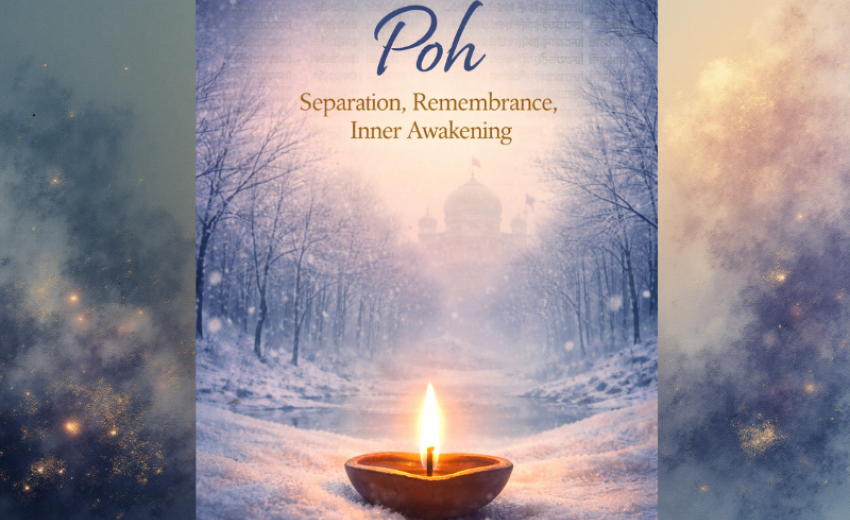

The month of Poh, Separation, and the Grammar of Suffering in Sikh Scriptures
Poh arrives without ceremony, wrapped in silence and cold. The tenth month of the Nanakshahi calendar mid-December to mid-January in the Gregorian system arrives with an austere cold marking the heart of winter, when the earth hardens, the sun weakens, and stillness settles over daily life. Yet for Sikhs, Poh is not simply a seasonal passage. It is a deeply textured spiritual time shaped by Gurbani, memory, and lived experience that invites introspection, remembrance, and ethical clarity. The cold of Poh is not merely external; it is inward, and it teaches the soul through discomfort rather than ease.
In Sikh thought, the months are not merely counted mechanically but contemplate more as moral and spiritual phases. More insights on this can be found in “Barah Maha” or the “Twelve months” composition found in the Sri Guru Granth Sahib Ji wherein Guru Nanak Dev Ji has powerfully expressed the entire cycle of year into a map of human soul’s relationship with the divine. Barah Maha is considered as a form of folk poetry depicting changing human emotions with respect to changing seasons of the nature outside. Each month acts a mirror reflection awareness, longing, separation, or union. Two compositions of Barah Maha are available in Sri Guru Granth Sahib, the first composition is in Rag Tukhari authored by Guru Nanak Dev Ji while the second composition is in Rag Maajh written by Guru Arjan Dev Ji.
Guru Nanak Dev Ji describes Poh as a time when the soul does not easily blossom, when the Beloved seems absent, and when restlessness burns from within:
ਪੋਹਿ ਨ ਵਿਗਸੈ ਕੰਤੁ ਨ ਮਿਲੈ ਅੰਤਰਿ ਅਗਨੀ ਜਾਲਿ ॥
ਸੋ ਧਨ ਖਰੀ ਕੁਚਜੀ ਜਿਨਿ ਪਿਰੁ ਨਹੀ ਜਾਣਿਆ ਨਾਲਿ ॥
In Poh, she does not blossom; her Beloved does not meet her.
An inner fire burns within that soul-bride who has not recognised the Lord’s presence.
The paradox at the core of Poh is encapsulated in this verse. Gurbani speaks of an inner fire rather than the chill that defines winter. The anguish depicted here results from a dimming of awareness rather than a withdrawal of the divine. The soul has forgotten to acknowledge the existence of the beloved, yet it has not vanished. In this sense, Poh turns into a season of truth rather than desertion. Without decoration or illusion, it reveals the inner state.
Guru Nanak Dev Ji’s tone in this composition stays deeply humanistic. The pain of separation is not punishment; it is instruction. Poh teaches that spiritual discomfort is not an enemy to be feared but a teacher to be listened to. When warmth disappears, awareness is sharpened.
Poh's significance is enriched by Sikh collective memory. This month commemorates some of the most traumatic and defining incidents in Sikh history, including the martyrdom of the Sahibzadas and Mata Gujri Ji's enormous suffering. These occurrences occurred amid the harshest winter conditions, with physical cold mirroring moral harshness. Remembering these sacrifices during Poh is not an accident. The season itself becomes an eyewitness.
In Sikh tradition, remembrance is never passive nostalgia. To remember is to learn how to live. Poh teaches that faith is not proven in moments of comfort but in moments of trial. The courage of the Sahibzadas, the quiet strength of Mata Gujri Ji, and the unwavering resolve of Guru Gobind Singh Ji during this time continue to shape Sikh moral consciousness. Their lives transform Poh into a season of ethical reckoning, asking how one stands when the world offers no shelter.
Poh is not a month of despair. Sikh remembrance is always balanced by chardi kala i.e., a resilient, grounded optimism that refuses to surrender to bitterness. In gurdwaras, Kirtan and Katha during Poh do not merely recount suffering; they cultivate strength. In homes, elders share stories not to burden the young with grief, but to root them in courage and clarity. Remembrance becomes a discipline that warms the spirit even as winter persists.
Fires are lighted not simply to combat the cold, but also to bring people together. Sangat, seva, and shared meals have a deeper meaning when warmth must be consciously established. These everyday actions become spiritual disciplines, reminding Sikhs that inner warmth comes from connection and humility, not from exterior ease. Poh does not advocate for disengagement from the world, but rather for deeper interaction with it via patience, awareness, and compassion.
Agrarian rhythms and cultural life continue through Poh, emphasizing a fundamental Sikh belief: spirituality is not distinct from daily existence. Winter clarifies, rather than suspends, responsibilities. Poh's calm allows reflection without forcing isolation. It teaches that one can be active in the world while remaining inwardly focused.
Ultimately, Poh asks a quiet but demanding question of the Sikh heart. When comfort fades, where does awareness rest? When warmth disappears, does remembrance remain? Gurbani teaches that separation from the divine is never geographical; it is perceptual. The cold we feel is often internal and so is its remedy. Recognition, not escape, ends winter.
As Poh returns each year, it leaves behind no dramatic proclamation. Its lesson is subtle and enduring. It teaches that the soul does not blossom through ease, but through alignment. That remembrance is strongest when tested. That even in the coldest season, awareness can awaken. Poh becomes, therefore, more than a month. It becomes a teacher that is quiet, severe but compassionate shaping the soul through stillness and truth.