
Martyrdom shifts teens toward wisdom
Gunjeet Kaur and Raman Singh are precocious teen siblings born in a busy city, coming from a renowned luxury family that is also enriched with values of Sikhi. Siblings inhabited attitudes like most of the budding teens—self-focused, rebellious, impulsive, emotional, unsteady, fragile, ego-centric, and identity-based, but a transition came in their character when they learned about the life journey of Sahibzaade, that true teen strength isn’t being reckless, impulsive, or ego-driven heroism, but courage, discipline, sacrifice, and unwavering values.
It was the month of December, and in this chilling weather Gunjeet and Raman insisted that Dad plan a trip. But Dad asked in a bit of a taunting way,
"Do you both by any chance have any plans to attend the Gurmat Samagam held in the nearby gurudwara?" You know na, the martyrdom days of Sahibzaade are beginning tomorrow!"
In return, both reacted,
"Oh, come on, Dad, we know it, so what?" Now you want us to consume our holidays by ending up in a gurudwara!? No way!
Dad asked, "Why not?" What’s the problem? I wonder why you guys don’t have any issue when spending 3-4 hours in a theater watching a damn movie in which nothing is real,not the character, not the story; everything is a mere imagination. Just a fantasy!
Raman replied, "Because we enjoy it."
Dad said, "Then you guys should be afraid of yourselves that enjoy seeing fakeness." It’s a threat to morality, I must say.
Both replied, "Everybody does, Dad."
The argument ends up with Dad being disheartened. To make his kids analyze the fact that to shape their teen life into productive, structured, peaceful, and fruitful, they must learn through the journey of young Baba rather than being a shallow follower. So, on the very next day, he asked his kids to be prepared for a special mysterious nighttime mission. Both Gunjeet and Raman were excited to hear that, when the clock got to 10:00 pm, the family gathered. Dad turned and began by asking Gunjeet,
What is your perspective on seeing life?
Raman: Simple, live life to the fullest. Do everything with no barriers, no limitations. To show off my success to people, flaunting my cool dude life. You know.
Dad responded with a smiling face, asking the same question to Gunjeet, and her reply reflected a similar attitude: one life, eat, chill, have fun, party around, etc.
Dad: Well. Actually, I’m in a dilemma. There is aomething which keeps on pounding my brain:
Why did the Chaar sahibzaade who were enriched with the successor throne, an abundance of basic necessities, fulfilled with everything one aspires for, choose to sacrifice their life for, accept torture for, accept harsh manhandling, tormented in brutal ways, and even butchered like they were some sort of animal, why did they choose to stand firm? When people actually find ways to live, why did they accept to die at such a young age? What do you have to say over that? Was it all destined?
This made them speechless and bombarded with thoughts. Silence fell into the room.
Dad continued, you know why Sikhi is unique, it is because it is the only spiritual path that maps your journey toward spiritual living.
You know what actually truthful living is? Or even why I’m emphasizing it? Because the life you want to live, full of joy and glamour and money and fame, etc., only makes you egocentric, fierce, and inhumane and a person without values; morality is living dead. These people have no idea about what happiness is. Everything’s a show-off, a flaunt. But if you really analyze that we get to live once and one should live a joyous life, then I will present to you how actually we are meant to live through the lens of Gurbani. Sahibzaade's journey of martyrdom is a living example to learn how to live. As teens they showed the world that true bravery rises from a pure heart, not from years lived. In an age where teens seek role models, the Sahibzaade shine as eternal heroes: fearless, principled, and unwavering even in childhood. They teach us that even the smallest shoulders can carry the strongest courage. They teach us :
- How to live in awe of the almighty:
On Ang 83 in Sri Guru Granth Sahib ji, it’s written that,
ਜਿਸੁ ਪਿਆਰੇ ਸਿਉ ਨੇਹੁ ਤਿਸੁ ਆਗੈ ਮਰਿ ਚਲੀਐ ॥
ਧ੍ਰਿਗੁ ਜੀਵਣੁ ਸੰਸਾਰ ਤਾ ਕੇ ਪਾਛੈ ਜੀਵਣਾ ॥੨॥
It means if your love for the divine is true, then surrender your ego, mind, fear, and attachments before him. Let the ego die, fear die, worries die. Walk fully surrendered with love and trust.
And how we will attain this position for that on Ang 603 to 604 in Guru Granth Sahib ji, it is stated that
ਸੋਰਠ ਮਹਲਾ ੩ ॥
ਸਬਦਿ ਮਰਹੁ ਫਿਰਿ ਜੀਵਹੁ ਸਦ ਹੀ ਤਾ ਫਿਰਿ ਮਰਣੁ ਨ ਹੋਈ
“Shabad marho” means let your ego, desires, and inner negativity die through the guidance of the Divine Word (Shabad/Gurbani).
“Phir jeevo” means after this inner death, you gain a new spiritual life.
“Sad he” means forever / eternally.
When one “dies” in the Shabad (ego dies and spiritual awareness awakens),
Then there is no more death, meaning:
- No spiritual death
- No rebirth
- Freedom from the cycle of life and death
- Eternal union with the Divine
“Let your ego die through the Divine Word; then you are reborn into eternal life, and you will never suffer death again.”
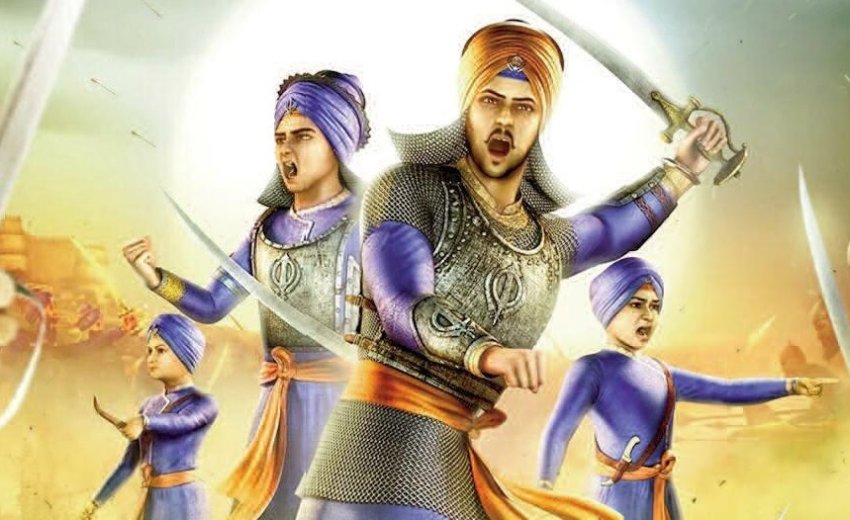
The Sahibzaade: Sahibzada Ajit Singh, Jujhar Singh, Zorawar Singh, and Fateh Singh, perfectly lived the message of this Gurbani line.
“Shabad ”marho”- Their ego and fear died in the Shabad
The Sahibzaade were raised in the Shabad of Guru Gobind Singh Ji, where:
- Fearlessness,
- Truth,
- Dharma,
- And complete surrender to Waheguru
were already part of their being.
They did not act from ego or personal desire.
They acted from Gurmat and divine obedience, which is the essence of “Shabad marna.”
“Phir jeevo sad he” - They gained eternal spiritual life
Their physical bodies were attacked,
but they became spiritually immortal.
- Ajit Singh and Jujhar Singh achieved martyrdom in battle at a young age,
- Zorawar Singh and Fateh Singh embraced martyrdom with unimaginable courage inside the cold walls of Sirhind.
Their eternal life is remembered by the entire world —
This is exactly what “Jeevo said he” means.
“Taa phir maran na ”hoye”—Such souls do not truly die
Their physical death was not the end.
Gurbani says:
Those who give up ego and live in the Shabad never truly die.
This is seen in the Sahibzaade:
- Their naam,
- Their valor,
- Their stand for righteousness,
- Their sacrifice,
Continue to guide generations.
They are not remembered as victims they are remembered as immortal warriors.Baba Banda Singh Bahadur's inspiration, and the eternal sons of Khalsa Panth.
In this way, the Sahibzaade embody the Gurbani message that:
True death is when the spirit dies.
True life is when the soul becomes one with the Divine.
Such souls never die—they become eternal.
And the second foremost thing that one can learn from Baba’s life is how to live fearlessly. The aforementioned facts map a route to the destination of becoming fearless. On Ang 1365, Bhagat Kabir ji says,
ਕਬੀਰ ਜਿਸੁ ਮਰਨੇ ਤੇ ਜਗੁ ਡਰੈ ਮੇਰੇ ਮਨਿ ਆਨੰਦੁ ॥
ਮਰਨੇ ਹੀ ਤੇ ਪਾਈਐ ਪੂਰਨੁ ਪਰਮਾਨੰਦੁ ॥੨੨॥
That death, which the world fears, brings joy to me.”
Why?
Because this is not the death of the body, It is the death of:
- ego
- fear
- attachment
- ignorance
This “death” leads to freedom.
So Kabir Ji is in bliss.
They all describe the same spiritual stage:
When ego dies and a person becomes one with the Divine,
Then physical death loses all meaning.
This is why:
- Gurbani says “taa phir maran na hoye”- no more death.
- Sahibzaade showed in their lives that true warriors never die.
- Kabir Ji says the death the world fears gives the saint joy.
This is the stage of fearless bliss (Anand Avastha).
The Sahibzaade reached the state that Kabir Ji describes:
Their spiritual death happened before physical death.
So when the moment of martyrdom came:
- The world saw “death,”
- But they experienced Anand, meaning union with the Divine, the fearlessness that rises from Shabad.
- As the night grew deeper, so did the silence in the room. Gunjeet and Raman, who only hours ago spoke about life as a playground of thrill, glamour, and impulse, now found themselves standing at the crossroads of understanding. Their father had not scolded them nor forced them toward devotion; he simply held up a mirror polished with the lives of the Sahibzaade, Gurbani, and eternal truth.
- For the first time, they realized that being young is not equal to being careless, and being modern is not equal to being hollow. The Sahibzaade were their age, yet their hearts were mightier than armies, their minds sharper than swords, and their spirits unshakeable. They had everything the world runs after: comfort, status, privilege, yet they chose values over vanity, courage over comfort, and sacrifice over selfishness.
- The Gurbani teachings illuminated what true living means:
to let the ego die so the soul can truly live;
to fear not the end of the body but the death of conscience;
to understand that the bravest are not those who break rules,
but those who rise above themselves. - Gunjeet and Raman understood that the real “mission” their father planned was not a journey outside - but a journey within. A journey from impulsiveness to awareness, from shallow thrill to purposeful strength, and from ego-driven choices to value-driven living.
- The Sahibzaade showed them that greatness doesn’t wait for age, and fearlessness doesn’t require experience—
It only requires a pure heart aligned with truth. - With softened eyes and humbled breaths, the teens finally felt what their father wanted them to feel:
that life becomes meaningful not when we chase the world, but when we discover ourselves through the wisdom of our faith. - That night marked the moment they stepped out of childhood noise and into the light of understanding—carrying forward not just the story of the Sahibzaade, but the very spirit of Sikhi that transforms, strengthens, and awakens.