The research station, located on Little Norway Road, is running on limited staff and carryover funds from previous projects. Despite that the director of research and business, Tarlok Singh Sahota, said they’re doing their best to prove why the facility is necessary.
We are busy, our society is structured in a way to make purchasing food as we do “easier” “Here is one weird trick that drives grocers mad!”
Facing a crisis due to over-exploitation of water resources, the Punjab Government will soon arm itself with a new policy for direct sowing of paddy.
On the strength of the legendary Sikh entrepreneurship, a green pasture rests there now, referred to as "mini Punjab".
He decided he wanted to explore the visual and cultural juxtapositions and see how the new farmers were faring.
The Punjabi-American Festival, held each year on the last Sunday in May, is organized by the Punjabi-American Heritage Society, which was founded in 1993 to encourage cross-cultural understanding in the community.
Over 2,000 Sikh farmers settled in Kutch are mobilising political support from outside the state to build pressure.... and to ensure that they are not evicted from the land they have been cultivating for several decades.
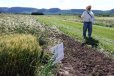
With only one year left to go until its funding runs out, the Thunder Bay Agricultural Research Station is showing the fruits of its labour in an effort to secure more provincial backing.
No rain. No water. No electricity. No money. And the list of woes goes on. Big, small or marginal farmer in any district is no exception to the situation. Yet, there is always hope amidst loss.
Food prices will more than double and the number of malnourished children spiral if climate change is not checked and developing countries are not helped to adapt their farming, food and water experts warned on Tuesday at the UN climate talks in Doha.
Malkiat Kaur, 78, doesn’t buy vegetables anymore. She grows them on a six-by-four foot plot in the backyard of her house.
They often are forbidden from opening savings accounts, borrowing money, or even selling crops at market. And what is the basis for these self-defeating practices? It is the simple fact that these farmers happen to be women.
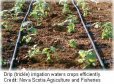
During a recent trip to a rural part of western India to report on rising food prices, I met two kinds of farmers — those with access to irrigation and those without. The differences between the two were stark. Those with drip irrigation or sprinklers invariably were reaping rich harvests and profits.
"The crisis in Punjab is very deep," said Sanjay Sharma, the regional bureau chief for the Times of India newspaper. Since the early 1990s, successive state governments had failed to grasp the importance of industrialization, he said.
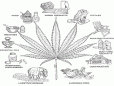
California farmers are missing out on a golden opportunity to tap into the growing industrial hemp products business of food, clothing, shelter, paper and fuel, which would greatly benefit our state's economy and family farmers. Industrial hemp is a perfect, environmentally sustainable crop for our state.
Dr. Rajwant Singh, convener of Washington based EcoSikh, congratulated Dr. Inderjit Kaur and Pingalwara institution and said, "this kind of initiative is needed in Punjab to stop the continuing damage with various chemical and pesticide based agricultural practices. We are also heartened to see that this is being dedicated to Guru Har Rai ji, who inspired Sikhs to care for nature and mother earth."

Sewa Singh and Prince Charles
Remembering contribution of Sikhs, he said, "The United Kingdom owes an immense debt of gratitude to the courage and sacrifice of Sikh soldiers and this, of course, is most famously exemplified in the purely appalling conditions of the First World War, and later in Asia during the Second World War".
Now, Mongolia wants the services of Punjab farmers for attaining self-sufficiency in food.
Subscribe to RSS - farming